

Nigeria’s Petroleum Sector in Turmoil as Key Regulators Resign Amid Dangote Controversy
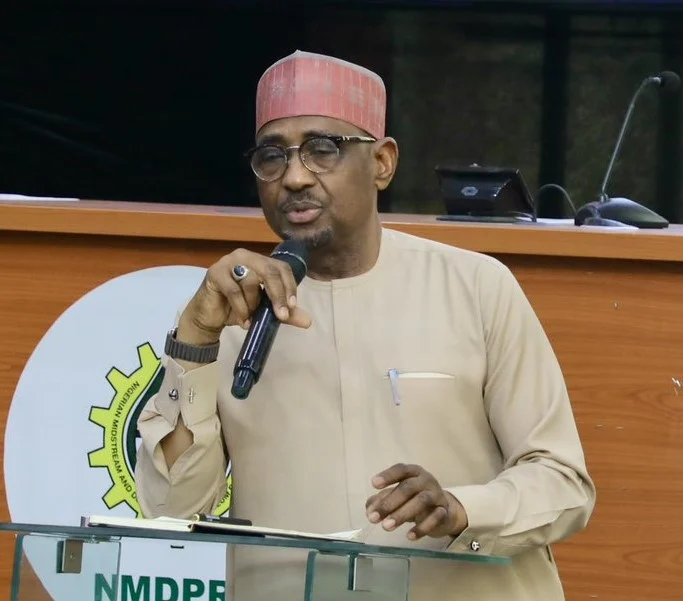
Nigeria’s oil and gas industry was thrown into fresh uncertainty on Wednesday following the resignations of Farouk Ahmed, Chief Executive of the Nigerian Midstream and Downstream Petroleum Regulatory Authority (NMDPRA), and Gbenga Komolafe, CEO of the Nigerian Upstream Petroleum Regulatory Commission (NUPRC). The departures come amid a heated dispute with Aliko Dangote, President of the Dangote Group, over fuel pricing, import licenses, and regulatory oversight.

The Presidency confirmed the resignations, widely interpreted as fallout from the escalating tension between the Dangote refinery and the NMDPRA. The controversy intensified after Dangote accused Ahmed of economic sabotage and petitioned the Independent Corrupt Practices Commission (ICPC) to investigate alleged personal wealth, including claims that Ahmed spent around $5 million for the secondary education of his four children in Switzerland.
Dangote publicly questioned the source of Ahmed’s wealth on Sunday, and the matter escalated on Tuesday when he formally wrote to the ICPC demanding a full investigation. Following the petition, Ahmed was summoned to the Presidential Villa, where his resignation was reportedly requested. Komolafe, who was not directly involved in the dispute, also resigned as part of a coordinated leadership change at both regulatory agencies.

Bayi Onanuga, Special Adviser to the President on Information and Strategy, confirmed the resignations and announced nominations for their replacements. President Tinubu has sent the names to the Senate for confirmation: Oritsemeyiwa Amanorisewo Eyesan as CEO of NUPRC and Engr. Saidu Aliyu Mohammed as CEO of NMDPRA. Both nominees are described as experienced professionals with extensive backgrounds in the oil and gas sector.
Eyesan, a University of Benin economics graduate, spent 33 years with NNPC and its subsidiaries, retiring as Executive Vice President, Upstream (2023–2024). Engr. Saidu Aliyu Mohammed, a chemical engineering graduate from Ahmadu Bello University, has held leadership roles at Kaduna Refining & Petrochemical Company, Nigerian Gas Company, and Seplat Energy, among others.

Industry Reacts to Resignations
The departures have heightened anxiety in the downstream sector, with marketers warning that the crisis could accelerate business failures, especially after Dangote slashed petrol prices. An industry insider, speaking anonymously, said the NMDPRA CEO’s resignation followed a meeting at the Presidential Villa.
“The resignation naturally causes tension. The price crash by Dangote has already reduced depot liftings drastically, and with regulators resigning, uncertainty grows. Operators are jittery,” the source said, noting losses caused by the refinery’s aggressive pricing strategy.
The dispute between Dangote and Ahmed dates back to 2024, shortly after the Dangote refinery began fuel production. Dangote’s deputy, Devakumar Edwin, accused NMDPRA of indiscriminately issuing import licenses for diesel and aviation fuel, undermining the refinery’s market. Ahmed countered by claiming that Dangote fuel had higher sulfur content than imports, sparking public outrage.
Despite these disagreements, the NMDPRA maintained that fuel import licenses were necessary to meet demand, citing a shortage in September and October 2025. Dangote countered, alleging economic sabotage, arguing that reckless licensing had forced his refinery to export fuel abroad while domestic prices were manipulated.

Komolafe’s resignation, though not tied to the immediate pricing dispute, reflects longstanding tensions over the Domestic Crude Supply Obligation and frustrations with international oil companies over local crude allocation. The NUPRC and Dangote refinery had previously clashed over crude pricing and supply, which eventually led to a naira-for-crude deal that allowed Dangote to reduce fuel prices significantly.
Experts and Stakeholders Weigh In
Industry observers say the resignations underscore deep-rooted issues in Nigeria’s petroleum sector, including corruption, weak regulation, and institutional decay. Jeremiah Olatide, CEO of Petroleumprice.ng, described the developments as confirmation of systemic rot. Energy lawyer Rasheed Osagie noted that the exits were inevitable given Dangote’s investment scale and economic influence, while Professor Wumi Iledare called it a “moment of truth” for regulators under the Petroleum Industry Act. Civil society leaders Auwal Rafsanjani and Debo Adeniran stressed that full investigations are necessary, warning that resignation alone is insufficient.
As the new leadership prepares to take office, operators in the petroleum sector remain on edge, watching to see if the shakeup will restore confidence or exacerbate uncertainty in an industry already grappling with intense competition and pricing pressures.




