

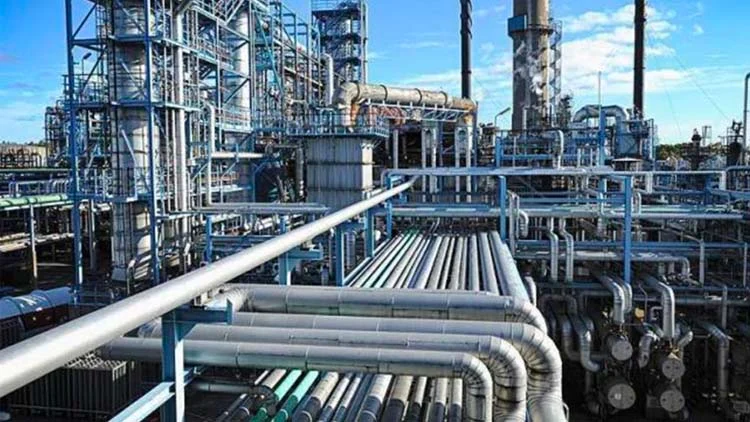
The Port Harcourt Refining Company, currently out of production, continues to supply 349,000 litres of diesel to the market daily, the Nigerian Midstream and Downstream Petroleum Regulatory Authority (NMDPRA) revealed in its latest data update.
According to the regulatory agency, the refinery, which was shut down by the Nigerian National Petroleum Company Limited (NNPC) on May 24, 2025, has not resumed production. However, diesel produced before the shutdown is still being evacuated to the market, averaging 0.349 million litres per day as of November.

“No production activities are ongoing as the Port Harcourt refinery remains in shutdown mode. However, evacuation of AGO produced while the refinery was operational before 24th May 2025 continued at an average of 0.349 million litres/day,” the NMDPRA data stated.
The refinery’s maintenance shutdown has now entered its seventh month, far exceeding the initial one-month period announced by Olufemi Soneye, the immediate past NNPC Chief Corporate Communications Officer.
The Port Harcourt refinery was declared operational in November 2024 by former NNPC GCEO Mele Kyari after years of inactivity. At the time, the 60,000-barrel capacity facility, upgraded with modern equipment, was said to be running at 70 per cent of installed capacity, producing diesel and low-pour fuel oil as the main outputs, with daily capacities of 1.5 million litres and 2.1 million litres respectively.

The facility was also expected to produce straight-run gasoline for blending into 1.4 million litres of premium motor spirit, 900,000 litres of kerosene, and an additional 2.1 million litres of low-pour fuel oil daily. About 200 petrol trucks were projected to be released into the Nigerian market each day.
Yet, just six months after the high-profile rehabilitation and resumption, the refinery was locked down again. The Warri Refining and Petrochemical Company, declared open in December 2024, was similarly shut down a month later.
The new NNPC GCEO, Bayo Ojulari, noted that the Port Harcourt refinery had been operating at a loss prior to the suspension of rehabilitation, processing less than 40 per cent of the 50,000 barrels of crude pumped daily, resulting in monthly losses of $300–500 million.

“When I resumed, one of my priorities was the refinery. I quickly realized we were losing between $300m and $500m monthly. The decision was to halt operations and find a way to make it sustainably profitable,” Ojulari said.
In response to ongoing operational challenges, the Petroleum Products Retail Outlets Owners Association of Nigeria urged the Federal Government to privatize the country’s four state-owned refineries by the first quarter of 2026. They argued that privatization would remove the recurring fiscal burden, improve efficiency, attract private investment and expertise, and bring Nigeria’s refining sector in line with global standards.

However, Ojulari has rejected calls for immediate privatization, emphasizing that the ongoing technical and commercial review is aimed at repositioning the refineries as sustainable, revenue-generating assets capable of meeting Nigeria’s fuel demand while adhering to international operational benchmarks.




