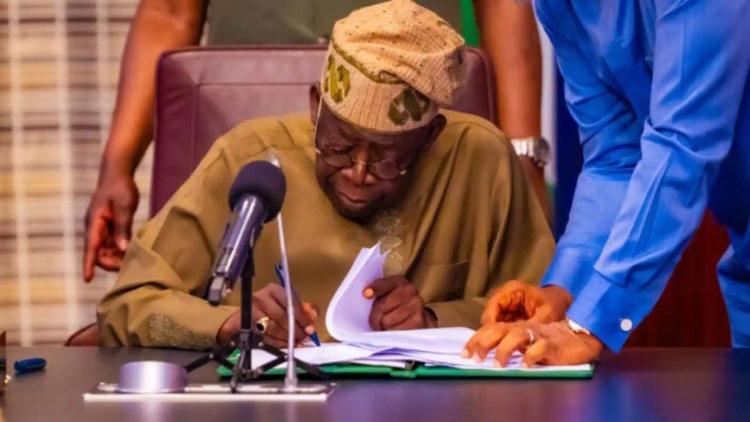
President Bola Tinubu has signed the Electoral Act, 2022 (Repeal and Re-Enactment) Bill 2026 into law, bringing the long-awaited amendments to Nigeria’s electoral framework into effect.

The signing follows the harmonisation of versions passed by the Senate and House of Representatives, culminating in a final bill that was transmitted to the President for assent.
On Tuesday, February 17, 2026, the Senate approved electronic transmission of election results from polling units to the Independent National Electoral Commission’s (INEC) Result Viewing Portal (IReV), while retaining manual collation as a mandatory backup mechanism in cases of technological failure.

The decision sparked widespread controversy and public outrage, with many Nigerians and civil society groups criticising the retention of the manual fallback provision, arguing it could undermine transparency and create opportunities for manipulation in future elections.

During an emergency plenary session last week, Senate President Godswill Akpabio had indicated that President Tinubu was expected to sign the amended Electoral Act into law within the month of February.
Akpabio stated at the time:

“I believe that if you are able to conclude within this, in the next few days or one week, the President should be able to sign this amended Electoral Bill into an Act of Parliament within this month of February. So I wish you a worthy deliberation with your colleagues.”
The newly signed law introduces several reforms aimed at improving the conduct of elections, though the electronic transmission clause with manual backup remains one of the most debated aspects.

Further details on the signed Act, including the full text and specific provisions, are expected to be released by the Presidency or National Assembly in the coming days.
The development sets the legal framework for the 2027 general elections and other future polls in Nigeria.