


Abuja, December 1I, 2025 — Nigeria’s multi-billion-naira National Public Security Communication System (NPSCS), once sold to the public as a game-changing police communication and surveillance network, now stands across the country as a monument to institutional failure.

From Lagos to Maiduguri and the FCT, purpose-built communication centres, towers, and technical facilities lie idle or vandalised. What was conceived as a $470 million (over ₦700 billion at current rates) backbone for modern policing has instead become part of the story of how insecurity deepened nationwide.

The key question is no longer just who to blame — but why Nigeria repeatedly builds strategic security infrastructure it cannot sustain.
What the NPSCS Was Supposed to Be
The NPSCS was initiated under President Umaru Musa Yar’Adua and aggressively implemented during President Goodluck Jonathan’s administration between 2010 and 2015. It was financed largely through a China Exim Bank facility and executed by Chinese telecoms giant ZTE.
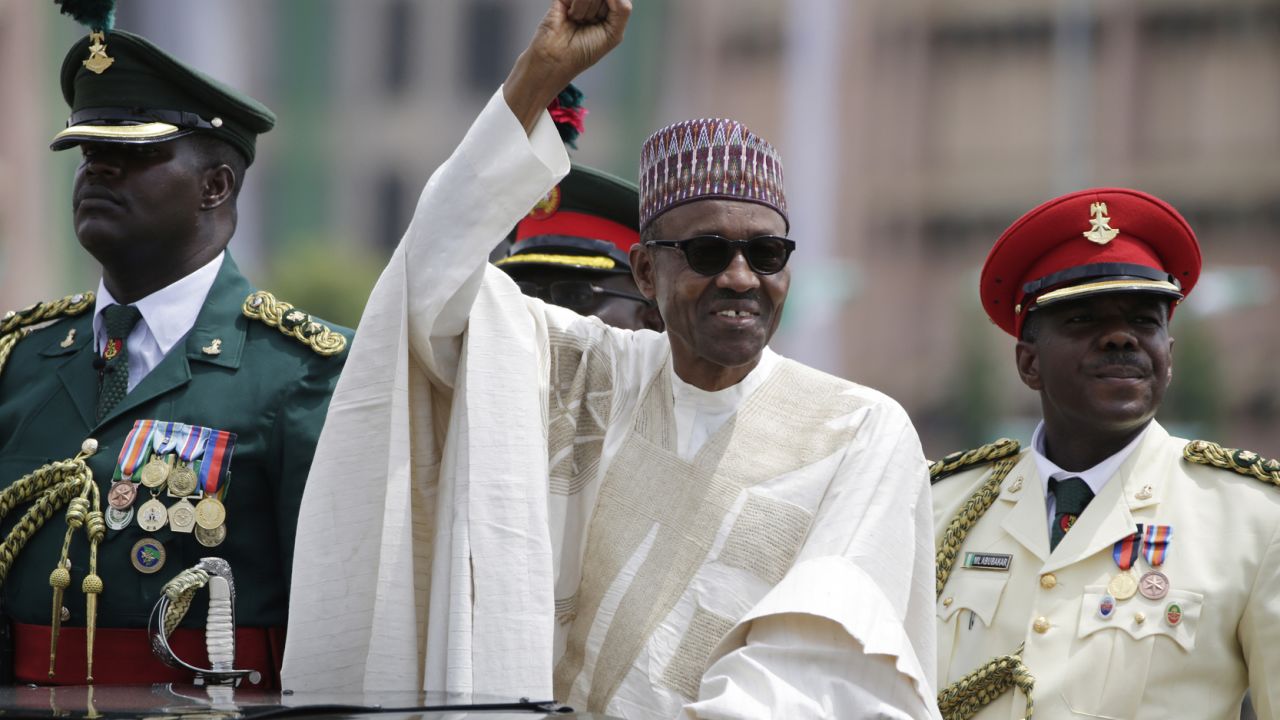
A National Security Rebuttal: Why the Police Network Truly Collapsed
The project was designed to provide:
A digital trunked radio network for secure voice communication nationwide
Command and control centres in all 36 states and the FCT
CCTV coverage in key cities
Emergency call centres and tracking capabilities
Integration of police, security and emergency services into a unified communication framework
Thousands of specialist Cadet Inspectors and ASPs were reportedly recruited and trained to man these facilities. On paper, it was one of the most ambitious internal security infrastructure projects in Nigeria’s history.
What Actually Happened: A System That Never Fully Lived
Despite the impressive launches and political speeches, evidence shows that the NPSCS never became a consistently functional, nationwide operational system.
Several official inspections and legislative probes over the years highlighted major faults:
Many CCTV cameras and base stations worked only partially or for a short period.
Maintenance arrangements and funding were weak or non-existent.
Handover from the contractor to Nigerian authorities was poorly managed.
By the end of the Jonathan era and into the early Buhari years, multiple components of the system were already failing, idle, or plundered. The infrastructure existed physically, but the network as a living, integrated security tool barely existed in practice.

This is a crucial point: the narrative that a fully functional, highly effective system was deliberately “switched off” overnight is not supported by the broader record. It was limping, under-maintained, and vulnerable long before.
Did Buhari Deliberately Shut It Down?
The most explosive claim in public discourse is that the Buhari-led APC administration deliberately shut down Jonathan’s “police communication empire” to aid bandits and criminal elements.
So far:
There is no publicly available documentary evidence of a formal directive by President Buhari ordering the shutdown of an operational NPSCS.
What can be established is a pattern of continued neglect: failure to fund maintenance, failure to upgrade, and failure to prioritise the system as a central security asset.
Sources within the police have claimed that instructions came from “above” to stop funding ZTE and allow the system to die. Those allegations are serious, but they remain anonymous, untested and uncorroborated in any court or official white paper.
It is also true that the Buhari administration inherited not just infrastructure, but the same security establishment — senior officers, civil servants, and contractors — that managed, compromised, or mismanaged the system under previous governments. Leaders at the top change; the underlying machinery often does not.
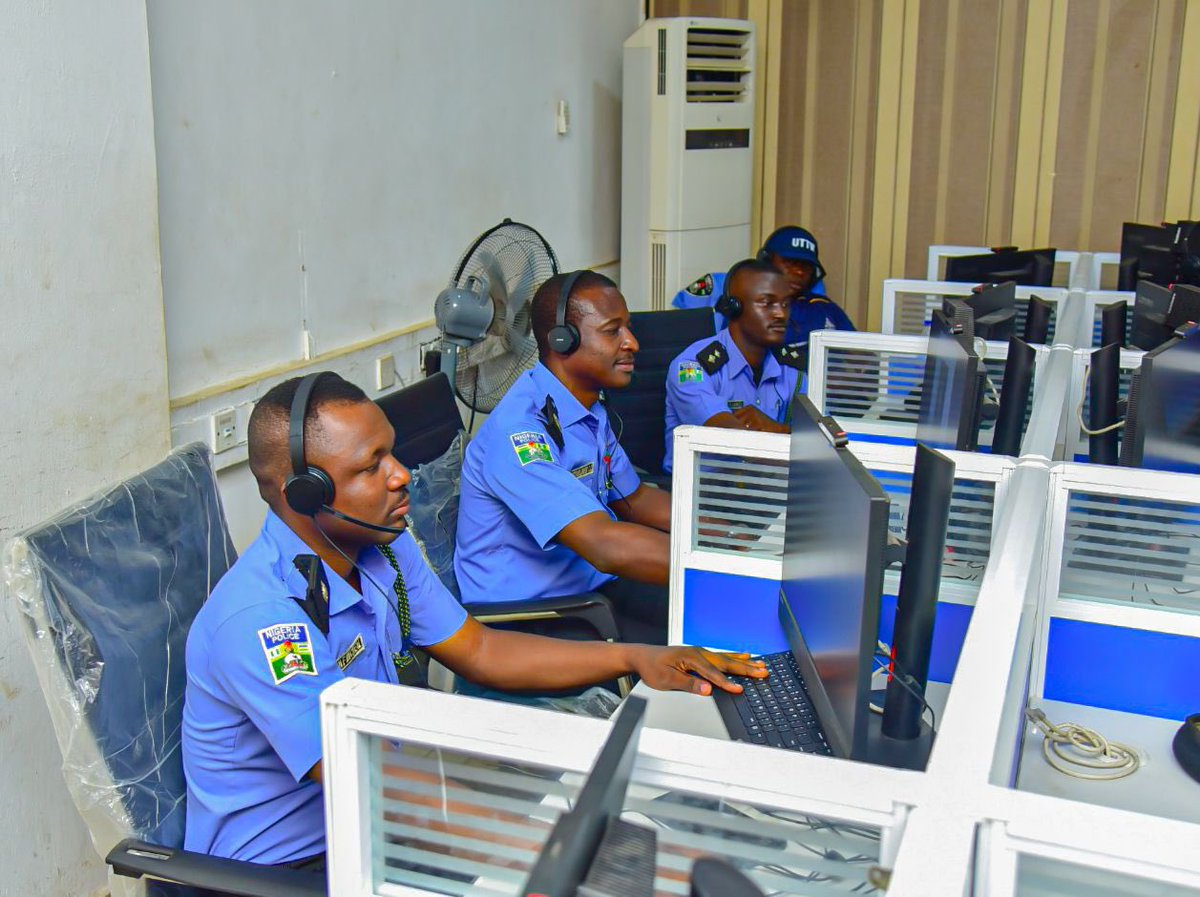
To say Buhari personally “shut it down to assist bandits” is therefore a political conclusion, not a proven fact. What is factual is that his government failed to salvage, reform, or transparently audit a system that was already in trouble. That is a serious failing, but it is different from a criminal conspiracy.
Sabotage, Infiltration and Fifth Columnists
Former President Jonathan publicly complained while in office that his government and security architecture were infiltrated by sympathisers or agents of terrorist networks. If that is accurate, it logically follows that:
Sabotage of critical security infrastructure could have occurred internally,
And those actors may have remained in place across administrations, including under Buhari.
However, this remains in the realm of political intelligence and conjecture, not judicially established fact. No administration — Jonathan’s, Buhari’s or Tinubu’s — has successfully prosecuted a network of “fifth columnists” linked directly to the failure of the NPSCS.
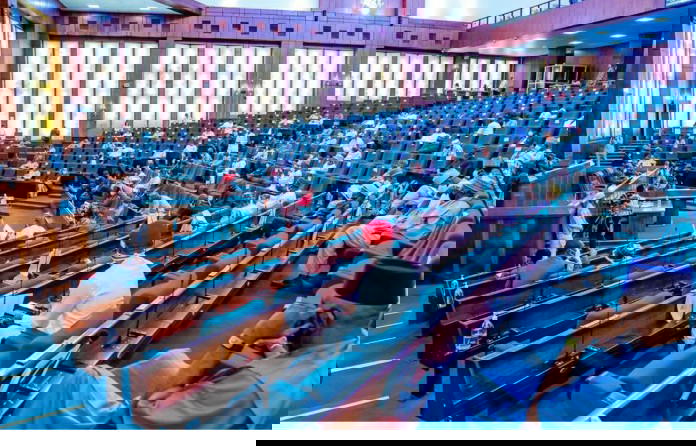
Rebuttal Report: Unpacking the Myths Behind Nigeria’s Broken Security System
The fairest conclusion today is that the system was brought down by a mixture of corruption, incompetence, poor project design, institutional decay and possible internal sabotage — a collective failure, not the handiwork of a single man or party.
Insecurity Under Jonathan vs Buhari: Context Matters
It is also inaccurate to pretend insecurity started under Buhari. Under Jonathan:
Boko Haram reached its most territorially ambitious phase, controlling large areas in the North-East.
The 2014 Chibok girls abduction, arguably the most globally infamous kidnapping in Nigeria’s history, occurred on his watch and remained unresolved for years.
Under Buhari, the map shifted:
Boko Haram/ISWAP was gradually pushed back territorially,
But banditry, mass abductions, rural terrorism and kidnapping for ransom exploded, especially in the North-West and North-Central.
Both periods exposed deep structural weaknesses in Nigeria’s security and intelligence system. Neither government can credibly claim success on internal security, and neither can honestly be singled out as the reason the NPSCS failed.
Did the Authorities Follow Up?
Various signals show that the Nigerian state knows the NPSCS failure is a scandal:
The National Assembly has held multiple probes and issued reports calling for accountability.
Federal agencies have announced “revival” efforts more than once, often with media fanfare but little visible impact on the ground.
More recently, committees and project management teams have been inaugurated to reassess or concession parts of the infrastructure.
Yet ordinary Nigerians still see abandoned masts, dark CCTV poles and empty buildings. That tells you the gap between announcement and delivery remains massive.
What Needs to Happen Now
Arguing endlessly about whether Jonathan’s team or Buhari’s team “killed” the project misses the urgent point: Nigeria still does not have a reliable, modern, nationwide security communication system in 2025.
With a fresh wave of kidnappings, rural attacks and urban banditry, the priority should be:
1. Independent technical and financial audit of the NPSCS assets — what is salvageable, what is obsolete, and what was never properly delivered.
2. Transparent accountability for officials and contractors involved in any fraud, sabotage, or gross negligence — across all administrations.
3. Designing a new, modern system, possibly with new vendors, incorporating:
Encrypted nationwide radio
Integrated emergency response and tracking
CCTV and drone feeds into central and regional command centres
Remote operation and redundancy for when physical sites are attacked
4. Ring-fenced funding and strict governance so that maintenance is not treated as an optional luxury.
It is entirely reasonable — and urgently necessary — to rebuild or replace Jonathan-era infrastructure with newer digital, networked systems, as security experts and civic groups like the National Patriots have proposed. What is not reasonable is to pretend the old system was a flawless masterpiece assassinated by one politician.
Final Analysis
The NPSCS story is not just a Buhari problem or a Jonathan problem. It is a Nigerian state problem: a pattern of grand projects launched with fanfare, under-delivered, under-maintained, then weaponised in partisan blame games once they fail.
If Nigeria is serious about confronting insurgency, banditry and mass kidnapping, it must stop treating critical communication infrastructure as political property, and start treating it as a non-negotiable backbone of national survival.
“The collapse of Nigeria’s multi-billion-naira police communication network is not the failure of one administration but the consequence of years of institutional decay, sabotage, and neglect,” the National Patriots said. “What was designed to give the nation real-time security intelligence was allowed to rot in silence while criminals evolved faster than the state. Blaming one regime distracts from the truth — the system was never protected, never maintained, and never prioritised. Nigeria cannot fight 2025 threats with broken 2010 infrastructure. We need a modern, fully networked, fail-safe communication architecture now, backed by transparency, funding, and accountability. Until then, insecurity will continue to outrun governance.” – The National Patriots.
“It is incorrect and deeply misleading to claim that the APC-led Buhari administration deliberately shut down a ‘fully functional’ police communication system to aid bandits,” Princess Gloria Adebajo-Fraser, MFR, stated. “First, the system was never fully operational. Second, its collapse had already begun before 2015. Third, the failure was institutional, not personal. And fourth, blaming one administration is both incomplete and unfair.
Our rebuttal is based on evidence, not politics. Nigerians must get their facts right and stop circulating narratives built on partial information or economic truths, especially at a time when national security demands clarity, honesty, and responsibility.”

The National Patriots.
It is incorrect and deeply misleading to claim that the APC-led Buhari administration deliberately shut down a ‘fully functional’ police communication system to aid bandits,” Princess Gloria Adebajo-Fraser, MFR, stated. “First, the system was never fully operational. Second, its collapse had already begun before 2015. Third, the failure was institutional, not personal. Fourth, blaming one administration is both incomplete and unfair.
Our rebuttal is based on evidence, not politics. Nigerians must get their facts right and stop circulating narratives built on partial information or economic truths for political reasons; especially at a time when national security demands clarity, honesty, and responsibility.”
Princess Gloria Adebajo-Fraser MFR.
Former Special Adviser, Strategy, Research and Planning to Former President Goodluck Ebele Jonathan.
President,The National Patriots.
Headlinenews.news Special Investigative Report.
BIG EXCLUSIVE: HOW NIGERIA’S MULTI-BILLION NAIRA POLICE COMMUNICATION EMPIRE BUILT BY JONATHAN WAS DELIBERATELY ABANDONED UNDER BUHARI, TO ASSIST BANDITS TO KILL NIGERIANS
THE MISLEADING VIRAL REPORT ON SOCIAL MEDIA. PLEASE PUT A SUBTITLE TO IT.
Abuja, December 9, 2025 – A nationwide investigation has uncovered the shocking truth behind the collapse of Nigeria’s National Public Security Communication System (NPSCS), a $470 million (over N700 billion at current rates) state-of-the-art police communication network built between 2010 and 2015 under President Goodluck Ebele Jonathan and completed during the tenure of former Inspector-General of Police, Late IGP Solomon Arase.
From Lagos to Maiduguri, Kano to Port Harcourt, Enugu to Sokoto and the FCT, gleaming, fully air-conditioned communication command centres, giant radio masts, tracking systems, emergency call centres, and digital trunking networks were commissioned with fanfare. Over 2,000 specialist Cadet Inspectors and Assistant Superintendents of Police (ASPs) were recruited and trained specifically to man these facilities.
Yet today, less than a decade later, every single one of these centres across the 36 states and the FCT lies abandoned, vandalised, or turned into ghost buildings. Billions of naira worth of equipment – servers, consoles, tracking devices, solar power systems, and long-range communication towers – rot away under the sun while bandits, kidnappers, and terrorists operate with near-total impunity.
Sources inside the Nigeria Police Force and the Ministry of Police Affairs who spoke on condition of anonymity revealed that the entire system was deliberately switched off and starved of funds immediately the Muhammadu Buhari-led APC government took power in 2015.
“The day Buhari was sworn in, the instruction came from above: shut it down,” a senior police officer attached to the Force Communications Department in Abuja told this reporter. “Annual maintenance fees to ZTE, the Chinese company that built the system, were stopped. The tracking platform in the IGP’s office that could trace kidnap calls in real time was cut off by 2017. That was when banditry exploded.”
Another officer in Zamfara State lamented: “We had everything – live tracking, instant radio communication between stations, emergency lines, CCTV feeds. One political change and everything died. They wanted us blind so their people could operate freely.”
Multiple sources confirmed that the decision to abandon the project was not due to lack of funds – the Buhari administration continued to collect and spend the monthly N100–N200 million security votes that were meant to keep the system running – but a deliberate political choice.
The result? From 2016 onwards, Fulani banditry, kidnapping, and rural terrorism skyrocketed across the North-West and North-Central, with security forces often arriving hours or days after attacks because they had no functional communication or tracking system.
Even Late Solomon Arase, Former Inpector General of Police at when the oder was given and who served as Police Service Commission Chairman under Tinubu, has repeatedly cried out in public that the communication assets he left behind were deliberately killed, rendering the police “deaf and dumb” in the face of insecurity.

While the Buhari government made several public announcements between 2016 and 2022 about “reviving” the NPSCS, not a single kobo was released for maintenance or reactivation. Instead, the same abandoned buildings were repainted and relaunched for media optics while the core systems remained dead.
Today, Nigeria is paying the price:
• Over 20,000 Nigerians killed by bandits and terrorists since 2016
• Billions paid in ransoms because police could no longer trace kidnap calls
• Entire communities displaced because rapid-response communication is non-existent
As Nigeria battles a new surge in kidnapping and banditry, the abandoned multibillion-naira communication towers stand as silent monuments to how political vendetta and ethnic agenda were placed above national security.
The question millions of Nigerians are asking tonight is simple:
Who ordered the deliberate shutdown of Jonathan’s police communication empire, and why were bandits allowed to thrive in the darkness that followed?



