

Nigerian banks are intensifying multi-pronged strategies as the ongoing banking recapitalisation exercise enters its most critical final stretch.
With about 52 working days left before the March 31 deadline, many banks are streamlining their options, increasingly turning to swift private equity deals and reassessing their licence categories as they race to meet new capital thresholds.
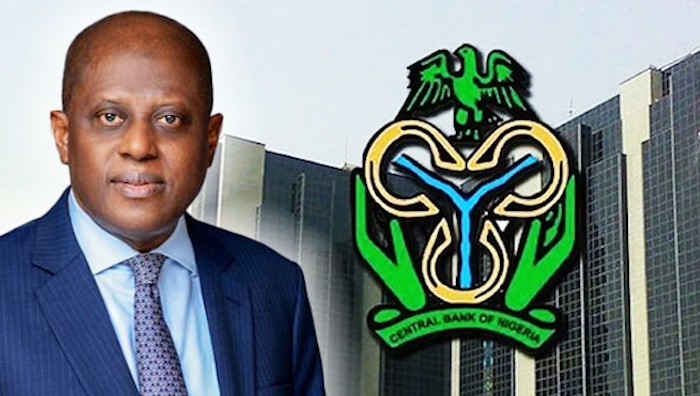
In his most recent public briefing on the exercise, Central Bank of Nigeria (CBN) Governor, Olayemi Cardoso, disclosed that 16 banks had already met the revised capital requirements, while 27 others were actively raising funds. Similarly, the CBN Deputy Governor for Economic Policy, Dr Muhammad Abdullahi, said recently that at least 20 banks have successfully complied.

His remarks followed confirmations from United Bank for Africa (UBA), Fidelity Bank, and First Bank of Nigeria, all of which announced that they had fully met the recapitalisation benchmarks after securing regulatory approval for their latest capital injections.
Nigeria currently has 44 deposit-taking banks, spread across different licence categories.
Sources familiar with the process said the CBN is carefully considering the most practical and least disruptive options for concluding the recapitalisation programme. According to one senior source, the apex bank is expected to unveil final resolution plans for at least three banks currently under regulatory oversight.
One of the banks, described as having deep roots in the South-West and a strong Lagos presence, may be considered for a downgrade from a national to a regional banking licence, the source added.

Industry insiders also revealed that no fewer than seven banks are considering scaling down from national to regional status, citing the concentrated nature of their operations and the growing reach of digital banking, which has reduced the competitive advantage of nationwide physical presence.
Meanwhile, one bank holding an international licence has reportedly indicated plans to temporarily downgrade to a national licence ahead of the deadline, while continuing efforts to strengthen its capital base with the aim of regaining international status later.
The CBN is said to have approved a flexible, two-way licence adjustment framework, allowing banks to either scale up or down their licence category, provided they can present verified proof of meeting the minimum capital requirements.
Under the current framework, banks are grouped into international, national, and regional categories, based on their capital strength.
Investment banking sources disclosed that many lenders are still exploring last-minute opportunities through special private placements, with talks ongoing with high-net-worth individuals and institutional investors. Analysts expect such transactions to peak within the next seven weeks.
However, market watchers noted that stringent capital verification processes and the narrow definition of qualifying capital — largely restricted to equity — have constrained banks’ fundraising capacity.

Despite these challenges, analysts remain optimistic. A senior analyst at a reputable think-tank said the recapitalisation exercise has progressed smoothly, with more than 20 banks already meeting the requirements.
“Significant progress has been recorded so far, and based on current developments, there is little indication of major disruption,” the analyst said, adding that the current exercise is far less turbulent than the 2004–2005 recapitalisation era, which led to widespread mergers, acquisitions, and liquidations.
The recapitalisation programme was formally announced in March 2024, when the CBN issued a circular reviewing the minimum capital requirements for commercial, merchant, and non-interest banks.
Under the revised rules, minimum capital was raised to N500 billion for international commercial banks, N200 billion for national banks, and N50 billion for regional banks. Merchant banks were also set at N50 billion, while non-interest banks now require N20 billion (national) and N10 billion (regional).
Banks were given a 24-month compliance window, which expires on March 31.
Unlike previous frameworks, the CBN now defines capital strictly as paid-up share capital and share premium, rather than total shareholders’ funds.

Although the apex bank has not released an official list of compliant banks, disclosures on the Nigerian Exchange (NGX), audited financial statements, and capital-raising announcements indicate that most tier-one banks, which account for roughly 75 per cent of industry assets, have already met the new thresholds.
These include Access Bank, Zenith Bank, GTBank, UBA, First Bank, and Fidelity Bank, alongside others such as Wema Bank, Jaiz Bank, Ecobank Nigeria, Stanbic IBTC Bank, Citibank, and Standard Chartered Bank.



