

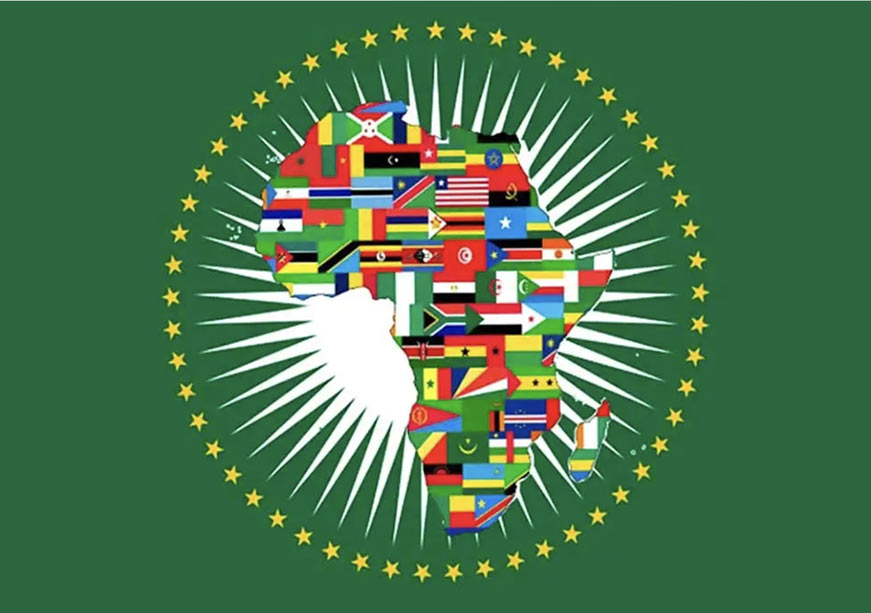
In August 2025, South African political figure Julius Malema revived the long-standing idea of a unified Africa governed by a single president, currency, military and parliament. The Economic Freedom Fighters leader argued that a united continent could emerge as a global power comparable to the United States. Although such an ambition appears unrealistic in the current climate, it is not a new proposition and does not exist outside Africa’s political tradition. Its most realistic prospects, however, lie less in political consolidation and more in economic integration, particularly through the African Continental Free Trade Area.
The push for Pan-African unity can be traced to the era of decolonisation in the 1950s. When Ghana gained independence as the first sub-Saharan African nation to do so, its founding leader, Kwame Nkrumah, insisted that freedom for one country had little meaning unless it was tied to the liberation of the entire continent. Alongside other Pan-African thinkers such as Patrice Lumumba and Frantz Fanon, Nkrumah promoted a vision that went beyond sovereignty to continental cohesion.

This thinking was reinforced in 1958 when leaders and activists from across Africa and the diaspora gathered in Accra for the All-African Peoples’ Conference. Nkrumah used the platform to advocate a shared foreign policy, freer movement of goods and people, harmonised governance frameworks and stronger intra-African trade as alternatives to dependence on former colonial powers.
Despite these ambitions, progress toward unity was limited. The formation of the Organisation of African Unity in 1963 represented a compromise between radical integrationists and more cautious leaders. While the body played a key role in supporting liberation movements in countries such as Angola, Mozambique and Zimbabwe, it struggled to function as a cohesive continental voice, particularly during the Cold War.
Decades later, the idea resurfaced when Libyan leader Muammar Gaddafi championed a borderless Africa during a special summit of African leaders in Sirte in 1999. His advocacy helped lay the groundwork for the African Union, which was established in 2002 to modernise and deepen cooperation across the continent. Yet Gaddafi’s push for a single African government was met with scepticism, and following his death in 2011, momentum toward political unification largely dissipated.

While political union remains distant, economic integration has proven more attainable. Launched in 2019, the African Continental Free Trade Area stands as the continent’s most ambitious integration project to date. It aims to connect a market of about 1.3 billion people and could add roughly 450 billion dollars to Africa’s income by 2035 if fully implemented.
The agreement offers a practical mechanism to reduce Africa’s economic fragmentation by lowering tariffs, aligning regulations and encouraging the free flow of goods and services. In doing so, it directly addresses a long-standing challenge identified by early Pan-Africanists: the tendency of African economies to export raw materials outward rather than trade value-added goods within the continent.

Implementation, however, has lagged behind ambition. By 2025, fewer than all African Union members had ratified the agreement, and full tariff liberalisation is not expected until the mid-2030s. Weak infrastructure, administrative hurdles and political reluctance continue to slow progress.
Advancing beyond economic cooperation will require more than symbolic commitments. African leaders must begin to frame unity as a practical response to shared challenges rather than an abstract political ideal. Coordinated strategies in trade, infrastructure, education and innovation are increasingly essential.
Instead of prioritising frequent diplomatic missions abroad in search of limited aid or symbolic partnerships, greater focus could be placed on building continental institutions and cross-border projects. Transport corridors, shared energy networks, environmentally sustainable industrial zones and regional centres of academic excellence would strengthen integration while keeping ownership of the agenda within Africa.

The African Union itself must also be treated as the primary platform for global engagement. Although a 2020 decision sought to limit the scale of external partnership summits to reinforce collective dignity and reduce costs, this approach has often been ignored. Continued preference for high-profile meetings outside the continent weakens the AU’s standing and undermines the idea of collective agency.
A more balanced approach would involve hosting major international engagements on African soil, allowing the continent to negotiate from a position of unity. As global competition intensifies around resources such as critical minerals and digital infrastructure, Africa’s ability to define its own role becomes increasingly important.
The free trade area has the potential to act as the foundation for deeper integration over time. By encouraging interdependence, it can build trust, strengthen institutions and enhance resilience. These are prerequisites for any future steps toward shared monetary systems or stronger continental authorities.

For this promise to materialise, implementation must accelerate. Investment in digital customs platforms, efficient border management and local manufacturing is essential. Support for youth-led enterprises, innovation hubs and pan-African investment mechanisms would also help spread the benefits more widely.
Crucially, integration must not remain the preserve of policymakers and elites. Ordinary citizens need to experience tangible improvements through employment opportunities, lower prices and better services. Only then can the idea of unity evolve from a leadership aspiration into a popular demand.
Africa possesses vast human and natural resources, including a young population, large markets and strategic minerals. What remains insufficient is a consistent, collective commitment to shared progress. Until leaders place continental interests above individual visibility on the global stage, Africa’s future risks being shaped elsewhere.
Political unification may still be a long-term prospect, but economic integration backed by coordinated leadership and clear priorities is achievable. The central question is no longer whether Africa can unite, but whether its leaders are prepared to drive that process from within.




