

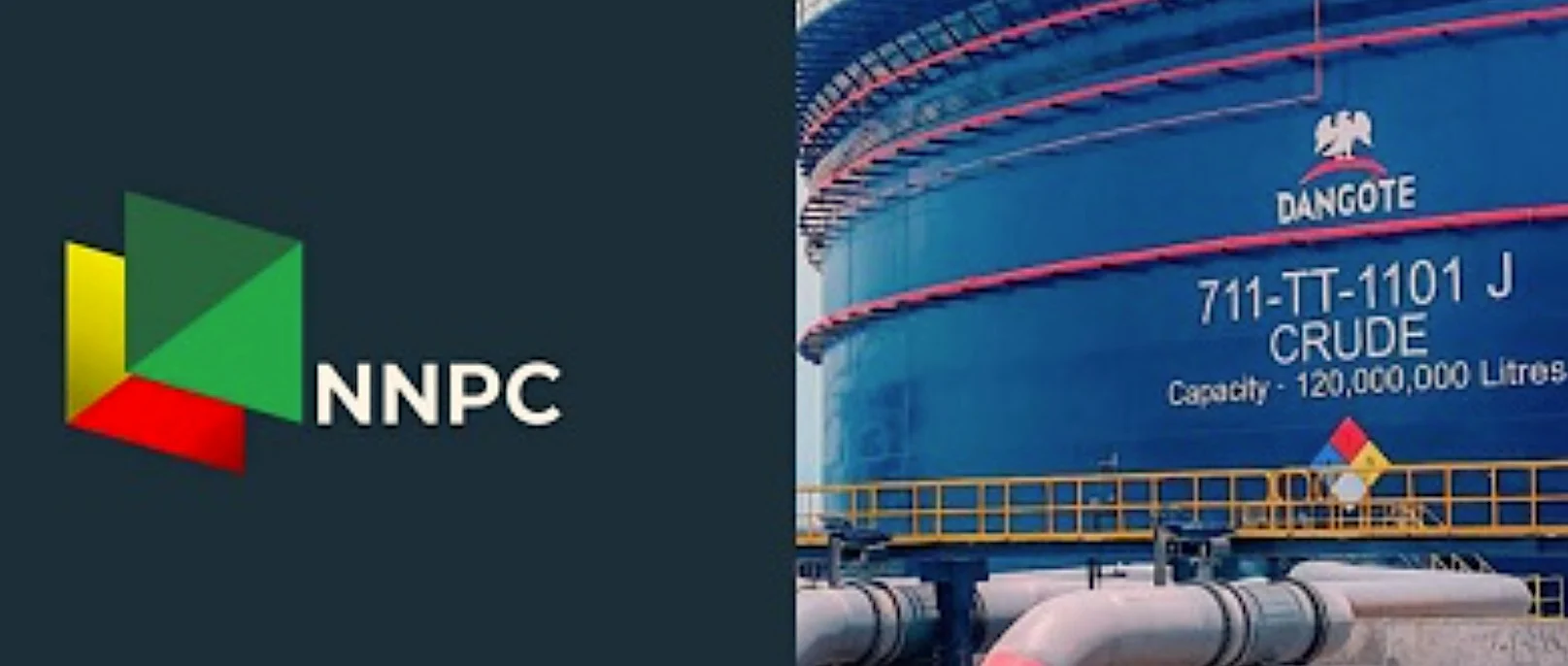
The Federal Government, through the Nigerian National Petroleum Company Limited, has begun exploring alternative ways to secure crude oil supply for the Dangote Petroleum Refinery by working with international third-party traders. The move is aimed at ensuring a steady supply of crude needed to sustain local refining operations.

Despite the effort, industry officials say the measure may not immediately lead to a drop in petrol prices. Nigerians are already dealing with high fuel costs after recent price increases from the $20 billion refinery located in Lekki.

Market operators revealed that the refinery recently paused the loading of Premium Motor Spirit (petrol), fueling speculation that another price increase could occur soon. If implemented, it would mark the third petrol price adjustment within a week. Prices at depots have already climbed from about ₦774 to nearly ₦995 per litre, pushing retail pump prices in several states beyond ₦1,000 per litre. In some locations, petrol is being sold for as high as ₦1,200 per litre, further increasing financial pressure on consumers.

Data from energy analytics firm Kpler shows a sharp rise in crude imports from the United States to Nigeria. In 2025, imports surged to about 41.13 million barrels, a 161 percent increase compared to 15.79 million barrels recorded the previous year.
The growing reliance on imported crude comes amid global supply disruptions linked to tensions between the United States and Iran. The geopolitical situation has affected oil shipping routes, especially around the Strait of Hormuz, a key corridor for global energy transport. As a result, international crude prices have risen above $92 per barrel, raising production costs for refiners.

Industry stakeholders say domestic refining capacity could help moderate fuel prices if crude supply to local refineries improves. However, they warn that continued dependence on imported crude and global market volatility could keep petrol prices elevated.
Analysts also point out that limited petrol import licences granted to marketers have strengthened the refinery’s influence in the market. Experts suggest that maintaining a balance between domestic refining and controlled fuel imports could help stabilise supply and strengthen Nigeria’s energy security.

Even with current challenges, analysts believe the operation of the Dangote refinery has helped prevent even sharper price increases. Without it, some experts estimate petrol prices in Nigeria could have risen to around ₦1,500 per litre.




