

Tuesday’s massacre in Woro community, Kaiama Local Government Area of Kwara State, which left an estimated 176 residents dead, was not a random act of violence but the culmination of a calculated jihadist expansion that Nigeria’s security apparatus failed to contain despite prior intelligence warnings.
Investigations reveal that the bloodshed was orchestrated by Abubakar Saidu, popularly known as Sadiku a terrorist commander whose violent career spans more than a decade across northern Nigeria.

Once a shadowy figure in the insurgency landscape, Sadiku has evolved over 12 years from a handpicked lieutenant of late Boko Haram leader Abubakar Shekau in 2014 to what security analysts now describe as the “Shekau of the North-Central” by 2026.
From Shekau’s Lieutenant to Ruthless Kingpin
Security findings indicate Sadiku was originally deployed by Boko Haram to Niger State as a trusted operative to extend the group’s reach beyond its North-East stronghold. A self-styled counterterrorism analyst on X (@MobilisingNigeria) traced his rise to close ties with Shekau, who personally selected him to represent Boko Haram’s interests in Niger.

He later collaborated with notorious bandit leader Dogo Gide to expand into North-Central territory and worked with the now-dismantled Darul Islam group before its collapse by police.
The alliance with Gide provided Sadiku with weapons, intelligence, and local influence—until ideological differences led to violent clashes and a split.
After the fallout, Sadiku retreated deeper into forests, eventually establishing a base in the Kainji Forest Reserve in July 2025. This shift marked his transition from transactional banditry to a more rigid, ideologically driven terror campaign.

Kainji Forest: Nigeria’s ‘New Sambisa’
The Kainji Forest Reserve, spanning Niger and Kwara states, has become a strategic corridor linking North-East insurgents with North-West bandit remnants. Security experts call it Nigeria’s “new Sambisa”—a vast, inaccessible hideout for recruitment, weapons trafficking, and coordinated attacks on rural communities in Niger, Kwara, Kebbi, and parts of Kaduna.
A Kwara-based security expert, Hassan, confirmed Sadiku’s relocation to the Kainji corridor signaled a dangerous westward push of Boko Haram-style insurgency into the North-Central zone.

“For over a decade, Boko Haram violence was largely confined to Borno, Yobe, and Adamawa. But splinter factions and allied groups are now exploiting forests, weak security presence, and porous borders to push westward,” he said.
Who is Sadiku?
Analyst @MobilisingNigeria described Sadiku as a Boko Haram factional leader who relocated from the North-East to establish new bases in the North-West and North-Central regions.
“Sadiku is equated to Shekau. Military pressure in the North-East forced him to move toward the North-West and North-Central as new bases,” the post read.

West and East Africa security tracker Brandon Phillips directly linked Sadiku’s faction to the Woro massacre, noting it occurred less than 4 kilometres from Nuku—site of Jama’at Nusrat al-Islam wal-Muslimin (JNIM, Al-Qaeda affiliate in the Sahel)’s first claimed attack in Nigeria in October 2025.
Phillips suggested operational overlap between JNIM and Sadiku’s group, possibly an opportunistic alliance or non-aggression pact. He observed that the Woro attack followed patterns seen in recent Papiri incidents in Niger State, indicating Sadiku’s continued southward push into JNIM-dominated Kainji zones.
Another researcher, Raheem Mutiu, noted JNIM fighters spreading across Kaiama, Baruten, Borgu, and surrounding areas near Kainji. These territories were previously controlled by the Mahmuda group, whose influence collapsed after its leader’s arrest in August 2025.

African conflict researcher James Barnett highlighted that Sadiku’s faction exhibited greater brutality than Mahmudawa, which focused on preaching and social issues, with violence mostly reactive to military operations. After Mahmuda’s leader’s arrest, some fighters joined Sadiku, while others fled to Benin Republic, consolidating Boko Haram splinter control around Kainji.
The Warning Letter and Execution
Woro community received a warning three weeks before the attack. Village head Salihu Umar confirmed receiving a Hausa-language letter dated 19 Rajab 1447 (January 8, 2026), signed by JAS (Jama’atu Ahlis Sunna Lidda’adati wal-Jihad), requesting a “secret” meeting with leaders to preach without harm.
Umar photocopied the letter, submitted it to the Kaiama Emirate, and forwarded a digital copy to the Department of State Services office in Kaiama.

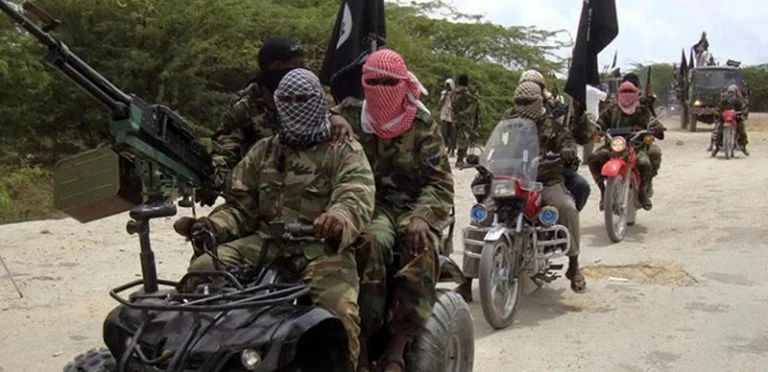
On the day of the attack, gunmen arrived around 5:00 pm on motorcycles, armed with AK-47s and explosives. They surrounded the village, blocked exits, stormed the Emir’s palace around 6:00 pm, dragged out his family, set the building ablaze, and began sporadic shooting across town.
Residents reported a white helicopter briefly hovering overhead without intervention. Between 6:30 pm and 8:00 pm, attackers entered an “execution phase,” rounding up men, binding their hands, and killing them.
A military aircraft reportedly returned around 8:00 pm, forcing the terrorists into bushes. Some residents emerged around 9:00 pm, believing the danger had passed. The attackers then regrouped, using the call to prayer as a ruse to lure people out before resuming killings until about 2:00 am, retreating into the forest with abducted women and children.

Survivors Recount Horror
Survivor ZulQharnain Shero Musa (Special Assistant on Media to Kaiama LGA Chairman) said hundreds of heavily armed terrorists arrived on motorcycles (two per bike), using sophisticated weapons including AK-47s, pump-action guns, and explosives.
“They surrounded the village, moved house to house, dragged residents out and executed them,” Musa recounted.
“They went to the emir’s palace, brought out his wife and children, set the building on fire around 6pm and began shooting sporadically across the town. Motorists on the federal road were also stopped and attacked. It was a coordinated and systematic assault.”
Many fled into bushes and farmlands; some were shot while escaping. A white helicopter briefly appeared but left. A military aircraft later forced temporary withdrawal, but attackers regrouped using the prayer call ruse. Violence continued until 2:00 am.
Musa said over 200 were feared dead, with mass burials ongoing. “Between Wednesday and Thursday alone, about 170 bodies were buried, while many others were still being searched for. Women were abducted and taken deep into the forest.”

About 95% of victims were Muslims; 5% were Christians. Villages are now deserted, farmlands abandoned, and economic activity collapsed. Fresh gunshots were heard as late as 4:30 am Thursday.
Another survivor, Aliyu Abdul Hamid Jogodo (Omo Salka), said attackers kidnapped his friend’s mother and killed his boss’s brother, Dr Muhammad Yusuf (Woro Primary Health Care officer-in-charge).
A trader, Ruqqoyat Solihudeen, said attackers disguised as soldiers—wearing full military gear, including a woman in hijab carrying ammunition.
Why Security Failed – Intelligence Insights
Village head Umar Salihu told ARISE News that distress calls were made immediately, but soldiers arrived around 3:00 am—10 hours later—after attackers had fled.
A senior intelligence officer said that bandits planted explosives on access roads to delay rescue teams. A truck was hit, slowing response.
“The security is overstretched; while we attend to emergencies in some areas, bandits strike elsewhere. We cannot be everywhere,” the officer said.

A police officer in Ilorin confirmed explosives on major roads made access impossible. Woro and Nuku are remote—over an hour from Kaiama, six to eight hours from Ilorin.
Expert Warnings
Security expert Kabiru Adamu warned attacks will persist without structural reforms, accountability, border security, and decisive pursuit of perpetrators.
“I foresee these attacks continuing. We identify vulnerabilities but fail to block them. Rural areas remain poorly secured, borders porous, law enforcement and justice weak. Governors collect security votes but deliver little. No one is held accountable,” Adamu said.
He criticized the lack of queries or sanctions despite 170+ deaths days after the incident.
Government Response
Governor AbdulRazaq constituted a seven-member committee, chaired by former lawmaker Ahmed Kiwozi, to engage communities on rebuilding, survivor needs, and humanitarian support (four-week mandate).
Over 50 survivors are hospitalized in Ilorin. Senator Sadiq Umar visited them Friday, offering support and calling for sustained operations in Kwara North.
The massacre has intensified calls for stronger border security and accountability in Nigeria’s counterterrorism efforts.




