
A deeply emotional message attributed to an ordinary Cuban woman has spread across the world, resonating with readers through its raw depiction of suffering. Written with urgency and pain, it speaks of grandparents dying without access to medication, newborns at risk due to failing energy systems, doctors working without essential tools, and families struggling against hunger.
It is not just a letter. It is a cry.
Yet beyond its emotional force lies a broader and more complex reality—one shaped by over sixty years of sanctions, global politics, and internal economic constraints.

A Sanctions Regime Decades in the Making
The roots of Cuba’s current condition trace back to 1960, following the Cuban Revolution.
By 1962, the United States had imposed a comprehensive economic embargo, restricting trade, financial transactions, and access to American markets.
Over time, this policy hardened.
The Helms-Burton Act of 1996 extended sanctions beyond U.S. borders, penalising foreign companies engaging with Cuba.
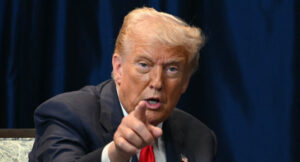
Although a brief thaw occurred between 2014 and 2016 under President Barack Obama, the easing of restrictions was largely reversed under President Donald Trump, who introduced over 200 additional measures targeting Cuba’s energy, financial and remittance systems.
Today, Cuba remains one of the most heavily sanctioned economies in the world.
The Human Reality Behind the Politics
The issues raised in the viral letter reflect conditions that have been documented by international organisations.
Cuba faces recurring shortages of fuel, food, and medical supplies.
The United Nations has estimated that the embargo has cost the Cuban economy over $150 billion in cumulative losses, restricting access to trade and global financial systems.
Healthcare—long a pillar of Cuba’s global reputation—has come under strain. Hospitals have reported shortages of essential supplies, including medications, syringes, and equipment parts.
These constraints are often linked to difficulties in procurement, financial transactions, and supply chain disruptions.
Food security has also deteriorated.
Cuba imports a significant portion of its food, and restrictions on credit and foreign exchange have complicated purchasing. Inflation and domestic currency reforms have further weakened household purchasing power.
The stories described in the viral message—of elderly citizens waiting for medication, mothers fearing for their children, and doctors struggling to provide care—capture a human reality that statistics alone cannot fully convey.
Global Voices and the Question of Justice
Despite the emotional weight of such accounts, Cuba’s situation has not been ignored globally.
At the United Nations, the position is overwhelmingly clear.
In October 2024, the UN General Assembly voted 187 to 2 in favour of ending the U.S. embargo on Cuba, reflecting near-universal opposition to the sanctions regime.
Caribbean leaders have also spoken out.
Barbados Prime Minister Mia Mottley described the embargo plainly as “simply wrong,” urging the world not to normalise the suffering associated with it.

Brazilian President Luiz Inácio Lula da Silva characterised Cuba as “a victim of an illegal economic embargo,” framing the issue as one of international justice and sovereignty.
Mexico’s former President Andrés Manuel López Obrador went further, describing the policy as “inhumane and unjust,” while insisting that lifting the blockade remains the most direct path to relief.
These voices highlight a global consensus: sympathy for Cuba is widespread.
Why Has the World Not Stepped In?
The more difficult question is why this sympathy has not translated into decisive economic rescue.
The answer lies in several hard realities.
First, U.S. sanctions have extraterritorial impact. Companies, banks, and shipping firms across the world often avoid dealing with Cuba due to the risk of penalties, effectively isolating the country beyond American borders.
Second, while many countries support Cuba politically, few are able—or willing—to replace the scale of trade, financing, and investment restricted by the embargo.

Third, Cuba faces internal structural challenges. A centrally controlled economic system, low productivity, limited private sector activity, and inefficiencies in agriculture and industry all constrain growth and resilience.
These internal factors mean that even where assistance is provided, it cannot fully resolve systemic weaknesses.
Fourth, traditional allies face their own limitations. Venezuela’s reduced capacity has weakened a once-critical support system, while other partners such as Mexico and Brazil provide assistance that is meaningful but not transformative.
And yet, support does exist. Humanitarian efforts involving multiple countries have delivered food, medical supplies, and basic infrastructure support.
Mexico has provided fuel shipments, while various international groups continue to offer targeted aid.
But these efforts remain fragmented—insufficient to offset the broader economic pressures facing Cuba.
A Nation of Contradictions
Cuba’s reality is defined by contradiction.
It has achieved notable successes in literacy, healthcare, and scientific research, including the development of multiple COVID-19 vaccines under constrained conditions.
At the same time, it faces persistent shortages, economic stagnation, and limited access to global markets.
Sanctions amplify these challenges. Internal structural issues deepen them.
The Cuban people live at the intersection of both.

Conclusion
The viral letter may not capture every dimension of Cuba’s situation, but it captures something equally important—the human experience of it.
Cuba is not simply a story of sanctions. Nor is it solely a story of internal failure.
It is a story of pressure and resilience, of policy and consequence, of a people navigating hardship shaped by forces both external and internal.
Understanding Cuba requires holding these truths together—without distortion, without dismissal, and without losing sight of the human cost at its core.
The National Patriots acknowledges the emotional force of the Cuban narrative while urging a balanced and fact-based understanding of its realities. Decades of sanctions have undeniably constrained Cuba’s access to global markets, finance, and essential supplies, contributing significantly to economic hardship. However, internal structural inefficiencies and policy limitations also play a defining role in shaping outcomes.
The global consensus, reflected in overwhelming UN votes, shows sympathy for Cuba, yet meaningful intervention remains limited by geopolitical realities. The lesson is clear: sustainable national resilience must combine external fairness with internal reform, ensuring that political strategies do not translate into prolonged human suffering.
Dr. Imran Khazaly
Headlinenews.news Special Investigative Report.