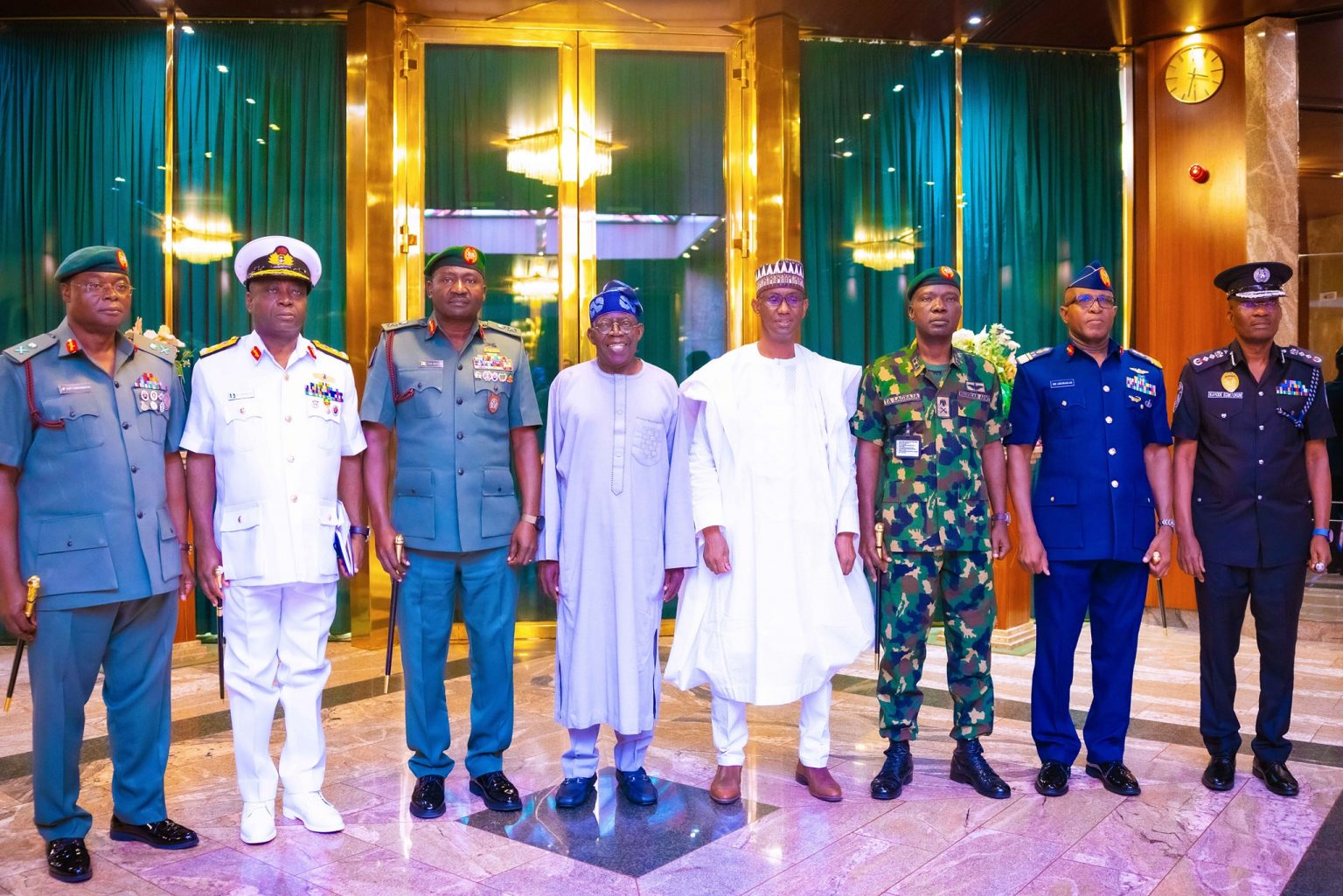
There is growing concern over the lack of coordination among Nigeria’s top security officials at a time when the country faces escalating threats from insurgents and bandits. Instead of projecting a united front, recent statements from key figures suggest conflicting approaches to the fight against terrorism—raising questions about strategy, leadership, and direction.
The Chief of Defence Staff, Olufemi Oluyede, and the National Security Adviser, Nuhu Ribadu, have come under scrutiny for remarks that appear to soften the perception of terrorists. While Oluyede reportedly likened insurgents to the biblical prodigal son, Ribadu described them as “our brothers”—comments that have sparked criticism and confusion.

These statements stand in contrast to the more forceful position attributed to the Chief of Defence Staff, Christopher Musa, who reportedly directed troops to take decisive action against terrorists without hesitation. The contradiction in tone and messaging highlights a deeper issue: a lack of coherence in Nigeria’s counter-terrorism approach.
At a time when clarity and resolve are essential, such mixed signals risk undermining military operations. Soldiers on the frontlines need consistent direction and strong leadership, not ambiguity. Conflicting narratives can weaken morale, create uncertainty in the field, and ultimately affect operational effectiveness.
Beyond the military, these inconsistencies also send troubling signals to the public and international partners. Allies who might otherwise support Nigeria with intelligence and resources could begin to question the country’s strategic focus. For citizens already grappling with insecurity, the lack of a unified message only deepens anxiety.
The reality on the ground underscores the urgency of the situation. Across parts of northern Nigeria, attacks on communities continue, with killings, abductions, and destruction of property becoming disturbingly frequent. Thousands have lost their lives, and many more have been displaced, living in camps under difficult conditions.

In this context, attempts to frame terrorists in sympathetic or reconciliatory terms risk trivialising the scale of violence and the suffering of victims. While rehabilitation programmes may have a place in addressing low-level offenders, critics argue that such approaches must be carefully managed and should not overshadow the need for firm action against those responsible for orchestrating violence.
The broader concern is strategic clarity. Countries that have successfully tackled insurgencies have typically combined strong military action with clear political direction and consistent messaging. Nigeria, by comparison, appears divided in its approach at a critical moment.
Negotiations and peace deals with armed groups in some regions have also yielded limited success, with many agreements breaking down and violence resuming shortly after. This has further reinforced the perception that the absence of a unified national strategy is hindering progress.
Ultimately, the fight against terrorism requires more than just weapons and manpower—it demands coordination, discipline, and a shared understanding of the mission. When those at the top speak in different directions, the consequences are felt across every level of the system.
For Nigeria to make meaningful progress, its security leadership must align on a clear, consistent strategy—one that reassures citizens, strengthens troop morale, and signals unwavering resolve to both allies and adversaries.