

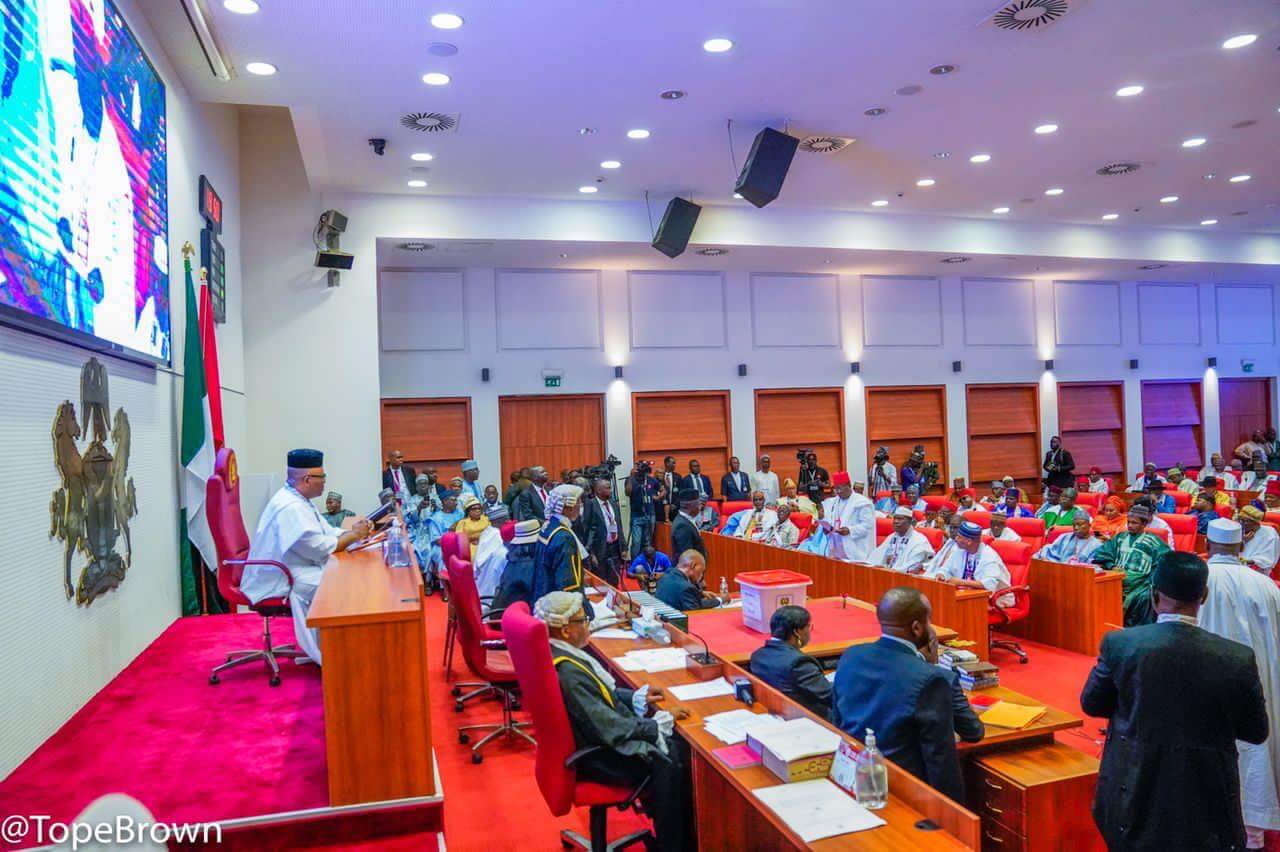
In a bold move to revive the nation’s struggling auto industry and strengthen the naira, the Nigerian Senate has advanced a bill that mandates all government Ministries, Departments, and Agencies (MDAs) to prioritize the purchase of locally manufactured vehicles.
The proposed legislation, titled the “Local Automotive Industry Patronage Bill, 2025,” is sponsored by Senator Patrick Ndubueze (Imo North). First introduced in October 2024, the bill has now passed its second reading in the Senate.


Leading the debate, Senator Ndubueze highlighted Nigeria’s overdependence on imported vehicles as a major factor weakening the local currency and crippling domestic manufacturers.
“No country can thrive economically without backing its own industries. We cannot expect growth while abandoning our homegrown auto brands in favour of foreign ones that offer us no long-term value,” he said.
Ndubueze stressed that out of 54 licensed vehicle manufacturers in Nigeria, only six remain operational, largely due to poor infrastructure, unstable policies, and limited access to foreign exchange. He noted that some Nigerian automotive firms have even relocated to Ghana to serve the Nigerian market from abroad.
“How do we stop the naira from falling if we keep obsessing over foreign goods? If the government, as the country’s biggest buyer, fails to support Nigerian-made cars, who will?” he asked.


The bill proposes that at least 75% of government-purchased vehicles must be fully manufactured in Nigeria, not just assembled. Additionally, qualifying manufacturers must have:
- At least 70% Nigerian workforce
- 75% of R&D spending locally
- Advanced technology like robotic paint systems and electrophoresis
Ndubueze emphasized that supporting local manufacturing should be considered a national security priority, citing countries like China, India, and Malaysia, which once banned foreign auto imports to develop their own industries. Today, those countries export vehicles globally—including to Nigeria.
Backing the proposal, Senate Chief Whip Mohammed Monguno (Borno Central) said the bill would give legal backing to the Federal Executive Council’s earlier policy on patronizing made-in-Nigeria goods and prevent future administrations from discarding it.
Deputy Senate President Barau Jibrin, who presided over the session, said the bill has the potential to boost employment, attract investment, and uplift the Nigerian economy.

“This bill will energize our auto industry, support the naira, and create new opportunities for local engineers and entrepreneurs. We urge the President to sign it into law without delay,” he stated.
The bill has now been referred to the Senate Committee on Public Procurement, which is expected to submit a report within four weeks—moving the legislation one step closer to becoming law.




