

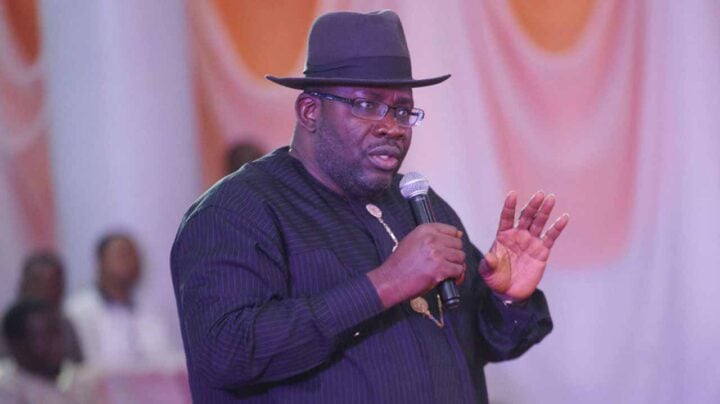
Senator Seriake Dickson, representing Bayelsa West and a member of the Senate Committee on Electoral Matters, has called on Nigerians to actively ensure their votes are transmitted and counted transparently in future elections. In a statement issued on February 11, 2026, the former Bayelsa State governor emphasized the Independent National Electoral Commission’s (INEC) technical capability to handle nationwide electronic transmission of results.

“INEC has told us it can transmit election results nationwide, and we believe them. Nigerians must insist that their votes are transmitted and counted transparently,” Dickson said.

He highlighted that electronic transmission is feasible wherever mobile calls or digital money transfers work, and presiding officers should not have discretion to opt out arbitrarily.
Key Points from Dickson’s Statement
– INEC’s Capacity: The commission has confirmed its ability to upload results electronically on a national scale, building on the existing INEC Result Viewing Portal (IReV) for public access.
– Reducing Manipulation Risks: While Nigeria does not use full electronic voting, immediate transmission from polling units to IReV would minimize alterations at collation centers (ward and local government levels), where past manipulations have often occurred.

– Recent Electoral Act Amendment: The National Assembly’s passage of amendments to the Electoral Act is a positive step, mandating electronic transmission of polling unit results. However, it includes a proviso allowing manual processes (using Form EC8A) in rare cases of network or communication failure.
– INEC Guidelines: Beyond the law, INEC is expected to issue directives requiring presiding officers to sign results, provide copies to agents, and transmit them electronically to IReV after voting concludes.

– Citizen Role: Dickson urged Nigerians to sensitize others, mobilize voters, turn out at polling stations, and support credible candidates committed to protecting democratic rights. Vigilance and participation are essential to strengthening Nigeria’s democracy.
Dickson acknowledged the compromise in the Senate’s decision, which rejected mandatory “real-time” uploads but preserved electronic transmission as the primary method with a network-failure backup. He described this as incremental progress rather than a setback, though he has previously expressed reservations about the caveat weakening safeguards against fraud.

His comments follow intense debates and public backlash over the Electoral Act (Amendment) Bill 2026, where the Senate initially leaned toward discretionary transmission but revised Clause 60(3) to mandate electronic uploads while retaining Form EC8A as a fallback for technical issues. This aims to balance technological advancement with practical challenges in areas with poor connectivity, ahead of the 2027 general elections.
Dickson stressed that active citizen oversight demanding transparency and real-time monitoring where possible remains crucial to preventing electoral assaults at collation stages and building trust in the process.




