The Nigeria Police Force derives its authority from the Constitution of the Federal Republic of Nigeria and the Police Act 2020, both of which mandate the institution to prevent crime, protect lives and property, and maintain public order.
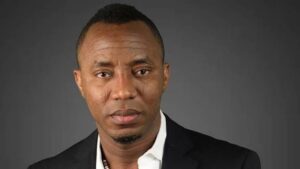
That mandate came under fresh scrutiny following the disruption on the Third Mainland Bridge allegedly led by Omoyele Sowore.
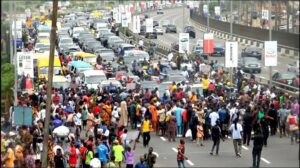
According to police sources, intelligence indicated plans to escalate the protest into a prolonged blockade of the main artery linking Lagos Mainland to Victoria Island and Ikoyi—Nigeria’s commercial nerve centres.
The bridge handles hundreds of thousands of vehicle movements daily.
Any sustained obstruction, security analysts say, translates directly into economic paralysis.
Legal Framework.
Section 4 of the Police Act 2020 empowers the police to prevent and detect crimes and maintain public safety.
Section 24 further provides authority to issue invitations for questioning in the course of investigations.
Where an individual repeatedly refuses lawful invitations, the police may lawfully declare such a person wanted as part of investigative procedure.
The Constitution guarantees freedom of expression and assembly under Section 39 and 40.
However, Section 45 provides that those rights may be restricted in the interest of public safety, public order, and the protection of the rights and freedoms of others.
In practical terms, protest is lawful; obstruction of critical infrastructure is unlawful.
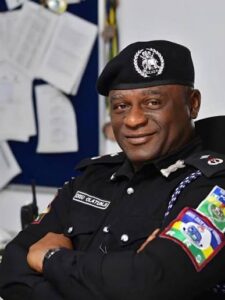
A retired Justice of the Court of Appeal, Justice Ahmed Babalola (rtd), told Headlinenews.news that “no constitutional right is absolute.
When an action obstructs emergency services, commerce, and the movement of innocent citizens, the state has both the authority and obligation to intervene.” He added that declaring a suspect wanted after repeated refusal to honour invitations is a recognised policing tool to prevent escalation.
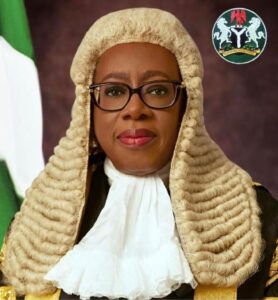

Economic and Human Cost.
Traffic experts estimate that a single hour of total gridlock in Lagos can cost millions of naira in lost productivity.
During the disruption, commuters reported severe delays.
A consultant physician at a Lagos teaching hospital, Dr. Tunde Alabi, confirmed that “delays in emergency transport can be fatal,” noting that one reported case involved a critically ill patient whose ambulance was trapped in the blockade.

Professor Amina Yusuf, a political sociologist, described blocking the bridge as “a disproportionate tactic that punishes ordinary citizens rather than policymakers.”
While a senior lecturer in law at the University of Lagos, Dr. Ifeanyi Okonkwo, stated that “while protest is protected, blocking a federal highway without coordination breaches public order statutes and exposes organisers to liability.”

Former Senator Ibrahim Danjuma argued that “activism must not slide into economic sabotage,” while retired High Court Judge Justice Babalola reiterated that the police acted within the law to forestall broader unrest.
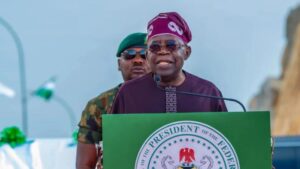

Globally, major democracies regulate protests around critical infrastructure.
In the United Kingdom, obstruction of highways can attract criminal sanction under public order legislation.
In parts of the United States, blocking interstate highways without permit has led to arrests.
The principle is consistent: the right to protest does not extend to crippling essential public corridors.
Police sources confirmed that invitations were issued to Sowore to clarify intelligence reports suggesting further mobilisation.
His refusal to appear, they argue, left the Force with limited options but to declare him wanted in order to prevent deterioration of peace.

Balance of Rights.
The core question remains: do protesters have the right to obstruct access for school children, traders, workers, and emergency responders?
Legal experts are unanimous that they do not. The right to protest exists within the framework of responsibility and public order.
Lagos State authorities also maintain that affected residents in Oworonshoki had previously received compensation linked to infrastructure development, raising questions about the necessity and proportionality of the blockade.
In constitutional democracies, activism thrives when balanced with civic responsibility. The police, by inviting and subsequently declaring a suspect wanted after non-compliance, acted within the statutory powers granted to them. The preservation of life, economic stability, and public order remains a constitutional obligation.
The law is neither selective nor symbolic. It functions when enforced—firmly, proportionately, and within its defined limits.
The National Patriots holds that the Federal High Court erred in awarding ₦30 million in damages to Omoyele Sowore over his declaration as wanted. The court’s reasoning, in our view, failed to sufficiently weigh the statutory powers granted to the Police under the Constitution and the Police Act to invite, investigate, and, where necessary, declare a suspect wanted after repeated refusal to honour lawful summons. Such a ruling risks setting a dangerous precedent that weakens law enforcement and emboldens disruptive conduct.
In the national interest, the National Judicial Council should review the judgment while the appeal proceeds to safeguard institutional balance and public order.
Dr. G. Fraser. MFR
Headlinenews.news Special Investigative Report.

It is evident from this video that the blockade of the Third Mainland Bridge went beyond peaceful protest and crossed into unlawful obstruction of a critical public artery.
The footage shows CP Olohundare Jimoh calmly appealing to protesters, reminding them that while they are free to express grievances, they cannot prevent innocent citizens from going about their lawful daily activities.
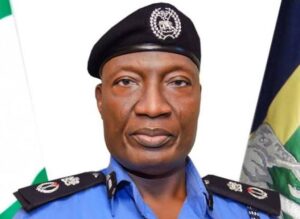
Sections 39 and 40 of the Constitution protect assembly, but Section 45 permits restrictions in the interest of public safety and order.
Blocking emergency access and commercial traffic is unacceptable and punishable under law.
The trial court, in our respectful view, erred.
The appellate court must restore balance between institutional responsibility and constitutional rights.
The National Patriots.
Headlinenews.news Special Report.
This footage underscores why the Police acted within their lawful mandate. Obstructing critical infrastructure such as the Third Mainland Bridge constitutes an offence under Section 6 of the Lagos State Public Order Law and Section 45 of the Constitution permits restriction of assembly in the interest of public safety.
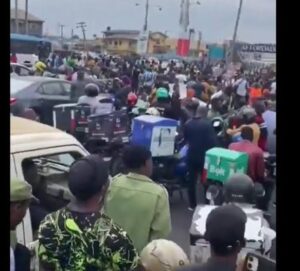
Declaring a suspect wanted after repeated refusal to honour lawful police invitations is recognised under the Police Act 2020 investigative powers. The trial court erred. CP Olohundare Jimoh deserves commendation for professionally restoring order without escalation.
Headlinenews.news Special Report
For full report,updates, details, photos, visit: www.headlinenews.news.