

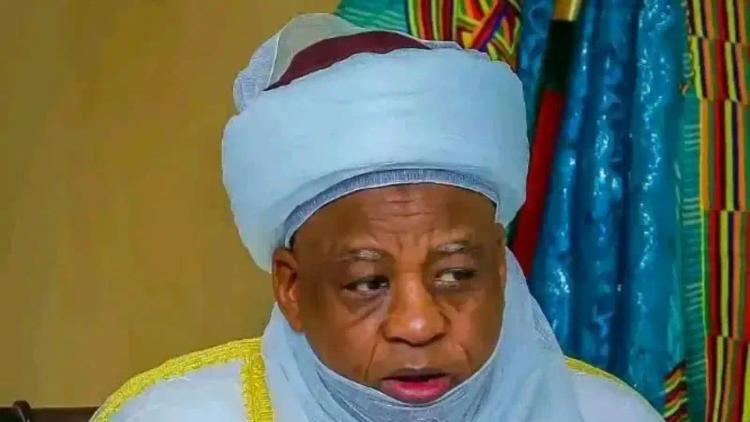
The Nigerian Supreme Council for Islamic Affairs (NSCIA) has announced that Muslims across the country should begin searching for the crescent moon marking the start of Ramadan 1447 A.H. on the evening of Tuesday, February 17, 2026.

The declaration was made by the Sultan of Sokoto and President-General of the NSCIA, Alhaji Muhammad Sa’ad Abubakar, in a press statement signed by the Secretary-General, Prof. Is-haq Oloyede, and released on Sunday, February 15, 2026.
According to the Sultan, if the moon is sighted on Tuesday evening, Ramadan fasting will commence on Wednesday, February 18, 2026. Should the crescent not be visible, fasting will begin on Thursday, February 19, 2026.

He noted that the National Moon Sighting Committee (NMSC), working in collaboration with the National Space Research and Development Agency (NASRDA), has made adequate arrangements for official moon-sighting observations.

The NSCIA also expressed concern over the Independent National Electoral Commission (INEC) scheduling elections during the month of Ramadan. The council described the move as “not unexpected” and warned that it would closely monitor the situation.
“We are watching very closely and expecting an immediate review,” the statement added.

The Sultan urged Muslims to approach the holy month with steadfast faith, reflection, repentance, and prayer for relief and guidance, quoting the Qur’an: “Inna ma’al ‘usri yusra” (“Verily, with hardship comes ease”).
He reminded the faithful that Allah intends ease, not hardship, during Ramadan, so they may complete the prescribed period of fasting and magnify Allah for His guidance, expressing gratitude (Qur’an, Al-Baqarah 2:185).

Ramadan is the ninth month of the Islamic lunar calendar and is observed by Muslims worldwide as a month of fasting, prayer, reflection, and community. It commemorates the first revelation of the Qur’an to Prophet Muhammad (peace be upon him) over 1,400 years ago.

During Ramadan, adult Muslims who are physically able abstain from food, drink, smoking, and marital relations from dawn (Fajr) until sunset (Maghrib), seeking spiritual purification, self-discipline, and greater consciousness of God (taqwa).
Fasting is one of the Five Pillars of Islam, alongside the declaration of faith (Shahada), daily prayers (Salat), almsgiving (Zakat), and the pilgrimage to Mecca (Hajj) for those who are able.




