

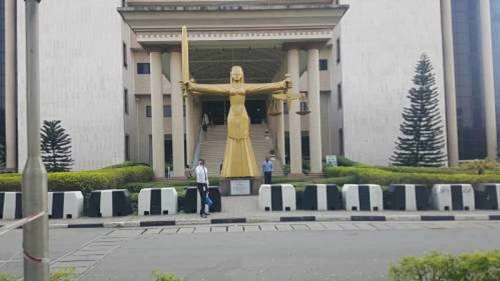
A Federal Capital Territory High Court in Abuja has ordered the Federal Government to proceed with the implementation of the new tax regime, dismissing a suit seeking to halt its commencement.
The court struck out an application filed by the Incorporated Trustees of African Initiative for Abuse Public Trustees, which sought an interim injunction restraining the Federal Government, the Federal Inland Revenue Service and the National Assembly from implementing the newly gazetted tax laws. The group had cited alleged discrepancies and unlawful insertions in the tax legislation.

In its ruling, the court held that the application lacked merit and failed to establish sufficient legal grounds to justify stopping the implementation of the laws. It ruled that the applicant did not show how the commencement of the tax regime would cause irreparable harm or violate constitutional provisions.

The court further stated that fiscal policy and economic reforms fall within the lawful authority of the government and that once a law has been validly enacted and gazetted, perceived errors can only be addressed through legislative amendment or a substantive court order. It added that controversies alone do not justify suspending the implementation of an existing law.

Consequently, the court affirmed that there was no legal barrier to the commencement of the new tax regime and directed that implementation should proceed as scheduled.
Meanwhile, human rights lawyer Femi Falana, SAN, argued that the new tax laws should not take effect until concerns over alleged alterations and legitimacy are resolved. He said the government should have made available clean and authentic copies of the laws before implementation, warning that unresolved discrepancies could trigger legal challenges.

Falana also criticised what he described as discriminatory provisions in the tax regime, particularly exemptions granted to certain companies, and warned that such policies could be challenged in court. He stressed that progressive taxation requires the wealthy to bear a greater burden, not the poor, and insisted that transparency and accountability are essential for public trust.
A group of former federal lawmakers also raised concerns over the alleged alteration of the harmonised tax bills passed by the National Assembly. The group warned that the controversy could lead to litigation and described the planned implementation as questionable unless authentic copies of the laws are publicly produced. They challenged current lawmakers to present verified versions of the harmonised Acts transmitted for presidential assent.

The former lawmakers argued that taxation without transparency and legitimacy amounts to economic injustice, especially amid rising inflation, unemployment and economic hardship.
Other stakeholders, including civil society groups and political figures, urged caution, warning that implementing disputed tax laws could undermine public trust and worsen economic hardship. They called for the publication of the exact versions of the laws signed by the President to allow for public scrutiny and verification.
However, the Senate leadership defended the tax reforms, insisting that the legislation was designed to strengthen the country’s fiscal base, eliminate multiple taxation and improve living standards. The Senate leader maintained that the laws were passed after extensive consultations and were not intended to impose hardship on Nigerians, urging the public to avoid misinformation and study the provisions of the reforms carefully.




