By Dr. Mohammed Musa Zango, FPSN
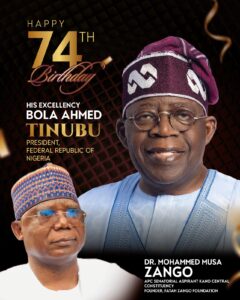
At 74, President Bola Ahmed Tinubu is navigating one of the most complex transitions in Nigeria’s history. His leadership must be assessed not through emotional responses or regional biases, but through facts, constitutional responsibility, and a clear understanding of Nigeria’s federal structure.
Across Northern Nigeria, the reality remains undeniably tough. Rising food prices, increasing transport fares, and growing pressure on small businesses are part of daily struggles. Many families are adjusting to a reduced standard of living, while insecurity continues to disrupt farming communities and rural economies. These challenges are not abstract; they are real, everyday experiences, directly affecting the lives of countless Nigerians.

However, any honest evaluation must begin by acknowledging the hardship, while recognizing the structure of responsibility. Nigeria operates under a federal system, where the President sets the national direction but is not the chief executive of states like Kano, Kaduna, Katsina, Sokoto, Kebbi, Jigawa, or Zamfara. Governors hold the mandate at the state level. This distinction is crucial. When federal funds are allocated and the expected relief is not felt at the grassroots, accountability must be shared across all levels of government—federal, state, and local.
President Tinubu inherited an economy burdened by long-standing distortions: unsustainable fuel subsidies, multiple exchange rates, weak infrastructure, and a culture of avoiding tough decisions. The easier path would have been to maintain the fragile status quo, but he chose to act decisively.
The removal of fuel subsidies and the unification of exchange rates, though initially painful, have created fiscal space. This has allowed for increased allocations to states and renewed funding capacity across the federation. Between March 2024 and August 2025, over ₦2.45 trillion was released to states and the Federal Capital Territory for infrastructure and security support.

This is an essential point for Northern Nigeria to grasp: federal funding must translate into visible improvements in daily life. Projects like better roads, improved local security support, agricultural inputs for farmers, and other social interventions are crucial to alleviating hardship. If these are not being realized, the issue should not rest solely with the federal government. State governments must be held accountable for ensuring that these funds reach the people and are used effectively.
Reforms alone, however, are not enough. Timely implementation and direct benefits for ordinary citizens are paramount. Delays in project execution, uneven regional impacts, and communication gaps have contributed to public frustration. These areas require immediate attention to restore public trust.
Northern Nigeria remains a primary focus for the administration’s infrastructure projects. The Kaduna–Kano standard gauge rail line, the Kano–Katsina–Maradi corridor, and the Abuja–Kaduna–Zaria–Kano highway reconstruction are substantial undertakings aimed at improving mobility, trade, and regional integration. These projects are critical for Northern Nigeria’s development, but their benefits must be evident to local communities, such as reducing transportation costs and enhancing trade.
In agriculture, the $158.15 million Value Chain Programme, covering states like Kano, Katsina, Jigawa, Sokoto, and Zamfara, is designed to boost productivity and rural incomes. This program is vital for a region where agriculture is central to livelihoods. Proper execution of this program can help improve the livelihoods of farmers and reduce economic hardship.

The federal government is also working to address insecurity and displacement with initiatives like the Resettlement Scheme for Conflict-Affected Persons. While these efforts have not yet fully matched the scale of the challenges, they represent critical steps toward restoring stability to affected communities. Expanding these programs and ensuring their timely execution will be key to long-term recovery.
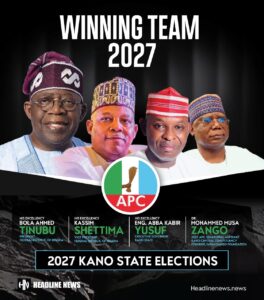
On the political front, President Tinubu has presented himself as a leader for all Nigerians, not just one section of the country. His decision to run with a Muslim-Muslim ticket, despite initial controversy, signaled a commitment to prioritize competence over identity politics. His selection of Vice President Kashim Shettima from the Northeast further reinforced this national balance. However, concerns raised regarding inclusivity should not be dismissed. These concerns reflect deeper expectations about fair representation and require thoughtful engagement.
For Northern Nigeria, the key question is how to approach this moment. It is insufficient to judge leadership solely by the hardships of the present. Equally, it is not enough to defend policies without considering their real-life effects. What is needed now is balance: an acknowledgment of the difficult decisions being made, combined with clear communication on how the benefits will reach those most affected by these policies.

Where policies are necessary but painful, they must be explained clearly and supported by visible relief measures. Resources provided by the federal government must be used effectively and transparently at the state level. If gaps exist, they should be addressed without defensiveness.
President Tinubu’s approach demonstrates a willingness to take on the challenges that previous administrations avoided. That willingness is commendable. However, the true success of these decisions will be measured not by their intentions but by their tangible outcomes, such as how quickly they ease hardship, restore stability, and create opportunities for ordinary Nigerians.
At 74, President Tinubu carries both the weight of national expectations and the responsibility of delivering results in a time of transition. Leadership at this level requires resilience, but it also demands responsiveness to the needs of the people. For the North, this is a time for fair and thoughtful judgment—one that neither ignores current hardships nor overlooks the systemic factors that shape solutions.
Nigeria is undergoing a period of transition. Such periods are never easy, but they are often necessary to shape the future of nations. What matters now is not just policy direction, but the effective execution of those policies, accountability at all levels of government, and a shared commitment to improving the lives of Nigerians.
The success of these reforms will ultimately be judged not by intention, but by their real-world impact, which is felt in the everyday lives of the people.
May Almighty God grant President Bola Ahmed Tinubu wisdom, strength, and good health. And may Nigeria find a path toward unity, stability, and lasting progress, through leadership that is not only bold but also responsive to the needs of its people.
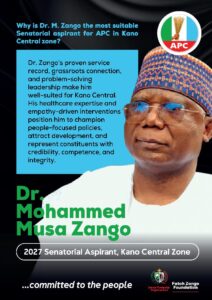
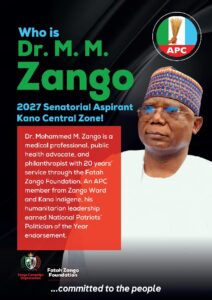
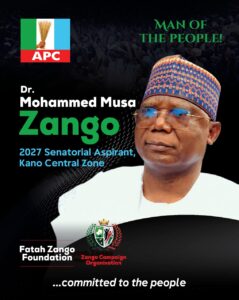
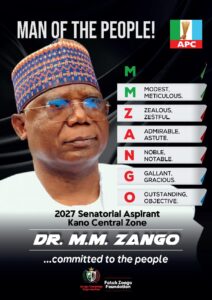
Dr. Mohammed Musa Zango, FPSN
APC Senatorial Aspirant, Kano Central
Founder, Fatah Zango Foundation
Recipient, National Patriots Distinguished Service Award for Humanitarian Excellence