

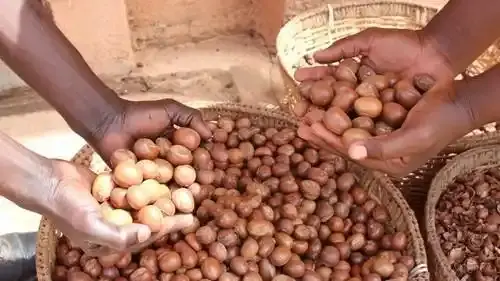
President Bola Ahmed Tinubu has approved a one-year extension of the ban on exporting raw shea nuts, effective from February 26, 2026, to February 25, 2027.
The decision, announced in a State House press release, aims to boost domestic processing, increase value addition, and strengthen Nigeria’s industrial capacity within the agricultural sector.

Bayo Onanuga, the President’s Special Adviser on Information and Strategy, said the move aligns with the government’s industrialisation goals under the Renewed Hope Agenda. “This decision reflects the administration’s commitment to industrial development, local value addition, and economic growth,” the statement said.

The policy requires surplus raw shea nuts to be exported exclusively through the Nigerian Commodity Exchange (NCX) framework, with all previous waivers permitting direct exports withdrawn. The Federal Ministry of Industry, Trade and Investment, alongside the Presidential Food Security Coordination Unit, will coordinate the implementation of a unified national framework to ensure consistency across the shea nut value chain.

Shea nuts, widely found in Nigeria’s savanna belt, are the primary source for shea butter, a high-value product used in cosmetics, pharmaceuticals, and edible oils. The government noted that processed shea butter fetches 10 to 20 times the price of raw nuts in international markets.

The Federal Government first imposed a six-month ban on raw shea nut exports on August 26, 2025, to encourage local processing and reduce the export of unprocessed commodities.




