President Bola Tinubu has reaffirmed his commitment to keeping Nigeria on the path of economic stability and infrastructure growth, pointing to strong investor confidence as a positive sign for the country’s future.
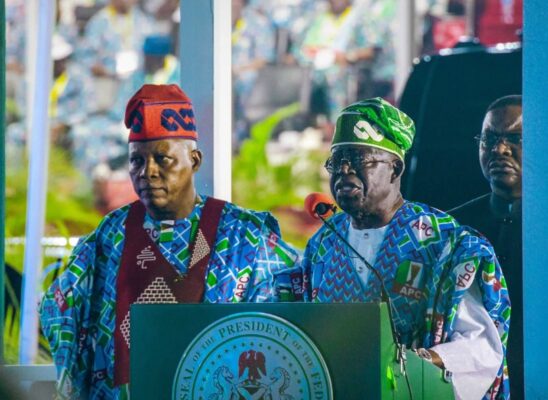
Speaking at the APC’s 4th Elective National Convention in Abuja, the President highlighted the oversubscription of Nigeria’s Eurobond by 400 per cent and the planned 1,600MW Grid Asset Management Company (GAMCO) as key indicators of progress. He assured Nigerians and the business community that recent economic reforms, including subsidy removal and exchange rate adjustments, are necessary steps toward long-term prosperity.

Tinubu described the convention as a defining moment for both the party and Nigeria’s democracy, urging newly elected leaders to prioritise unity, fairness, and integrity in their leadership.
“As a party, this convention gives us the opportunity to strengthen our resolve and recommit to the ideals that brought us together,” he said, recalling the formation of the APC in 2013 as a movement driven by national interest.
He emphasised that leadership must be guided by vision, discipline, and accountability, while expressing appreciation to party members, especially women and youths, for their contributions over the years.
The President also called for improved party organisation, urging leaders to maintain a reliable and transparent membership database to sustain the party’s growing influence.
While acknowledging the expansion of the APC, with more politicians joining from opposition parties, Tinubu warned against internal divisions, stressing that personal ambition must not override collective goals.

He clarified that his administration does not support a one-party system, noting that a strong opposition is essential for a healthy democracy.
On electoral matters, Tinubu defended the Electoral Act 2026, stating that it followed due legislative process and was designed to strengthen Nigeria’s democratic framework.
Addressing the economy, the President admitted that ongoing reforms may be challenging but insisted they are necessary to build a stronger foundation. He noted improvements in key indicators, including GDP growth, a trade surplus, declining inflation, and rising business confidence.
He also highlighted ongoing infrastructure development across ports, airports, and road networks, alongside tax and fiscal reforms aimed at shielding the economy from global shocks.
Tinubu concluded by reiterating his administration’s focus on building a stable, secure, and prosperous Nigeria, while maintaining respect for the rule of law and democratic principles.