


By Headlinenews.news Governance Strategy & Global Affairs Desk
Calls for a more assertive global projection of Nigeria’s image have gained renewed policy traction following remarks by Ademola Oshodi, Senior Special Assistant to President Bola Ahmed Tinubu on Foreign Affairs, who warned that weak narrative management could evolve into a national security vulnerability if left unaddressed.
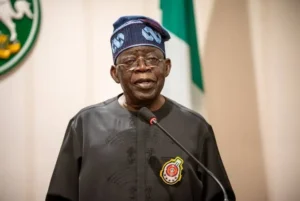
Speaking during an interview on Channels Television’s The Morning Brief, Oshodi stressed that Nigeria must proactively shape its international narrative rather than allow external or partisan actors define it.
“I don’t think the government is doing enough to ensure we get our information and narrative out there,” he said.
His remarks followed debates surrounding reports that the administration engaged Washington lobbyists to strengthen diplomatic messaging and policy communication within the United States policy ecosystem.
Narrative as a National Security Variable
Oshodi framed perception not merely as a communications concern but as a strategic security consideration.
“If it is not done right, it could be a huge national security threat,” he warned, citing risks posed by misinformation and social media distortions.
He cautioned against reductionist portrayals of insecurity capable of inflaming sectarian tensions internationally:
“We don’t want a misconception that it is a massive killing of Christians, with attention focused only on Christians.”
He further emphasised contextual framing:
“We don’t want a situation where people feel banditry is political rather than economic… We also don’t want a situation where West Africans see what is happening in Nigeria as an opportunity to create chaos from our borders.”
These concerns reflect fears that mischaracterised conflict narratives could distort diplomatic perception and attract geopolitical misinterpretation.
Foreign Lobbying and Structural Limits
While engaging U.S.-based lobbyists may amplify Nigeria’s voice within Washington policy circuits, governance strategists caution that foreign advocacy alone cannot recalibrate national perception sustainably.
Presidential aide Ademola Oshodi was in fact responding to a direct question regarding reports that approximately $9 million had been committed to foreign lobbying engagements — a development that has generated debate both within Nigeria and across diaspora policy circles.

In addressing the issue, Oshodi emphasised that the broader objective of such engagements was to ensure Nigeria’s narrative is properly projected internationally, particularly within influential diplomatic and legislative ecosystems.
However, policy observers maintain that while foreign lobbyists can facilitate access, amplify messaging, and support diplomatic positioning, image repositioning requires deeper contextual interpretation of reform data, governance indicators, anti-corruption outcomes, and security realities — functions best anchored within domestic strategic communication expertise.
Without indigenous narrative architecture, foreign lobbying risks episodic advocacy rather than institutional perception management.

Institutional Gap: Media Management vs Perception Architecture
Policy analysts increasingly argue that while the Presidency maintains a sizeable media apparatus — comprising spokespersons, press secretaries, and communication aides — media management alone cannot substitute for strategic perception engineering.
News reporting, press briefings, and publicity engagements represent only one layer of national image projection.
Perception management operates at a more complex intersection of geopolitics, investor psychology, diaspora diplomacy, digital narrative warfare, and reform storytelling. It shapes interpretation, credibility, and international reception — not merely information flow.
This distinction is critical.
Without specialised expertise, communication systems risk remaining reactive — driven by news cycles rather than long-range narrative positioning.
Governance communication in many developing democracies has historically evolved from journalism traditions. While media professionals remain indispensable, perception architecture requires multidisciplinary competencies — policy analytics, crisis communication, behavioural messaging, global branding, and diplomacy alignment.

Need for an Independent Perception Management Consultant.
For this reason, governance strategists recommend the immediate engagement of a seasoned perception-management consultant to design and institutionalise a Presidential Strategic Communications Framework.
Such an expert would:
• Develop national perception risk indices
• Build proactive narrative response systems
• Align reform data with global storytelling
• Coordinate diaspora engagement messaging
• Establish misinformation monitoring desks
• Train government communicators in perception analytics.
Importantly, this framework must function as a distinct strategic unit — separate from routine media operations, though working in coordination.

Media units manage information flow.
Perception units manage narrative meaning.
Both are essential — but not interchangeable.
Urgency of Institutional Recalibration.
Nigeria’s reform cycle is advancing faster than its communication evolution.
In politically polarised environments shaped by digital propaganda ecosystems, diaspora advocacy blocs, and reform-disrupted patronage interests, perception vacuums are rapidly exploited.
Thus, calls for global image promotion — including foreign lobbying engagements — will achieve optimal results only when anchored in a professionalised domestic perception-management architecture.
Without this recalibration, communication efforts risk fragmentation, reactive defensiveness, and diminished narrative credibility.

Strategic perception management is therefore governance infrastructure — not cosmetic public relations.
Comparative Global Models.
Global precedents reinforce this necessity.
The United Arab Emirates institutionalised international branding to reposition itself as a global investment hub.
Rwanda deployed governance storytelling to rebuild post-conflict credibility.
Saudi Arabia’s Vision 2030 leveraged media diplomacy for economic repositioning, while India utilised diaspora engagement to project technological ascendancy.
Each case demonstrates that perception engineering is institutional — not incidental.
Soft Power Optics and Spousal Diplomacy Significance
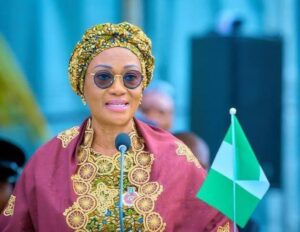
Oshodi also referenced the international engagements of Oluremi Tinubu, whose interviews with American media platforms helped clarify Nigeria’s reform trajectory.
The international recognition accorded to the First Lady, Senator Oluremi Tinubu, carries layered diplomatic symbolism beyond personal commendation.
When global leaders publicly acknowledge the character, credibility, and stature of a presidential spouse, such recognition often extends — implicitly — to the leadership values of the presidency itself.

In diplomatic psychology, state spouses function as soft-power extensions of executive identity.
Their engagements, comportment, and reception within foreign policy circles shape perception of national leadership ethos.
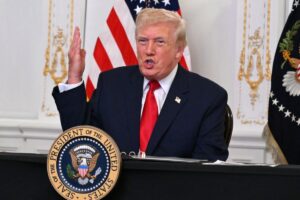
Thus, commendation from U.S. President Donald Trump describing the First Lady as a “respected woman” reinforces broader reputational goodwill toward President Bola Ahmed Tinubu by extension.
The principle is intuitive: birds of the same feather flock together — leadership partners complement one another in values, disposition, and public trust signalling.
Her recognition therefore contributes positively to Nigeria’s international perception architecture, projecting integrity, refinement, and statesmanship within global diplomatic optics.

Conclusion.
The call for global promotion of Nigeria’s image reflects growing institutional awareness that reform success must be matched by perception success.
In a politically contested information ecosystem amplified by digital propaganda and diaspora activism, narrative management is no longer optional.
It is governance infrastructure.
As Nigeria advances structural transformation, managing its global story may prove as consequential as managing its economy itself.
The National Patriots Movement reiterates that Nigeria urgently requires a professional perception-management consultant to institutionalise a Strategic Communications Framework distinct from routine media operations. Media reportage alone cannot counter coordinated misinformation, diaspora propaganda, and politically motivated narrative distortions.
A specialised architecture is vital to project reforms accurately, safeguard national reputation, and strengthen Nigeria’s global perception amid ongoing structural transformation.

Dr. G. Fraser. MFR.
CEO,
Fraser Consulting Consortium.
The National Patriots.




