

Guinea’s presidential inauguration on January 17, 2026, signalled a return to constitutional governance after the September 2021 military coup that disrupted the country’s democratic system. However, the ceremony was not just a domestic milestone—it tested the capacity of the Economic Community of West African States (ECOWAS), under Nigeria’s leadership and President Bola Tinubu’s guidance, to uphold regional democratic standards, and whether Nigeria could convert its diplomatic influence into principled regional leadership.

The presidential election on December 28, 2025, Guinea’s first since the 2021 coup, carried significance far beyond national politics. It has become a regional measure of how post-coup transitions are managed, particularly in a context where elections increasingly serve as instruments of political closure rather than vehicles for democratic renewal. ECOWAS’ response, and Nigeria’s role within it, will have implications that extend beyond Conakry, reflecting on the bloc’s credibility in promoting democracy amid growing constitutional crises in the region.
Guinea’s transition embodies the tension between stabilising post-coup states and preventing the normalisation of power seized through unconstitutional means. Nigeria’s central position in ECOWAS places it at the heart of this balancing act. Since the ouster of President Alpha Condé, Abuja has been crucial in mediating between pressure and dialogue, recognising that instability in one member state can spill over into security, trade, and institutional challenges across the region—burdens Nigeria often bears disproportionately.

While the December 2025 election marked a procedural step forward, it did not fully settle Guinea’s democratic trajectory. Coup leader Mamady Doumbouya was declared the winner with 86.72 per cent of votes on an officially reported turnout of 80.95 per cent. Voting itself was largely peaceful, but structural restrictions—such as the dissolution of several political parties, limitations on opposition activity, and the sidelining or exile of prominent political figures—shaped the environment. These conditions influence whether elections serve as genuine competitive mechanisms or simply consolidate post-coup power.
Nigeria’s diplomacy has had to navigate these realities. On one hand, organising elections marked a critical step away from prolonged military rule following the suspension of constitutional governance. On the other hand, the constrained political context raised questions about inclusivity and fairness. Nigeria’s engagement has sought to recognise procedural progress while maintaining broader democratic legitimacy.

The presence of Vice President Kashim Shettima at the inauguration was a deliberate demonstration of Nigeria’s leadership role within ECOWAS and its commitment to regional stability. Abuja’s engagement signalled support for constitutional order while keeping channels open for ongoing democratic consolidation and governance reforms. This approach reflects ECOWAS’ preference for phased reintegration rather than abrupt normalisation.
Nigeria’s involvement in Guinea did not start on election day and will not end with the inauguration. It has been anchored in sustained, process-driven diplomacy—using ECOWAS to maintain pressure for constitutional restoration while avoiding isolation that could entrench military dominance. Nigeria has historically combined engagement with clear normative boundaries, as seen in Liberia, Sierra Leone, and The Gambia, and while the current wave of coups challenges this model, it remains relevant.
Past ECOWAS actions highlight what is at stake. Sanctions against Mali in 2022 and Burkina Faso’s suspension following a coup the same year set precedents that unconstitutional changes of government would carry consequences. Guinea now tests whether these standards will be consistently applied or selectively accommodated.
For Nigeria, Guinea is strategically important. Mining contributes roughly 90 per cent of the country’s exports and over 20 per cent of GDP, with the world’s largest bauxite reserves. Political outcomes in Conakry influence regional investment, resource governance, and economic stability. For Nigeria, supporting accountable civilian rule in Guinea is therefore a pragmatic foreign policy necessity as much as a normative commitment.
Nigeria has emphasised that Guinea’s transition should be viewed as a process rather than a one-time event. Post-election measures—credible legislative and local polls, restoration of political party rights, and effective civilian oversight of the security sector—are essential benchmarks for democratic consolidation, in line with the 2001 ECOWAS Supplementary Protocol on Democracy and Good Governance.
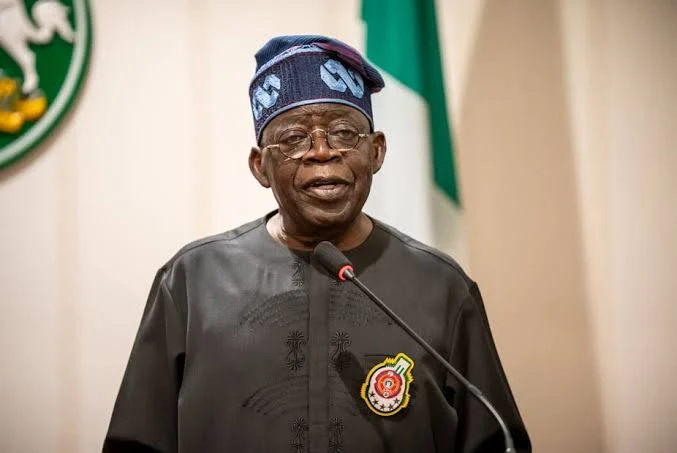
President Bola Tinubu’s leadership reflects this dual imperative: preserving stability while upholding standards. With ECOWAS facing credibility challenges, including the withdrawal of Niger, Mali, and Burkina Faso in 2024, Nigeria aims to maintain Guinea within a regional framework where democratic benchmarks remain conditional and sequential, not arbitrary.
Restoring Guinea’s full ECOWAS membership solely on the basis of holding elections risks rewarding coups through managed ballots. Nigeria’s responsibility is to ensure reintegration is conditional, transparent, and tied to tangible reforms. This approach protects ECOWAS’ credibility and the democratic principles it was established to uphold.

Ultimately, Nigeria’s engagement illustrates a foreign policy that balances pragmatism with institutional norms—avoiding isolation that could deepen instability, while resisting pressures to lower democratic standards for short-term calm. Guinea’s reintegration should remain phased and linked to measurable reforms, ensuring that stability is achieved through accountable governance.
For West Africa, democracy remains a long-term process, not a single event. Regional leaders’ insistence on credible, competitive, and accountable transitions will shape the future. Nigeria’s involvement in Guinea demonstrates that leadership within ECOWAS can reinforce this principle when elections are treated as gateways to sustained accountability rather than endpoints.



