


In the public life of every nation, there are moments when a fleeting human incident is assigned a weight far greater than it deserves. President Bola Ahmed Tinubu’s brief misstep during a State visit to Turkey has become one such moment — not because it revealed any crisis of governance, but because it exposed how easily political culture can be distracted by spectacle.
What should have passed as an ordinary occurrence, familiar to anyone who has navigated unfamiliar surfaces or cold outdoor walkways, was quickly seized upon by sections of the opposition as an occasion for ridicule. Yet serious democracies are not built on mockery, and national judgment cannot rest on seconds of imagery.

A stumble is not a policy failure.
It is not evidence of state collapse. It is, at most, a reminder of the simple truth that leadership is carried by human beings, not by abstractions.
The deeper question, therefore, is not about a momentary loss of balance, but about the political immaturity revealed by those who celebrated it.
Democracy and the Temptation of Spectacle.
Opposition politics has a legitimate role in democratic life. Governments must be questioned, criticised, and held accountable.
But when critique degenerates into glee at harmless vulnerability, something more corrosive is at work: a culture in which ridicule replaces reasoning, and optics are mistaken for substance.
Such reactions do not strengthen accountability. They weaken public discourse.
Politics conducted as entertainment ultimately produces shallow outcomes, because it encourages citizens to respond emotionally rather than thoughtfully.
A nation cannot mature when its debates are reduced to mockery.
The Philosophical Warning Against Perfection.
The earliest political thinkers understood the danger of demanding perfection from rulers. Aristotle argued that the defining quality of leadership is not physical prowess, but practical wisdom — the capacity to judge rightly in complex human affairs.
As Aristotle writes in the Nicomachean Ethics, “Practical wisdom is concerned with action, and with things that are good or bad for human beings.” Leadership, in this tradition, is not theatre. It is judgment under pressure.
The lesson is simple: governance is a human undertaking, not a performance of flawless optics.

History’s Greatest Leaders Were Not Untouched by Frailty.
Those who seek political meaning in a misstep would do well to consult the record of history.
Many of the world’s most consequential leaders bore physical limitations or governed at advanced age — and yet provided some of the most enduring examples of statesmanship.
Franklin D. Roosevelt guided the United States through economic catastrophe and the Second World War while confined to a wheelchair. His condition did not diminish strategic direction.
Abraham Lincoln led a fractured America through civil conflict while burdened by illness and profound personal grief. Physical strain did not prevent moral clarity.
Winston Churchill, far from youthful, provided steady direction to Britain during one of the most perilous periods of modern history. His strength lay not in athletic vitality, but in endurance of mind.
There are other examples. Charles de Gaulle returned in later life to stabilise France during institutional upheaval.
Nelson Mandela assumed office at 75, embodying reconciliation and national restoration rather than youthful spectacle.
The historical verdict is unambiguous: nations are not governed by bodily perfection. They are governed by judgment, experience, and courage.
Frailty as a Mark of Duty, Not Disqualification.
There is something profoundly misplaced in the belief that leadership must belong only to the physically untouched. In truth, the willingness to serve despite personal limitation can reflect an unusual depth of responsibility.
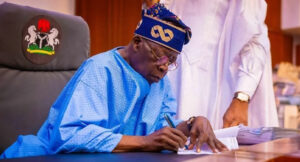
The Stoic philosopher Seneca captured this when he wrote, “Difficulties strengthen the mind, as labour does the body.” The burden of leadership is often proven precisely in moments of strain.
Patriotism is not comfort. It is service when service is demanding.
President Tinubu, despite the natural demands of age and the realities of medical history, continues to carry the weight of Africa’s largest democracy. That is not weakness. It is evidence of commitment to duty.
African Ethics and the Esteem of Eldership
Beyond philosophy and history lies a cultural principle deeply rooted in African civilisation: respect for age, experience, and elder-statesmanship.
Across African societies, elders are regarded as custodians of memory and perspective.
Wisdom is not automatic, but experience remains an irreplaceable teacher.
To mock an elderly leader is therefore not merely politically crude; it is culturally indecent and taboo.
Our traditions emphasise restraint in speech and dignity in judgment, particularly when addressing those who have carried long years of public responsibility.
A society that normalises ridicule of vulnerability risks eroding respect not only for leadership, but for shared humanity.
Tinubu’s Record Cannot Be Reduced to Optics.
The episode in Turkey does not define President Tinubu’s administration. Nigeria’s trajectory is shaped not by viral fragments, but by sustained choices in governance.
Beyond symbolism, governance is ultimately assessed through substantive choices, not viral moments.
Nigeria’s petrol subsidy alone cost about ₦3.6 trillion in 2023, illustrating the scale of structural decisions confronting the administration.
International observers have noted early signs of macroeconomic adjustment following reform measures.
Such debates, however, belong to serious policy discourse — not to the politics of ridicule built around a harmless misstep abroad.
It is precisely because substance is harder to contest than spectacle that trivial moments are sometimes weaponised in political discourse.
Opposition and the Responsibility of Serious Alternatives.
In every mature democracy, opposition politics is meant to offer credible alternatives, superior programmes, and thoughtful critique.
When opposition reduces itself to mockery, it advertises not strength, but emptiness.
A politics of derision cannot inspire a serious electorate.
It remains trapped in reaction rather than vision.
Nigeria deserves a discourse grounded in ideas, not in celebrations of harmless incidents.
A Nation’s Destiny Is Larger Than a Misstep.
Nations do not decline because a leader briefly loses balance.
They decline when citizens lose seriousness — when cruelty replaces reflection, and symbolism replaces substance.
President Tinubu rose immediately and continued forward. If any metaphor is worth keeping, it is resilience: the capacity to proceed despite uneven ground.
History rarely records who never faltered. It remembers those who persisted, adjusted, and carried responsibility to its end.
A stumble lasts seconds. Leadership is measured across years. And Nigeria’s future will be shaped not by mockery, but by endurance, reform, and national maturity.
“The National Patriots Movement views the mockery surrounding President Bola Ahmed Tinubu’s brief misstep in Turkey as an unfortunate reflection of political immaturity.
Leadership is not diminished by ordinary human moments, but strengthened by endurance and duty.
Nigerians must reject spectacle and ridicule, and instead embrace serious discourse, national unity, and respect for those carrying the burden of reform and governance.”
Princess G Adebajo-Fraser MFR.
The National Patriots Movement.



