

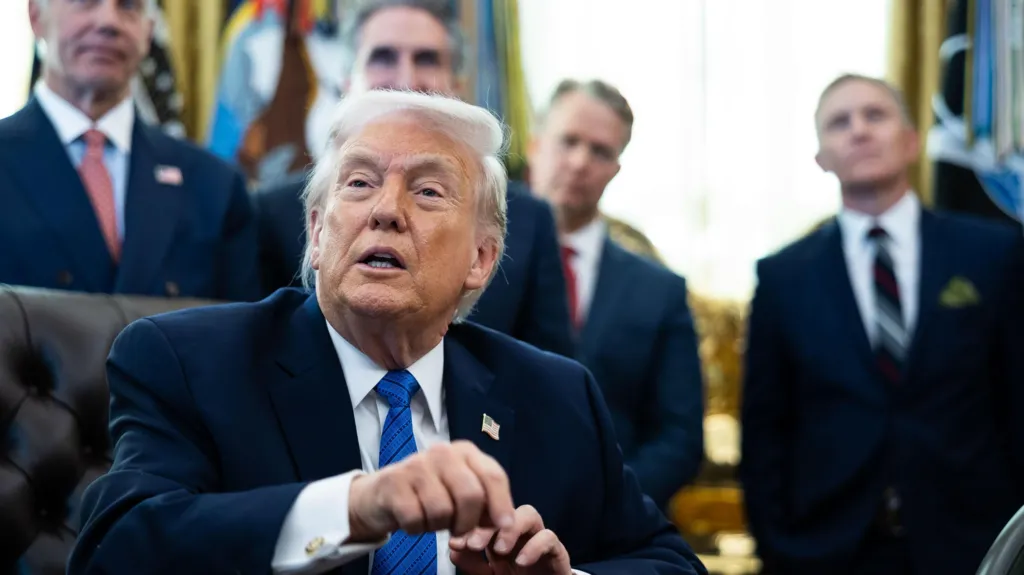
US President Donald Trump has overturned a key Obama-era scientific ruling that formed the legal foundation for federal efforts to limit greenhouse gas emissions.
The 2009 “endangerment finding” concluded that several greenhouse gases, including carbon dioxide and methane, posed a threat to public health. It became central to federal regulation of emissions across sectors such as vehicles, power plants, oil and gas, landfills, and aviation.

The White House described the reversal as the “largest deregulation in American history,” claiming it would lower vehicle costs for automakers by $2,400 per car and save over $1 trillion. Speaking in the Oval Office on Thursday, Trump called the original ruling “a disastrous Obama-era policy that severely damaged the American auto industry and massively drove up prices for American consumers,” while criticizing Democrats’ climate agenda as the “Green New Scam.”

Former President Barack Obama responded on X, warning that repealing the finding would leave Americans “less safe, less healthy and less able to fight climate change,” and accused the move of prioritizing fossil fuel profits over public welfare.
Environmental groups are preparing legal challenges, describing the rollback as the most significant federal climate change reversal to date. Peter Zalzal of the Environmental Defense Fund estimated the decision could result in $1.4 trillion in higher fuel costs, 58,000 additional premature deaths, and 37 million extra asthma attacks.

Some US automakers may also face challenges in international markets, as producing less fuel-efficient vehicles could limit export opportunities. Michael Gerrard, a climate law expert at Columbia University, noted the rollback could put US manufacturers “in a bind” because global buyers may reject higher-emission vehicles.

The endangerment finding previously restricted states from imposing stricter carbon rules and limited lawsuits challenging federal greenhouse gas regulations. With the reversal, states and non-profit organizations are expected to bring new legal challenges, likely starting in state courts, to test the scope of the new policy.

Scientific debate is also central to upcoming legal battles. The Department of Energy formed a panel last year to question widely accepted climate science, and this report informed the Trump administration’s reversal. Critics argue the panel was unrepresentative and biased toward climate skepticism. A federal judge recently ruled that the department violated the law in forming the panel, which may influence litigation over the rollback.

Legal experts believe the administration may be seeking a Supreme Court ruling to make the reversal permanent. If successful, future presidents would be unable to reinstate the endangerment finding without new legislation. Meghan Greenfield, former EPA and Department of Justice attorney, noted, “This is really different, as the EPA is exiting the space entirely and wants to do it on a permanent basis.”




