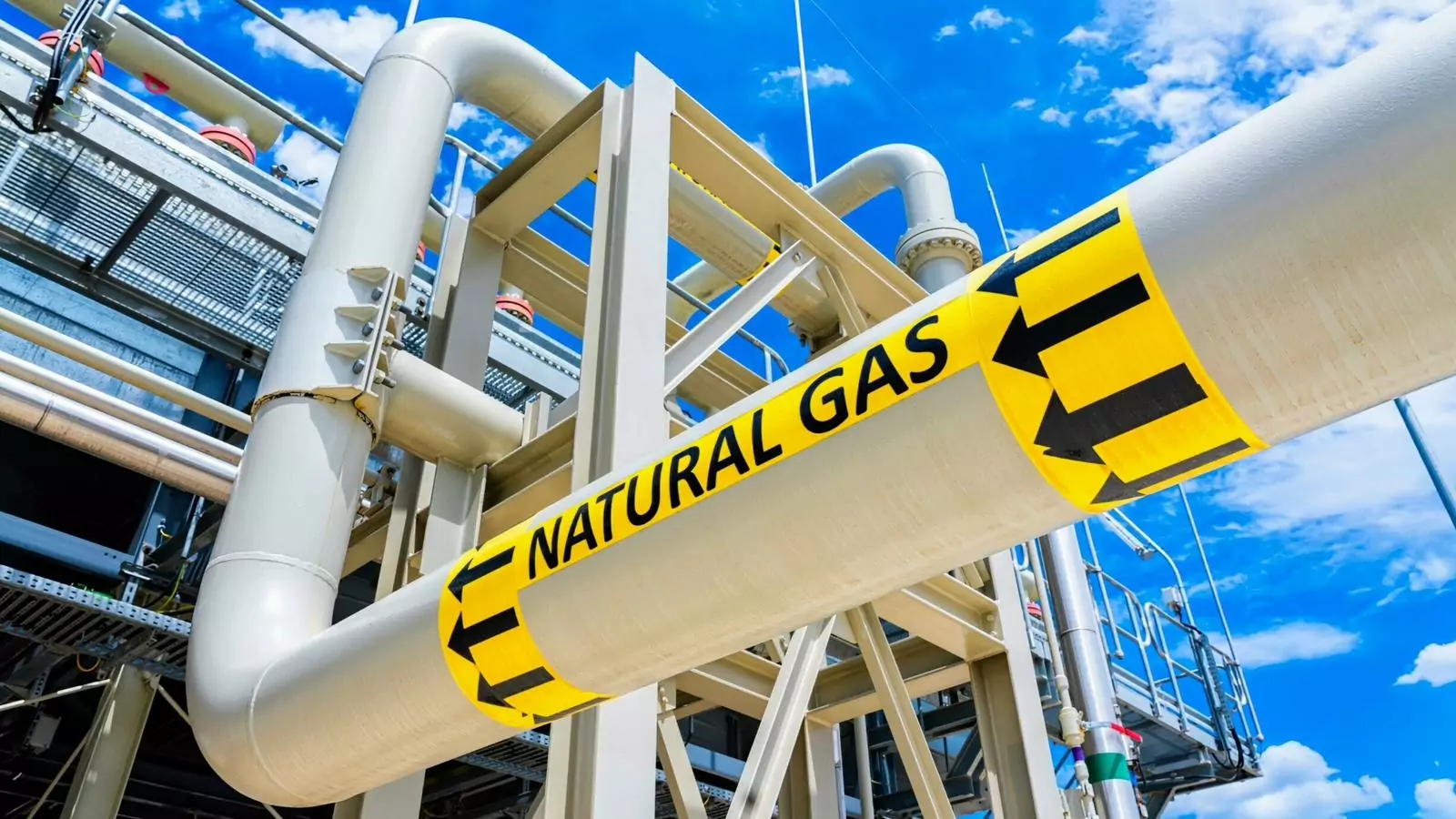
Nigeria is accelerating efforts to position natural gas as a key driver of its energy transition, with production rising from 6.8 billion cubic feet per day in 2023 to 7.5 billion cubic feet per day in 2025.

The Coordinating Director of the Decade of Gas Secretariat, Ed Ubong, said production could reach 12 billion cubic feet per day by 2030 if current reforms and investments continue. Speaking at the Decade of Gas and World Bank Ministerial Roundtable in Abuja, Ubong highlighted collaboration among government agencies, regulators, investors, and industry players as the main driver of recent growth.
The initiative, running from 2021 to 2030, aims to unlock Nigeria’s vast gas reserves, boost economic growth, and expand infrastructure. A secretariat established in 2023 is coordinating over 215 gas demand projects, improving planning, accountability, and execution.

Key priorities include expanding gas-to-power projects and promoting liquefied petroleum gas (LPG) for domestic use. Plans are underway to increase LPG consumption from 1.8 million tonnes to 3 million tonnes per year by 2030, supported by the distribution of over five million gas cylinders.
Several upstream operators have made Final Investment Decisions on major gas projects, indicating growing investor confidence. Nigeria has identified 16 priority pipeline projects requiring $22 billion in funding, with public-private partnerships and development partner support deemed crucial.
The country is also aiming to become a hub for regional gas trade, with projects like the African Atlantic Gas Pipeline, Trans-Sahara Gas Pipeline, and coastal LNG infrastructure along the Gulf of Guinea central to export plans. Regulatory alignment, reliable demand data, and sustainable financing are considered essential for cross-border gas exports.

Aliyu Mohammed emphasized that the next phase of the initiative will focus on execution, increased production, expanded pipelines, and new processing facilities. Unlocking Nigeria’s 200 trillion cubic feet of gas reserves will require sustained investment, policy consistency, and regional collaboration.
The Decade of Gas initiative reflects the government’s strategy to leverage gas as a transition fuel to drive industrialisation, enhance electricity supply, and support cleaner energy use across Nigeria and the continent.

National Patriots Excerpt
Nigeria’s renewed push to position natural gas as the backbone of its energy transition is commendable, particularly with production rising from 6.8 billion cubic feet per day in 2023 to 7.5 billion cubic feet per day in 2025, and a projected 12 billion cubic feet per day by 2030.
However, ambition without credibility will not attract the scale of investment required to achieve or exceed these targets.
The National Patriots emphasises that investor confidence remains the single most critical factor in unlocking Nigeria’s vast gas potential of over 200 trillion cubic feet.
While policy direction appears sound, there must be demonstrable sincerity in honouring agreements and protecting investments.

The protracted case of Global Gas & Refining Ltd raises serious concerns. Having invested approximately $500 million from U.S., Dutch, and other European sources into Nigeria’s gas infrastructure over two decades ago, the company has yet to recover its capital or returns.
Despite a Nigerian court ruling awarding at least $250 million against Shell Petroleum Development Company (SPDC) and NNPC, compliance has not been achieved since 12 years. With NNPCL now the successor-in-interest to SPDC’s assets, the obligation to honour this judgment is clear before contempt proceedings are initiated.

The resolution of this matter, now under the management of Fraser Consulting Ltd is considering a political solution and seeking Presidential Intervention, risks escalating into international litigation involving U.S. investors against NNPCL and the Federal Republic of Nigeria. This would significantly damage Nigeria’s investment credibility.
Unresolved cases of this magnitude undermine investor trust, discourage partnerships, and project a troubling signal about contract sanctity and judicial enforcement.
Nigeria must urgently tidy up legacy disputes within the gas sector.
Without this, even the most ambitious production targets will remain theoretical.
The pathway to 12 billion cubic feet per day—and beyond—depends not just on infrastructure and policy, but on trust, transparency, and accountability.
Dr. Imran Khazaly.
The National Patriots.