


A Defining Opportunity Nigeria Must Not Squander
The United States and Nigeria are set to establish a joint task force to address mounting allegations of Christian persecution—now central to Washington’s engagement with Abuja.

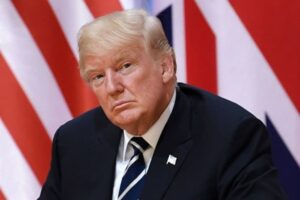
Jonathan Pratt, a senior official at the U.S. State Department’s Bureau of African Affairs, disclosed this during a congressional hearing in Washington, DC. He said the move follows a directive from Secretary of State Marco Rubio, after President Donald Trump redesignated Nigeria a Country of Particular Concern (CPC).
Earlier in the week, Nigeria dispatched a high-level delegation led by National Security Adviser Nuhu Ribadu, joined by Attorney-General of the Federation Lateef Fagbemi and others, to discuss the allegations and CPC implications.
> “The secretary of state has directed us… to work with the Nigerian government on an action plan and to set up a task force to address this issue and use all the tools at our disposal,” Pratt told lawmakers.

He said the strategy would be broadly diplomatic but also include security cooperation, policing, economic support and related programmes.
Jacob McGee, deputy assistant secretary in the Bureau of Democracy, Human Rights and Labour, described the CPC designation as a “conversation starter” meant to deepen engagement, stressing that “ultimately, this is their responsibility.”

Not a Routine Engagement
This new joint task force is not business as usual. It places Nigeria’s conduct, competence and sincerity under structured scrutiny.
To benefit from it, Nigeria must avoid its familiar weaknesses:
No Political Arrogance
This is not the time for denial or grandstanding. The U.S. system responds to evidence and performance, not rhetoric. Abuja must come with humility and hard facts.

Corruption Must Stay Out
If this process is treated as another “project” to be shared, Nigeria will lose credibility immediately. Data, reforms and follow-through must be clean.
No Internal Turf Wars
Rivalry between ministries, agencies or personalities will be fatal. The U.S. expects one coherent Nigerian voice, not competing briefings.
Competence Over Connections
Nigeria must deploy its best minds, not merely its best-connected: serious diplomats, statisticians, security experts, human rights professionals and faith leaders.

Build a Real Strategy Team – Not a Protocol List
To navigate this properly, Nigeria should immediately:
Establish a Strategic Thinktank on the Crisis under the Presidency, bringing together:
Advocacy groups like The National Patriots;
Retired Generals with field experience;
DG NIA and their representatives.
Serious legal, security and data experts;
Credible Christian and Muslim leaders.
Form a professional media support unit with selected outlets such as Headlinenews.news, Punch, ThisDay and others, to coordinate facts, counter misinformation and brief both Nigerian and international media.
This cannot be left to protocol officers and speechwriters. It needs people who understand security, diplomacy, religion, law and public perception—and who are willing to speak hard truths internally.
A Moment of Accountability – and Opportunity
The CPC designation is serious, but the decision to work through a joint task force shows that Washington is still open to partnership, not just punishment—if Nigeria delivers.
To seize this opportunity, Nigeria must:
Present credible, unified data on attacks against Christians, Muslims and others;
Demonstrate concrete, ongoing measures to protect all communities;
Show visible improvements in policing, intelligence and justice;
Address excesses by security forces honestly;
Strengthen interfaith and community conflict-prevention structures;
Use advocacy groups and media responsibly, not as propaganda tools.
Handled well, this process can help Nigeria correct distorted narratives, avoid deeper sanctions and rebuild trust.
Handled badly, it will confirm the worst accusations.
The Stakes – And the Warning
Failure could mean:
Escalating sanctions and restrictions;
Damaged security and economic cooperation;
Growing international suspicion;
Stronger propaganda for extremists.
Success could deliver:
Stronger U.S.–Nigeria relations;
Better military and intelligence cooperation;
Increased development and governance support;
Reduced pressure from Congress and advocacy networks;
Real protection for ordinary Nigerians of all faiths.

This is a rare chance to reset the conversation and prove that Nigeria can confront insecurity and rights concerns without excuses or theatrics.
Advocacy groups, retired Generals, serious media and a focused thinktank must now be brought into the room. If Nigeria brings its best people, best data and best discipline to the table, this joint task force can be a turning point.
If it treats this like just another political assignment, the consequences will be historic—and not in Nigeria’s favour.
This opportunity must not be wasted.
The National Patriots.




