A recent drone strike on the British airbase at RAF Akrotiri in Cyprus has reignited debate about the UK’s military presence on the island. The strike, which punched a hole in a hangar, has drawn criticism from locals who see the bases as symbols of foreign control and a potential source of danger.
For some in Britain, the incident highlights vulnerabilities in UK military power. For many Cypriots, it underscores the lingering impact of foreign military influence.
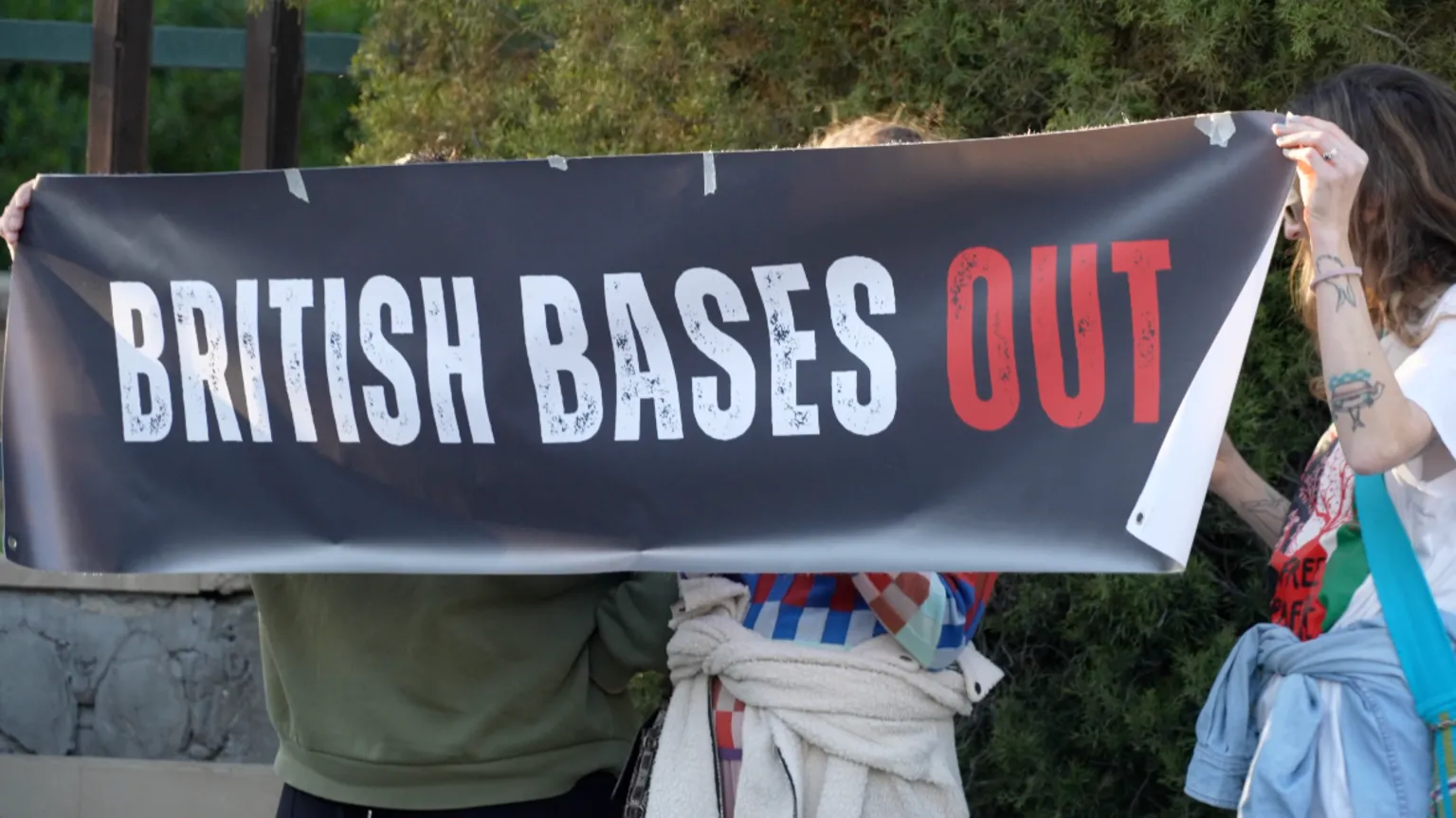
“We just want an independent Cyprus,” said local business owner Natasha Theodotou at a demonstration outside the presidential palace in Nicosia, holding a banner that read “British Bases Out.” “Just as we’re occupied by the Turkish government, we are occupied by the UK.”

The UK retains two sovereign bases in Cyprus—Akrotiri and Dhekelia—under a 1960 treaty that ended colonial rule and established Cyprus’ independence. The bases cover about 98 square miles (254 sq km) and include communities beyond the fenced airfields, providing local employment while remaining a source of tension.
Around 200 to 300 protesters marched through Nicosia on Saturday, carrying pro-Palestine signs and chanting, “Say it loud, say it clear, British bases out of here.” Many expressed concerns that the bases make the island a target for attacks in regional conflicts.
British military officials believe the drone that hit RAF Akrotiri was launched from Lebanon by the Iranian-backed militia Hezbollah. While the UK has not conducted attacks on Iran, the base is reportedly used by American U-2 spy planes, potentially making it a target amid US-Israeli operations in the region.

“We think we’d be a lot safer without them here,” said Shona Muir, holding a “British Bases Out” banner alongside Natasha.
The UK Ministry of Defence defended its presence, saying the bases support the safety of British citizens and allies across the Mediterranean and Middle East. “This week, we have flown Typhoon and F-35 fighter jets on sorties around the region, shooting down Iranian drones and defending innocent civilians,” a spokesperson said.
Cypriot officials have stressed that it was the UK base, not Cyprus itself, that was targeted. Nonetheless, calls for transparency about how the bases are used continue.
“There are worries now that there are things there that we were not aware of,” said protester Stephanos Stavros. He added that while the original treaty should be respected, “full transparency” is necessary.
Cyprus’ Foreign Minister, Constantinos Kombos, acknowledged that the issue of British bases has been on the agenda for years, but any renegotiation would be highly complex, involving the UK, Greece, Turkey, and both Greek and Turkish Cypriot communities.
The drone strike has not only caused physical damage but also brought the debate over Cyprus’ sovereignty and the UK’s military footprint back into sharp focus.