

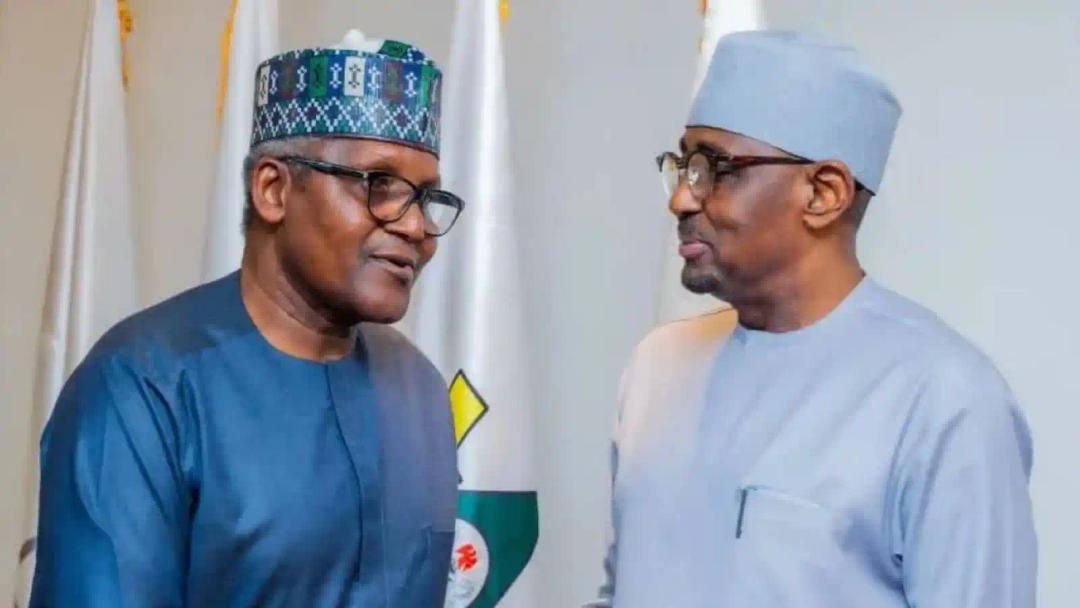
The Chief Executive Officer of the Nigerian Midstream and Downstream Petroleum Regulatory Authority (NMDPRA), Farouk Ahmed, has come under intense public spotlight following corruption allegations made by Africa’s richest man, Aliko Dangote.

Dangote, speaking during a press briefing at the Dangote Petroleum Refinery in Lekki, alleged that Ahmed spent about $5 million to send his four children to secondary schools in Switzerland. He questioned how a career public servant could afford such fees, sparking widespread debate over transparency and accountability in public office.
Farouk Ahmed, born in July 1957, is an engineer trained in the United States and a seasoned figure in Nigeria’s oil and gas industry. Over the years, he has held several high-level roles, including Managing Director of the Petroleum Products Marketing Company, Executive Secretary of the PPPRA, and Special Adviser on Downstream matters at the NNPC. He currently heads the NMDPRA, an agency he has led since its creation in 2021.

Both former President Muhammadu Buhari and President Bola Tinubu retained Ahmed in office, with the presidency previously praising his role in stabilising fuel supply and ending fuel queues after subsidy removal.
However, the allegations by Dangote have reopened questions about his conduct. Dangote insisted the issue was not personal but a call for investigation, stressing that such spending appears disconnected from the economic reality facing most Nigerians. Ahmed has not publicly responded to the latest claims, though the NMDPRA earlier dismissed similar accusations as false and politically motivated.

The controversy has drawn reactions from civil society and industry players. SERAP has called on anti-corruption agencies to urgently probe the allegations, while PETROAN described Dangote’s claims as blackmail aimed at dominating the downstream sector.
As accusations and counter-accusations fly, the unfolding dispute has raised a bigger question: does this controversy demand a full investigation, or is it part of a deeper power struggle in Nigeria’s oil sector?



