

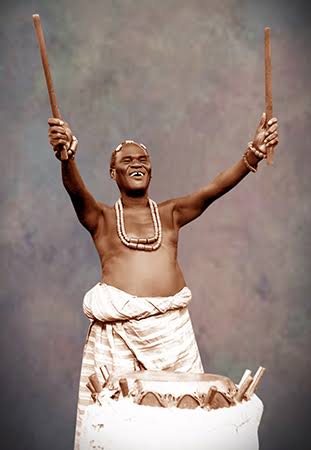
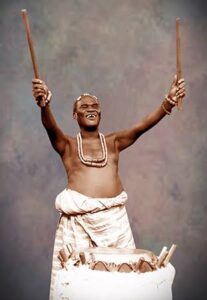
When Hubert Ogunde released “Yoruba Ronu” in 1964, it was far more than a theatrical production. It was a cultural alarm bell—an artistic intervention rooted in deep concern for the political fragmentation threatening the Yoruba nation at that time. Ogunde, one of Africa’s greatest dramatists and a father of modern Nigerian theatre, understood something profound: a divided Yoruba race weakens not only itself but the entire balance of Nigeria’s political and cultural architecture.
Sixty years later, the message echoes with renewed relevance. Nigeria has evolved demographically, politically and economically, yet the essential truth behind Ogunde’s warning remains:
any ethnic group that loses internal cohesion risks losing its influence, identity and bargaining power in the Nigerian enterprise.
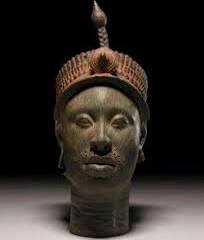
Today, as the Yoruba race stands at a crossroads—geopolitically significant, culturally advanced, economically vibrant yet internally fragmented—the imperative of unity cannot be overstated.
A Historical Nation: Bound by Legacy and Ancestral Sacrifice
The Yoruba are not merely an ethnic group; they are a civilization—with a documented history exceeding a millennium, a tradition of urban governance before colonialism, and ancestral bloodlines that shaped West Africa’s intellectual, spiritual and artistic identity.
The Oyo Empire (14th–19th century) developed one of Africa’s most sophisticated systems of governance, with checks and balances that political theorists today still study.
Ile-Ife, regarded as the cradle of Yoruba civilization, flourished with advanced metallurgy, terracotta artistry and philosophical systems long before European contact.
In the 19th century, Yoruba sub-national states such as Ijebu, Ekiti, Egba and Ibadan created complex political alliances and federations to safeguard collective interests.
Between 1940 and 1960, Yoruba leaders like Obafemi Awolowo, Samuel Akintola, and others laid the foundation for Western Nigeria’s development—introducing free primary education, establishing the first television station in Africa (1959) and fostering a culture of intellectual excellence.
These ancestors acted with a unified vision, even when internal disagreements existed. They understood that the strength of the Yoruba race lies not in homogeneity of opinion, but in shared purpose.
Ogunde’s “Yoruba Ronu” was a plea to protect this heritage.
Why Ogunde’s Message Still Matters: Lessons From History and Today
Ogunde’s caution emerged from a period of political rivalry that threatened Yoruba cohesion. He feared that internal division could render the Yoruba vulnerable in the emerging Nigerian political structure—a prediction that partially materialized through shifting alliances, marginalization and diminished collective bargaining power in subsequent decades.
Today, the Yoruba nation remains influential, but no longer invincible. The pressures of national politics, economic inequality, intra-elite rivalry, and regional insecurity all pose risks to Yoruba coherence.
Historical patterns across Nigeria show that ethnic groups with high internal unity enjoy greater political stability and strategic influence.
The Hausa–Fulani bloc maintains unified political structures across multiple states.
The Igbo, despite internal differences, maintain strong cultural solidarity and economic collaboration.
Minority groups across the Middle Belt and Niger Delta increasingly coordinate regionally to assert their rights.
The Yoruba, known for individualism, intellectual independence and internal political diversity, sometimes lack structured collective unity—especially in moments when it matters most.
This is why Ogunde’s message must be reawakened:
A great nation must never allow its internal debates to overshadow its shared destiny.
Facts and Figures: Yoruba Strength in the Nigerian Landscape
The Yoruba occupy one of the most strategic positions in Nigeria’s socio-economic architecture:
An estimated 45 million Yoruba people live in Nigeria, while millions more form influential diasporic communities in the U.S., UK, Brazil and Latin America.
The South-West accounts for over 20% of Nigeria’s GDP, driven by commerce, technology, education and industry.
Lagos alone is Africa’s 5th largest economy, larger than the GDP of several African nations combined.
Yoruba states consistently record high literacy rates—up to 85% in some areas—one of the highest in Nigeria, reflecting Awolowo’s legacy of education.
The Yoruba diaspora contributes billions of dollars in remittances yearly, strengthening families, businesses and regional development.
Yet these assets can only be fully leveraged when the Yoruba speak with one voice on issues of national importance—just as their ancestors did.
A United Yoruba Nation: Strategic Imperative, Not Romantic Idealism
Unity does not mean uniformity. It means alignment where it counts:
Unity in defending Yoruba economic interests
Unity in regional security cooperation
Unity in political negotiations within the Nigerian federation
Unity in cultural preservation and language revitalization
Unity in protecting Yoruba land, values and future generations
A divided people cannot negotiate from strength. A fragmented bloc cannot protect its cultural legacy.
Ogunde understood this.
So did Awolowo.
So did the Oyo Mesi.
So did the generations before them who fought wars, built empires and preserved the Yoruba identity against all odds.
The Yoruba have always thrived when united and faltered when fractured. The historical record is unmistakable.
What Unity Demands Today
For unity to be meaningful, Yoruba leaders, intellectuals, traditional rulers, youth, business elites and community organisations must embrace a shared responsibility:
● Revive Yoruba cultural identity
Promote the language, values, festivals and ethics that bind the people to their heritage.
● Strengthen inter-state collaboration
Security, transportation, education and regional development must be planned as a shared enterprise among Yoruba states.
● Protect Yoruba economic interests
Just like the Igbo and Hausa-Fulani protect theirs, Yoruba entrepreneurs and political actors must collaborate instead of competing destructively.
● Resolve political disagreements internally
External forces have historically exploited Yoruba infighting. That cycle must end.
● Build a unified Yoruba position in national politics
Not dictated by individuals, but guided by institutions, elders and collective interests.
For the Sake of the Ancestors
The Yoruba owe their unity to those who came before them:
to Oduduwa, revered progenitor of the race,
to the Alaafins who built Oyo into an empire,
to warriors who preserved the Yoruba identity during internecine wars,
to intellectuals who shaped Nigerian independence,
to artists like Ogunde who used creativity to warn and enlighten,
to leaders like Awolowo who envisioned a modern, educated Yoruba society grounded in discipline, fairness and communal upliftment.
Ogunde’s “Yoruba Ronu” was, and remains, a spiritual injunction.
A call from the ancestors.
A reminder that greatness is sustained only when a people stand together.
Conclusion: Yoruba Ronu — Yoruba, Awaken
Today, Nigeria stands at a defining moment, and so do the Yoruba.
Unity is not merely desirable; it is existential. Without it, the Yoruba risk diminishing their influence, weakening their cultural identity and forfeiting the strategic role their ancestors fought to secure.
But with unity, the Yoruba remain what they have always been:
a resilient, visionary, culturally sophisticated and politically strategic nation capable of shaping Nigeria’s destiny.
The message Ogunde delivered decades ago still rings clear:
Yoruba Ronu — Yoruba, think.
Yoruba dakun, jọ ara yin jẹ.
Yoruba dide, ẹ jẹ ara yin l’ọmọ.
Yoruba papọ, ki iran yi le bọ l’aiye.
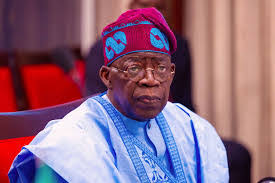
Unite, protect one another, and preserve the legacy entrusted by the ancestors.”It pains the heart when Yoruba sons and daughters speak harshly of their own, especially those entrusted with national leadership like Tinubu, Obasanjo etc. Our ancestors, who laboured to preserve the dignity and cohesion of the Yoruba race, would be restless to see discord where unity should stand. As a people with deep roots, shared heritage and a collective destiny, we must remember that strength comes only through solidarity, mutual respect and responsible engagement.
Other regions across Nigeria have often demonstrated remarkable internal cohesion, rallying behind their own during moments of national responsibility, like the case of the Hausa-Fulani and Former President Buhari. The Yoruba, known for wisdom, restraint and honour, must not allow division to diminish their influence. Let us walk together in unity of purpose, mindful of the legacy we inherited and the future we owe our children. The Southwest of Nigeria ought to give block votes to ensure President Tinubu’s second term in 2027 by the special grace of God.
Listen to Hubert Ogunde’s Yoruba Ronu now!”
Princess G. A. Adebajo-Fraser MFR. [Arewa O’Odua of Yorubaland]




