

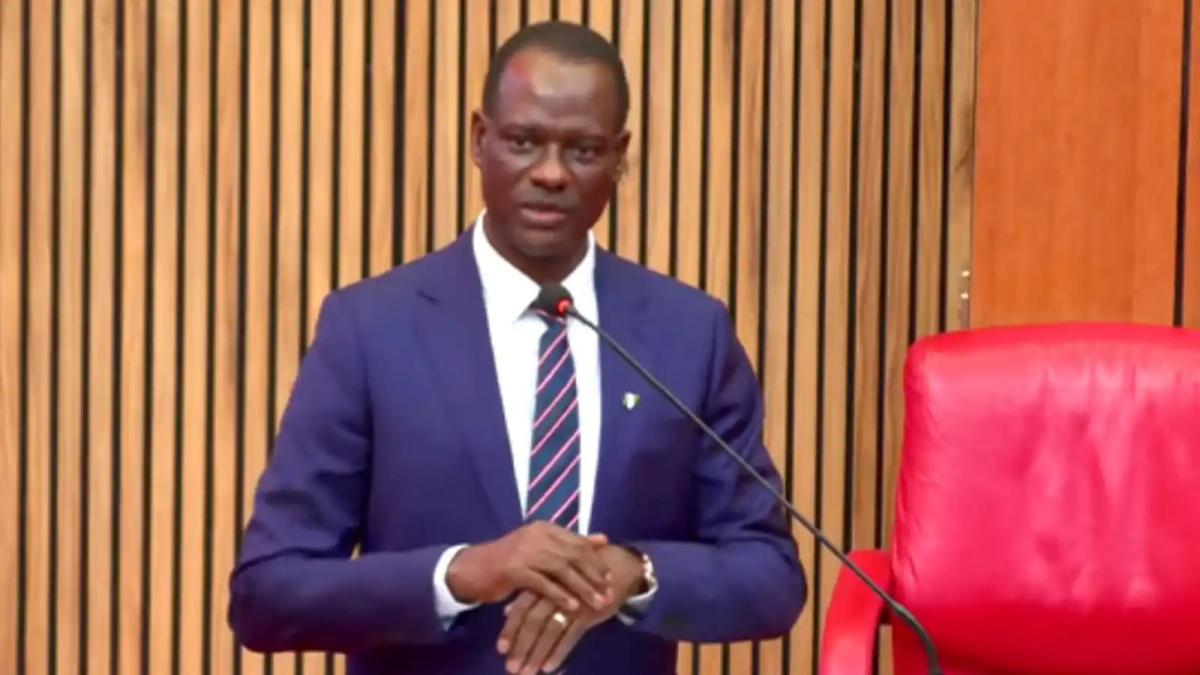
The Senate of Nigeria has confirmed the appointment of Taiwo Oyedele as Minister of State for Finance under the administration of Bola Ahmed Tinubu.
The confirmation was announced by the Senate President, Godswill Akpabio, after lawmakers approved the nomination through a voice vote during deliberations at the Committee of the Whole.
Oyedele is expected to replace Doris Uzoka-Anite, who has been redeployed to serve as Minister of State for Budget and National Planning.

His confirmation followed a screening session on Wednesday during which senators questioned him for more than two hours before clearing him for the role.
Speaking during the session, Oyedele described his nomination as a call to serve the country at a crucial time.
“With over two decades of experience working with national governments, multilateral institutions, and global corporations, my journey across the private sector, academia, and public policy has focused on fiscal governance and economic transformation,” he told lawmakers.
“However, this moment is not about personal accomplishments; it is a call to serve at a critical time when Nigeria faces significant fiscal challenges and remarkable opportunities.”
President Tinubu had earlier forwarded Oyedele’s name to the Red Chamber for confirmation following his nomination.

During the screening, Oyedele expressed appreciation to the president for the confidence placed in him and thanked the Senate for the opportunity to present his vision.
“I am deeply honoured to appear before this distinguished chamber today. I thank President Bola Ahmed Tinubu for the confidence reposed in me through this nomination, and I thank the Senate for the opportunity to share my vision,” he said.
Before his ministerial nomination, Oyedele served as chairman of the Presidential Committee on Fiscal Policy and Tax Reforms, where he played a key role in the development of a new tax framework for the country.
Appointed to the role in July 2023, he led efforts to review and restructure Nigeria’s tax system. The reform process took more than two years to complete and eventually culminated in the implementation of a new tax regime that took effect on January 1.
The reforms are expected to improve tax administration, boost government revenue, enhance the business environment, and attract both domestic and foreign investment into the Nigerian economy.




