

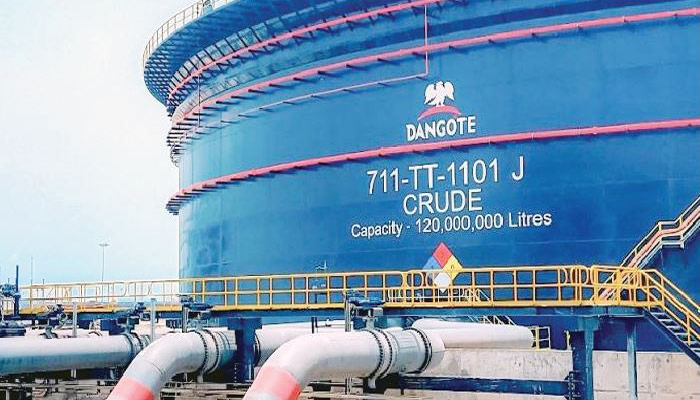
Crude oil deliveries from the trading arm of the Nigerian National Petroleum Company Limited rose significantly in April 2026, with over 1.03 million metric tonnes (about 6.8 million barrels) supplied to the Dangote Petroleum Refinery within the month.

Data from tanker vessel tracking reviewed on Tuesday shows that the supply was delivered through eight crude cargoes, highlighting the continued role of NNPC Trading as a key feedstock supplier to the 650,000 barrels-per-day facility in Lagos.
The shipments were drawn from several Nigerian crude grades, including Anyala, Bonga, Odudu, Forcados, Qua Iboe, and Utapate, and were delivered via the refinery’s offshore Single Point Mooring systems.

Out of the eight cargoes recorded, five have already been fully discharged, while three are still in different stages of arrival or offloading, indicating a steady flow of crude into the refinery.
The breakdown shows that vessels such as Sonangol Kalandula, Advantage Spring, Barbarosa, Sonangol Njinga Mban, and Nordic Tellus completed deliveries from various crude sources including Bonga, Forcados, Odudu, and Anyala.

However, additional cargoes from vessels like Advantage Sun, another Advantage Spring shipment, and a second Sonangol Kalandula delivery are still pending berthing or discharge completion.
Altogether, the NNPC Trading supplies amounted to 1,033,332 metric tonnes of crude, reflecting what industry observers describe as a consistent supply commitment to the refinery.

In addition to crude imports, the refinery also received refined petroleum products and blending components from international suppliers during the same period, including gasoline blendstocks from the United Kingdom, France, the Netherlands, and Togo, as well as naphtha and residue catalytic oil shipments from Europe and Asia.
Further cargoes from the United States, Cameroon, and Nigerian oil fields also supported refinery operations, including large crude deliveries from Corpus Christi, Ingleside, Escravos, and other domestic locations.

Operational records suggest most vessels completed discharge within one to two days of arrival, pointing to improved efficiency at the refinery’s offshore handling systems.
The Dangote refinery, Africa’s largest single-train refinery, continues to play a major role in Nigeria’s downstream oil sector, with expectations that it will reduce dependence on imported fuel by processing domestic crude into petrol, diesel, aviation fuel, and other products.
Recent comments from industry sources indicate that crude supply from NNPC Trading to the refinery has increased compared to previous months, reflecting adjustments in supply arrangements between both parties.




