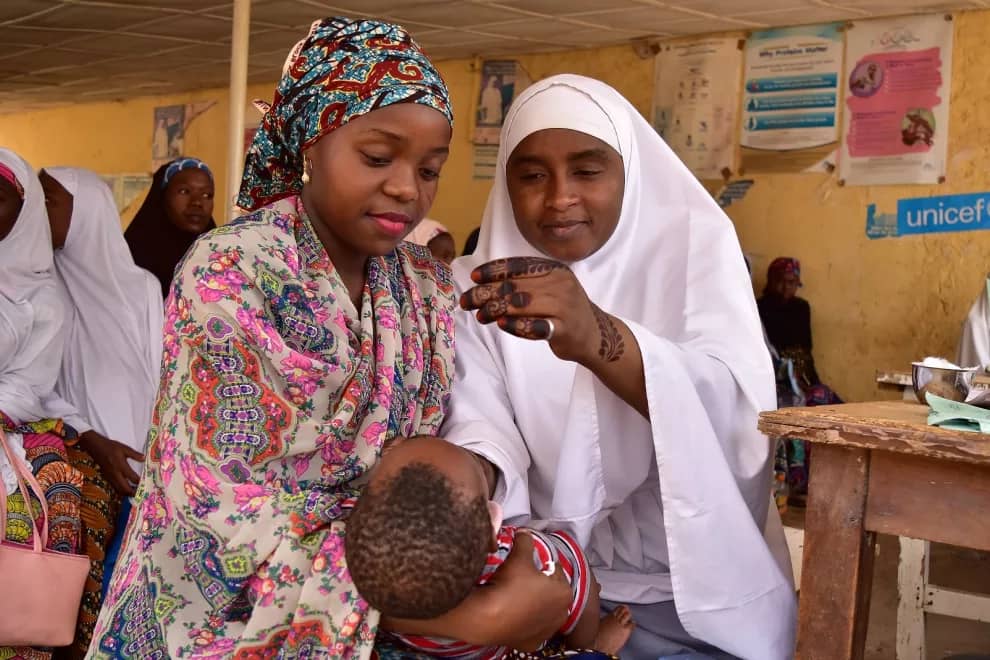
The National Primary Health Care Development Agency (NPHCDA) says more than one million children in four states have received at least one dose of the malaria vaccine.

Speaking in Abuja on Tuesday at a press briefing, Muyi Aina, executive director of the agency, said the malaria vaccine rollout, which began in Kebbi and Bayelsa states, has been extended to Ondo and Bauchi.
In the area of coverage, a total of 984,559 children have received at least one dose in Kebbi and Bayelsa, while Ondo recorded more than 166,342 children and Bauchi 105,890,” Aina said.
He added that over 600,000 vaccine doses are currently stored in the national cold chain system to support ongoing distribution.
In December 2024, the federal government began malaria vaccination in Kebbi and Bayelsa after it received 846,000 doses of the R21 vaccine from Gavi, the vaccine alliance organisation.

The NPHCDA executive director had said experts advised the government to focus on the highest priority locations, leading to the exercise beginning in the two states.
The R21/Matrix-M, developed by scientists at Oxford University and endorsed by the World Health Organisation (WHO), is used for the prevention of malaria in children.
According to Aina, the malaria vaccine presents a unique challenge because it requires four doses to achieve full effectiveness, unlike most routine vaccines.
“What we find is that sometimes there’s a dropout between each stage,” he said.
“We’re working through systems to learn how to successfully bring people back four times for the vaccine.”
He also said the federal government is scaling up investments in primary healthcare with N70.6 billion released through the basic healthcare provision fund (BHCPF) between 2023 and 2025.

Aina described 2026 as a “year of consolidation”, adding that efforts are focused on expanding access, improving quality, and strengthening accountability across the system.
He said the number of facilities benefiting from the fund has increased from 8,309 to 13,512, while funding per facility has also been raised in response to inflation and rising healthcare costs.
“Every facility used to get N300,000 per quarter. Now we have two tiers. Low-volume facilities are getting N600,000,” he said.
The executive director said the agency has deployed 774 performance and financial management officers across all local government areas to improve oversight.
He said their work led to the recovery of N59.95 million in misused or unaccounted funds.
“In many instances, we make sure that the money is refunded and sanctions are applied depending on the specifics of the offence,” he said.
He added that the agency is also digitising financial reporting, with a management application already active in 14 states and expected to be rolled out nationwide before the end of the year.