


‘Nobody Saw It Coming’: How Tinubu’s Reforms Are Redrawing Africa’s Economic Map
By Headlinenews.News
“We used to look down on Nigeria and Lagos.”
Those candid words from a Kenyan commentator have become one of the most striking external assessments of Nigeria’s changing fortunes. For years, Nairobi’s “Silicon Savannah,” with its relatively stable shilling, thriving technology ecosystem and reputation for ease of doing business, inspired pride among many East Africans who viewed Nigeria with a mixture of sympathy and superiority.

Today, however, the conversation is changing.
According to the Kenyan observer, nobody in East Africa saw it coming. Yet within a relatively short period, Nigeria appears to have altered the economic narrative on the continent, leaving many wondering how Africa’s largest economy managed to regain momentum so quickly.
“I am not making a political speech,” he said. “I am simply amazed.”
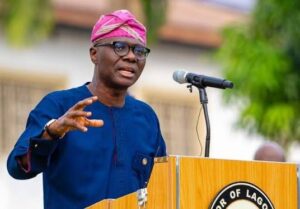
His amazement reflects a broader shift in global perceptions.
For years, Kenya enjoyed a reputation as East Africa’s innovation hub. Nairobi earned international acclaim as the “Silicon Savannah,” powered by technological breakthroughs such as M-Pesa and a relatively stable business environment. Meanwhile, Nigeria’s enormous potential was often overshadowed by policy inconsistencies, exchange-rate distortions and structural inefficiencies.

But something changed after President Bola Ahmed Tinubu assumed office in May 2023.
Perhaps no single decision symbolized the new direction more than the removal of fuel subsidy and the unification of Nigeria’s foreign exchange market. Though painful and unpopular, the reforms signaled a willingness to tackle long-standing distortions that had discouraged investment and weakened competitiveness.
The effects are beginning to attract global attention.
According to Dealroom.co’s Global Tech Ecosystem Index, which assessed 288 cities across 69 countries, Lagos emerged as the world’s fastest-growing emerging technology ecosystem. The report represented a remarkable endorsement of Nigeria’s growing appeal to investors and innovators.
The transformation is reflected in venture capital and startup valuations.

Nigeria remains Africa’s leading destination for startup funding, attracting billions of dollars in investments over the past decade. Industry estimates indicate that Nigerian startups account for roughly one-third of all venture capital inflows into Africa.
Even more impressive is the emergence of five unicorns—technology companies valued at more than one billion dollars. These include Interswitch, Flutterwave, Jumia, OPay and Moniepoint.

By comparison, Nairobi, despite its celebrated reputation, has produced far fewer unicorns.
The Kenyan commentator lamented that many East Africans had grown accustomed to seeing themselves ahead of Nigeria in technological advancement and ease of doing business. The latest rankings, however, have forced many to reassess those assumptions.
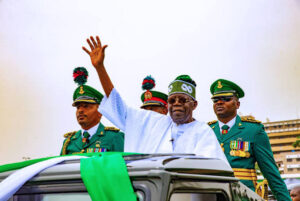
“Nobody knew how Nigeria sprang up suddenly,” he confessed.
Analysts argue that Nigeria’s strengths extend beyond reforms alone.
With a population exceeding 230 million people, expanding internet penetration, a youthful demographic and a vibrant entrepreneurial culture, the country possesses advantages few African economies can rival. Lagos, in particular, has become a magnet for software developers, fintech innovators and international investors seeking scale.
The Tinubu administration’s reforms have also improved government revenues and increased policy predictability—factors global investors closely monitor before committing capital.
The World Bank and the International Monetary Fund have acknowledged improvements in macroeconomic fundamentals and government revenues since the reforms commenced. Although inflation and cost-of-living pressures remain major concerns, international institutions have maintained that subsidy removal and exchange-rate liberalization were necessary for long-term stability.
History offers several examples.
India’s rise as a technology powerhouse was driven by difficult reforms and economic liberalization. Vietnam transformed itself into a manufacturing and innovation centre through structural changes and foreign investment. Indonesia under President Joko Widodo implemented subsidy reforms that initially generated criticism but eventually strengthened economic competitiveness.
Supporters of President Tinubu argue that Nigeria is now following a similar path.
Critics, however, maintain that macroeconomic gains mean little if they do not translate into better living conditions for ordinary Nigerians. Inflation, food prices and insecurity continue to present serious challenges requiring urgent attention.
Yet even critics acknowledge that perceptions about Nigeria are changing.
Perhaps that is why the Kenyan’s remarks resonate so deeply.
They represent not partisan praise from within Nigeria, but admiration from outside its borders.

For decades, Nigeria possessed enormous potential.
Today, the world is beginning to see signs of that potential being unlocked.
The story remains unfinished.
The challenges remain enormous.
But if the current momentum is sustained, historians may one day look back at June 2023 not merely as the beginning of painful reforms, but as the moment Nigeria started reclaiming its place as Africa’s economic powerhouse.
And perhaps the greatest compliment of all is when former skeptics stop asking why Nigeria struggled—

and begin asking how Nigeria suddenly surged ahead.
‘Nobody Saw It Coming’: How Tinubu’s Reforms Are Redrawing Africa’s Economic Map.
The National Patriots notes with pride the remarkable confession of a Kenyan commentator who admitted that many East Africans once looked down on Nigeria and Lagos. Today, global data firm Dealroom ranks Lagos as the world’s fastest-growing emerging tech city, ahead of all African competitors. This achievement underscores Nigeria’s enormous potential and demonstrates how bold reforms and entrepreneurial dynamism are repositioning the country on the global innovation map.
The National Patriots welcomes the growing international recognition of Nigeria’s economic resurgence and commends the Tinubu administration for undertaking difficult but necessary reforms. The admiration coming from outside Nigeria underscores the country’s vast potential. While more must be done to address hardship through stronger social safety nets, Nigerians should remain hopeful and support efforts aimed at building a globally competitive economy for future generations.
Princess G. Fraser. MFR
President, The National Patriots.
For full report, visit: www.headlinenews.news




