The debate over the creation of state police in Nigeria has spanned decades, driven by concerns over security, federalism, and the effectiveness of the country’s centralized policing system. While supporters argue that state-controlled police forces would improve local security and intelligence gathering, opponents fear they could be abused by state governments for political purposes.

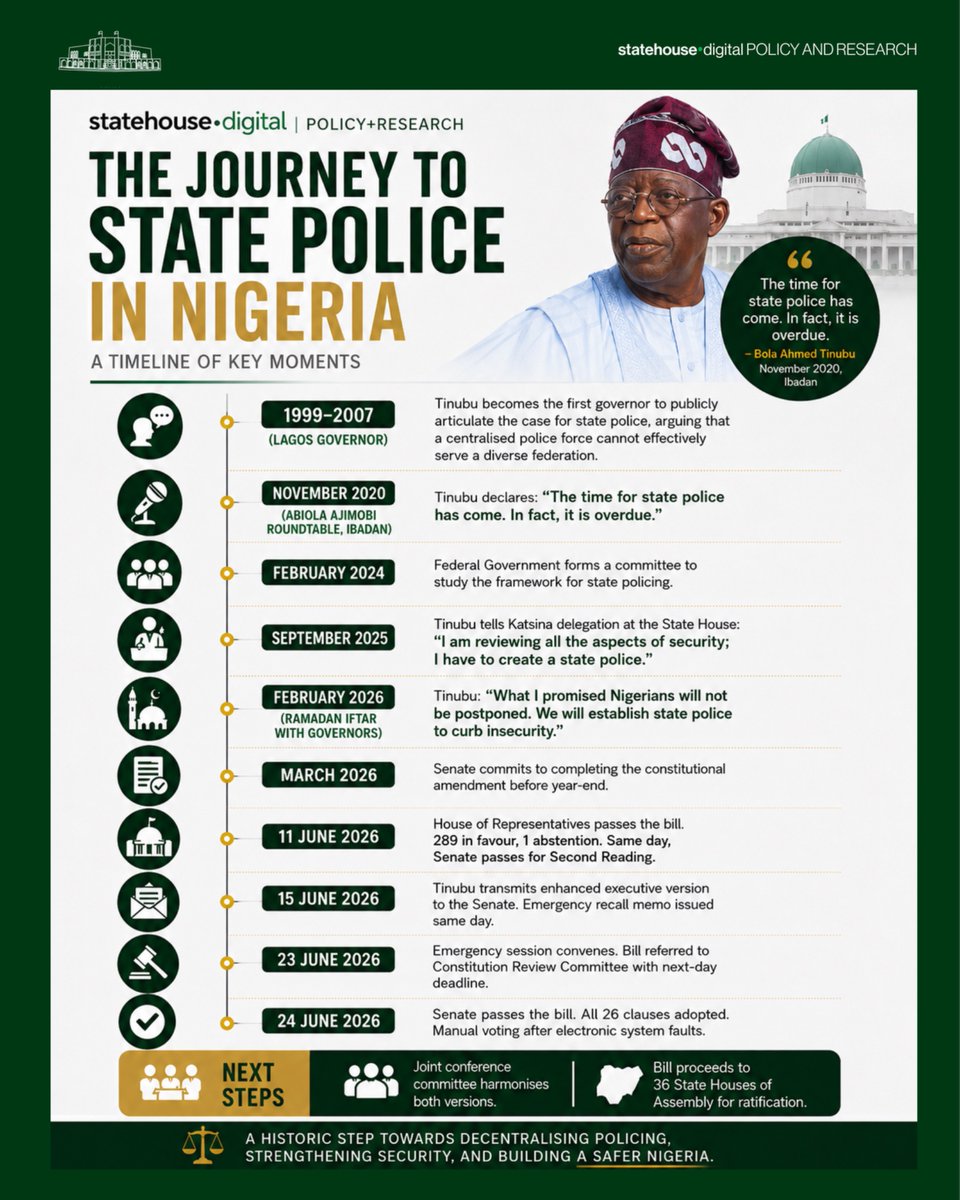
Here is a timeline of the major milestones that have shaped the journey toward state police in Nigeria.
At independence in 1960, Nigeria operated a regional policing system alongside the federal police. The Northern, Western, and Eastern Regions each maintained their own police forces. However, allegations of political intimidation and abuse by regional governments led to growing concerns about the system.
Following the first military coup in January 1966 and subsequent political changes, the regional police system was dismantled. Military governments centralized policing under a single national command, a structure that has largely remained in place ever since.
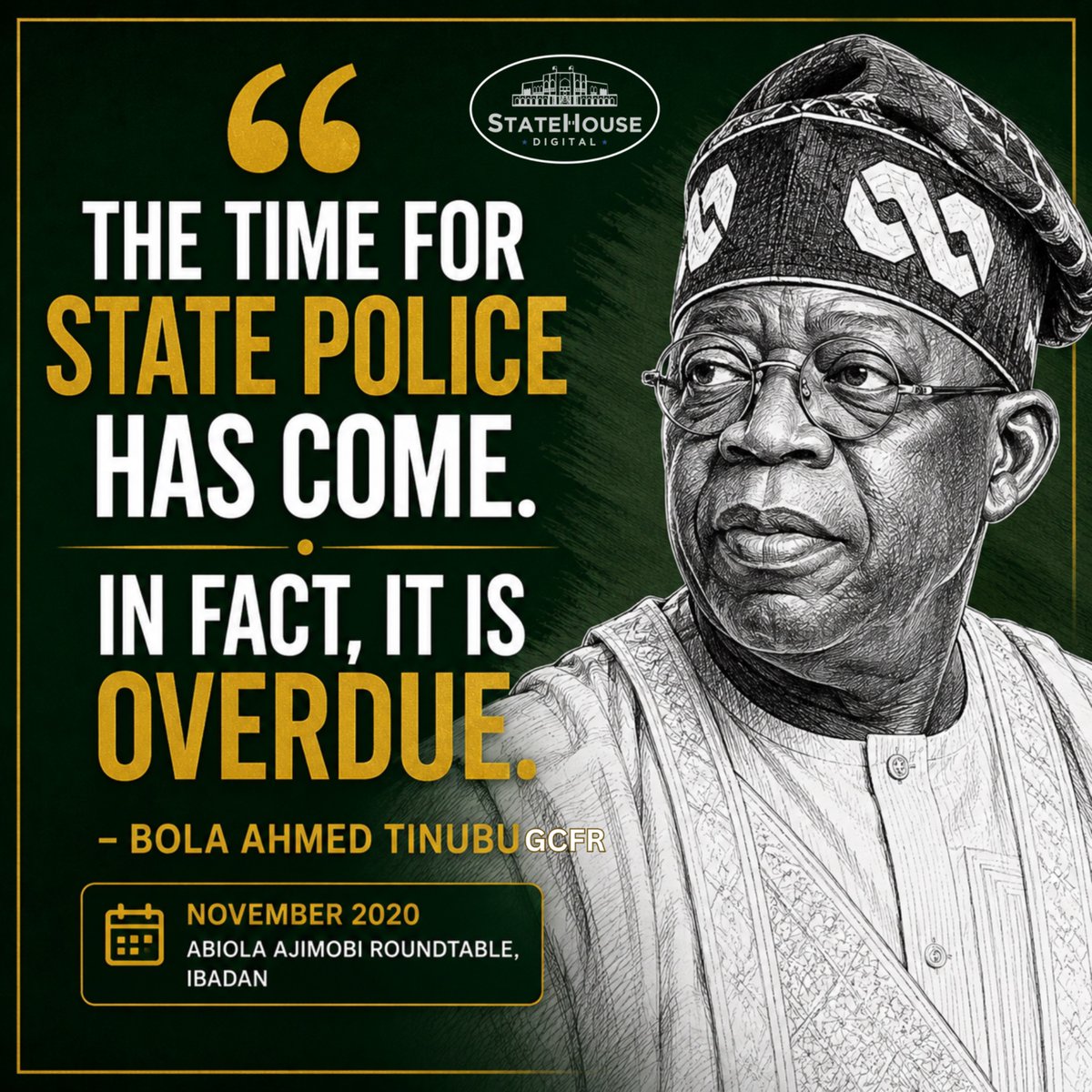
Nigeria’s subsequent constitutions, including the 1979 and 1999 Constitutions, maintained a single Nigeria Police Force under federal control. Section 214 of the 1999 Constitution expressly states that there shall be only one police force for the federation, making state police constitutionally impossible without an amendment.
The issue gained significant momentum during the 2014 National Conference convened by the administration of former President Goodluck Jonathan. Delegates recommended the establishment of state police as part of broader constitutional reforms aimed at strengthening Nigeria’s federal structure. However, the recommendations were never implemented.
Escalating cases of insurgency, banditry, kidnapping, farmer-herder conflicts, and communal violence renewed calls for decentralised policing. The 2020 #EndSARS protests also intensified demands for comprehensive police reforms, with many stakeholders arguing that structural changes, including state police, were necessary to improve accountability and effectiveness.
As insecurity worsened across the country, the Nigeria Governors’ Forum and several state governments increasingly supported state police. The issue became a recurring subject during constitutional amendment exercises in the National Assembly, although no proposal secured the constitutional backing required for implementation.
Nigeria’s 36 state governors, under the Nigeria Governors’ Forum, reached a landmark consensus supporting the establishment of state police. They agreed that decentralised policing had become necessary to address growing security challenges nationwide, marking one of the strongest collective endorsements of the proposal.
The House of Representatives included bills on state police among several constitutional amendment proposals. Public debates continued over funding, oversight mechanisms, recruitment standards, and safeguards against political misuse.

The proposal achieved its most significant progress in 2026.
- February 2026: President Bola Tinubu urged lawmakers to create the constitutional framework for state police as part of efforts to tackle worsening insecurity.
- March 2026: A committee submitted a framework outlining how state police could operate.
- June 11, 2026: The House of Representatives overwhelmingly passed the constitutional amendment bill establishing state police.
- June 24, 2026: The Senate approved the constitutional amendment after its final debate, bringing Nigeria closer than ever to establishing state-controlled police forces.
Although the National Assembly has approved the constitutional amendment, it is not yet law. Under Nigeria’s constitutional amendment process, the proposal must still be endorsed by at least two-thirds (24) of the 36 State Houses of Assembly before it can receive presidential assent and become part of the Constitution.

Supporters say state police will:
- Improve response to local security threats.
- Strengthen intelligence gathering through community-based policing.
- Reduce the burden on the overstretched federal police.
- Deepen Nigeria’s federal system of government.
Critics argue that it could:
- Be used by governors to intimidate political opponents.
- Increase political interference in policing.
- Create disparities between wealthier and poorer states.
- Lead to inconsistent policing standards across the federation.
For more than five decades after the abolition of regional police, Nigeria relied exclusively on a centrally controlled police force. The constitutional amendment passed by the National Assembly in 2026 represents the closest the country has come to restoring decentralised policing. If ratified by the required number of state legislatures and signed into law, it will mark one of the most significant security and constitutional reforms in Nigeria’s democratic history.