

Federal Government to Publish Full Breakdown of Fuel Subsidy Savings
The Federal Government says it will soon release a detailed report showing how savings from the removal of petrol and foreign exchange subsidies have been spent since the economic reforms introduced by President Bola Tinubu’s administration.
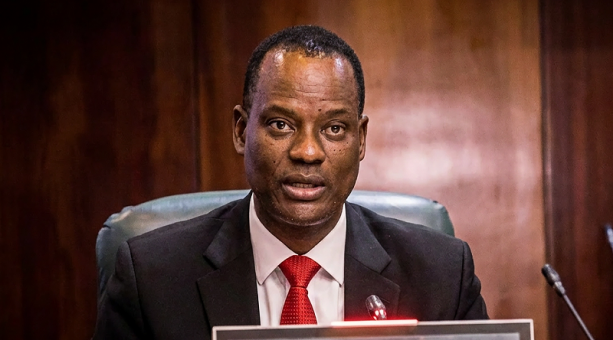
The announcement was made by the Minister of Finance and Coordinating Minister of the Economy, Taiwo Oyedele, during the seventh Africa Emerging Markets Forum held in Abuja.
Responding to concerns about whether Nigerians are benefiting from the reforms, Oyedele admitted that many citizens have repeatedly asked what happened to the funds saved after the removal of fuel subsidy.
According to him, the question is a legitimate one and the government has a responsibility to provide clear answers.
“People keep asking where the money has gone, and it’s a valid question,” he said. “In the next few days, Nigerians will see a detailed analysis because transparency requires us to explain how public resources are being used.”

Oyedele explained that the removal of petrol and foreign exchange subsidies, which together accounted for about five per cent of Nigeria’s Gross Domestic Product (GDP), was not only intended to save money but also to eliminate corruption and market distortions associated with the subsidy regime.
He disclosed that much of the savings had been used to finance obligations that were previously covered through Central Bank financing, service increased public debt costs and support the implementation of the new national minimum wage.
The minister noted that before the reforms, government spending relied heavily on money creation by the Central Bank, adding that ending the practice meant alternative sources of funding had to be secured.
“If you stop printing money, the spending doesn’t disappear. Government still has to finance those obligations, and that is where part of the savings has gone,” he explained.

Oyedele also said the Ministry of Finance and the Central Bank of Nigeria (CBN) have strengthened policy coordination to ensure both institutions work with the same economic assumptions before introducing fiscal or monetary measures.
According to him, aligning projections on inflation and other macroeconomic indicators will help prevent conflicting policy decisions.
He added that the government is developing a framework aimed at reducing borrowing costs for businesses without returning to subsidy programmes.
“Within the Ministry of Finance, we are working on a framework that will bring down the cost of capital without introducing subsidies. We believe this will complement the efforts of the monetary authorities,” he said.
Addressing concerns over rising poverty, Oyedele disagreed with claims by the World Bank that the reforms had worsened living conditions.
While acknowledging that subsidy removal initially reduced purchasing power for many Nigerians, he argued that the reforms have created the foundation for stronger economic growth and higher incomes in the long term.




