

Here is the rewritten version, keeping the reported claims and Malami’s response intact while changing the wording and structure.
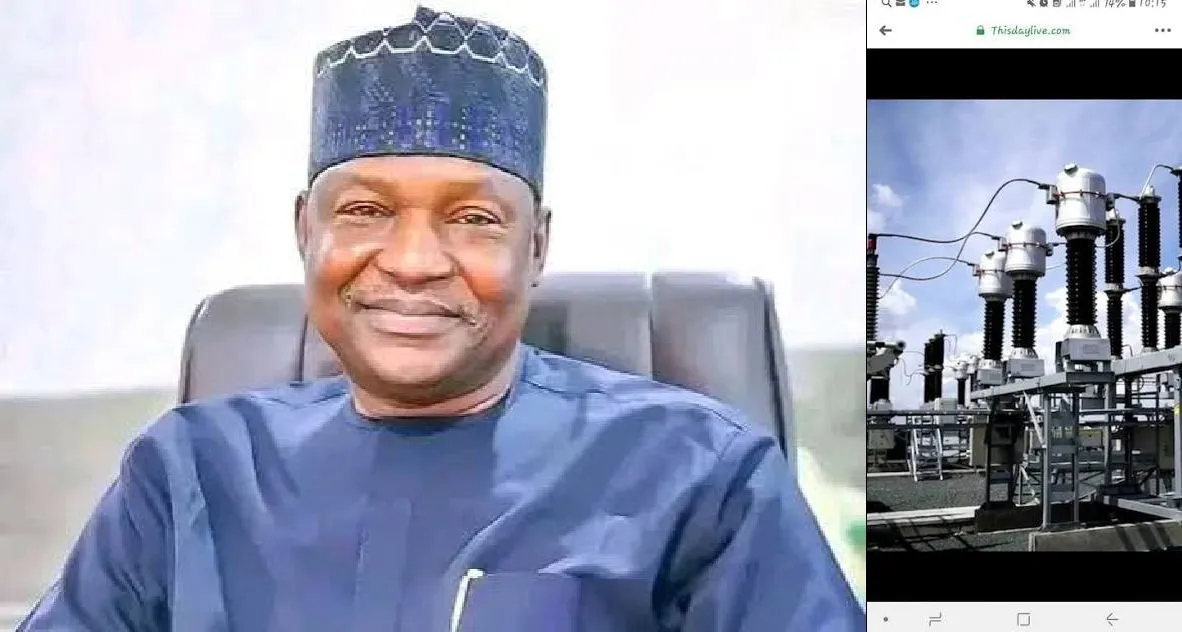
Former Attorney-General of the Federation, Abubakar Malami, SAN, has defended the $200 million settlement agreement between the Federal Government and Sunrise Power over the Mambilla hydropower project, saying the arrangement was made in Nigeria’s interest.

Malami’s position followed an International Chamber of Commerce tribunal ruling which found that the 2020 settlement agreement was linked to corruption and was therefore unenforceable.
The former AGF and the then Minister of Power, Saleh Mamman, signed the settlement agreement in January 2020, under which Nigeria was expected to pay Sunrise Power $200 million. A subsequent addendum divided the payment into two $100 million instalments and provided for an additional $200 million payment in the event of default, alongside interest.
During the arbitration, Sunrise promoter Leno Adesanya alleged that Malami and Mamman had demanded half of the settlement sum as bribes. He claimed the officials wanted the first $100 million paid to Sunrise, with the second instalment to be released after an alleged payment arrangement had been fulfilled.

Adesanya told the tribunal that he rejected the demand and claimed to have audio and video recordings that could support his allegations. However, he did not produce the recordings despite an order to do so, citing concerns for his safety.
The tribunal said it found Adesanya’s failure to produce the recordings difficult to accept and concluded that the settlement agreement and its addendum were products of corruption. It consequently ruled that the agreements could not be enforced.
The tribunal did not reach the same finding against Mamman, noting that the recordings were the only potential direct evidence concerning his alleged involvement.
No payment was ultimately made to Sunrise because former President Muhammadu Buhari declined to approve the settlement. The tribunal, however, held that the failure to make the payment did not change its conclusion regarding the alleged corrupt nature of the agreement.
Reacting through his media aide, Mohammed Bello Doka, Malami denied that his actions as AGF were motivated by any expectation of personal financial gain.
He maintained that there was no evidence showing that he received money or any other financial benefit from Sunrise, Adesanya or any related entity under the arrangement.
Malami also pointed out that the $200 million settlement was never paid by the Federal Government, describing the existence, authenticity and contents of the alleged recordings as matters that required proper consideration.
According to him, the dispute over the Mambilla project began in 2003 and had continued through successive administrations. He said the government at the time was confronted with potentially multibillion-dollar liabilities, prolonged litigation, financing challenges and delays affecting the project.
Malami explained that the government’s consideration was whether a significantly smaller negotiated settlement could resolve the dispute and reduce the financial and legal exposure surrounding the project.
He added that after Buhari rejected the proposed payment, he did not instruct officials to pay Sunrise. Instead, he said he directed the lawyers representing the Federal Government to oppose efforts by Sunrise to enforce the settlement.
The former AGF also stressed that the ICC proceedings were commercial arbitration and not a criminal trial against him.
He welcomed the tribunal’s decision in favour of Nigeria, particularly its order directing Sunrise and Adesanya to reimburse the country $11.82 million in legal expenses and $414,125 in arbitration costs.
Malami said he would provide a more detailed response to the tribunal’s findings after reviewing the complete arbitration award.




