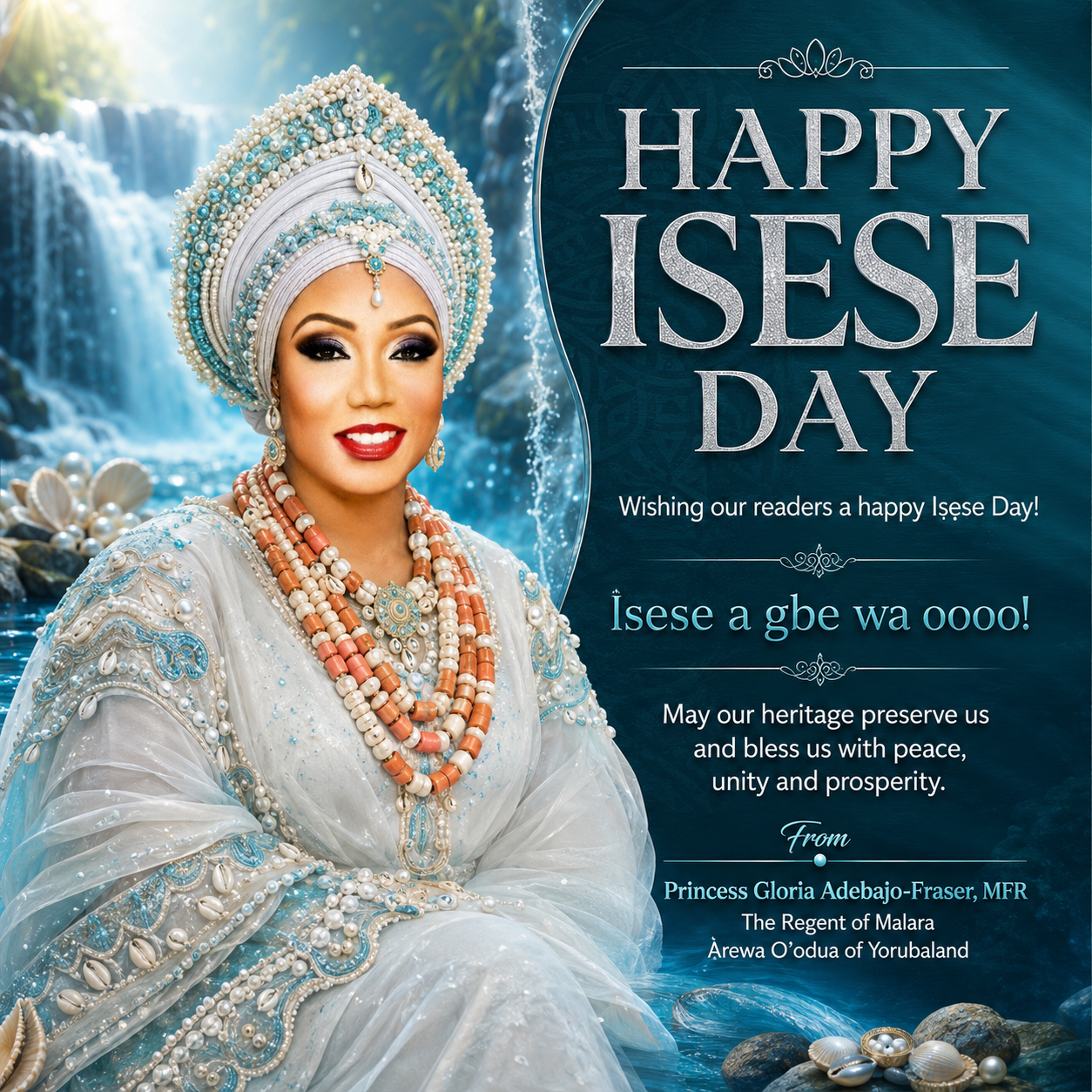
ÌṢẸ̀ṢE DAY: CELEBRATING YORÙBÁ SPIRITUALITY, IDENTITY AND ANCESTRAL HERITAGE
By Gloria Fraser, MFR
Across Yorùbáland and communities in the diaspora, drums, prayers, traditional attire and cultural performances are marking Ìṣẹ̀ṣe Day—an annual celebration of Yorùbá indigenous spirituality, ancestry and cultural heritage.
Observed on August 20, Ìṣẹ̀ṣe Day provides an important occasion for practitioners and cultural communities to honour Olódùmarè, the Òrìṣà, ancestors, traditional institutions and the enduring values of Yorùbá civilisation. Several southwestern states recognise the occasion, although it is a regional observance rather than a nationwide federal public holiday.
The word Ìṣẹ̀ṣe broadly means tradition or ancestral custom. It represents the spiritual and cultural foundations inherited from earlier generations and preserved through oral history, language, worship, music, dance, dress, art, festivals and community institutions.
For practitioners, Ìṣẹ̀ṣe Day is principally a period of spiritual renewal, thanksgiving and reflection. Prayers are offered for peace, protection, good health, prosperity and harmony among individuals, families and communities. It is also a time to honour the Òrìṣà and remember the ancestors whose experiences, knowledge and sacrifices helped shape the present generation.
Beyond its religious significance, Ìṣẹ̀ṣe Day carries an important cultural message: a people cannot fully understand their destination if they become disconnected from their origins.
Yorùbá culture is one of Africa’s most influential civilisations, with an intellectual and spiritual heritage extending far beyond Nigeria. Its traditions have travelled across the Atlantic and remain visible in communities throughout Brazil, Cuba, Trinidad and Tobago, the United States and other parts of the world.
The celebration therefore serves as a call to preserve the Yorùbá language, which remains one of the most important vehicles for transmitting history, identity and traditional knowledge. When a language declines, irreplaceable expressions, proverbs, songs, philosophies and communal memories are placed at risk.
Ìṣẹ̀ṣe Day also provides an opportunity to introduce younger generations to the deeper meaning of their heritage. Cultural preservation cannot be limited to ceremonial clothing and annual festivals. Children should understand Yorùbá history, language, greetings, music, arts, family values, respect for elders and the principle of ìwà pẹ̀lẹ́—good and gentle character.
The occasion is commonly marked by community gatherings, prayers, processions, drumming, dancing, lectures, storytelling and colourful cultural performances. Traditional rulers, priests, priestesses, community leaders, artists and cultural custodians play important roles in preserving and passing this knowledge from one generation to another.
The growing recognition of Ìṣẹ̀ṣe Day also reinforces Nigeria’s constitutional commitment to freedom of religion and belief. Indigenous African spirituality deserves the same dignity and protection accorded to other faiths. Respect for Ìṣẹ̀ṣe does not diminish Christianity, Islam or any other religion; it affirms the right of every Nigerian to practise and celebrate a lawful faith without ridicule, discrimination or exclusion.
Cultural diversity should not divide the country. Properly understood, it enriches Nigeria and strengthens mutual respect among its people.
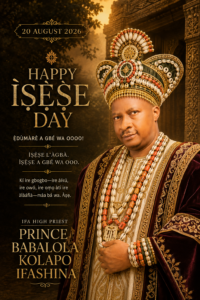
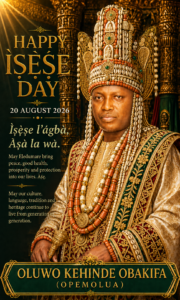
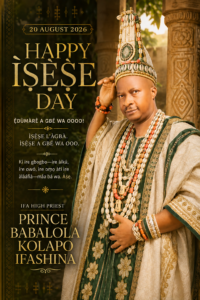
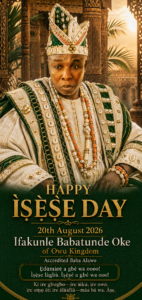
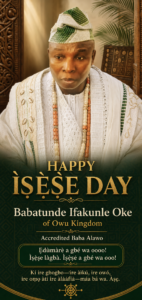

THE NATIONAL PATRIOTS RECOGNISES ÌṢẸ̀ṢE DAY
The National Patriots recognises Ìṣẹ̀ṣe Day as an important celebration of the ancestral foundation, indigenous spirituality and cultural identity of the descendants of Odùduwà.
Ìṣẹ̀ṣe is not merely another religion competing with Christianity or Islam. It is the original foundation from which Yorùbá language, customs, spirituality, traditional institutions and communal values emerged. Christianity and Islam subsequently became important parts of Yorùbá society
Princess Gloria Adebajo-Fraser MFR.
Arewa O’odua of Yorubaland.