

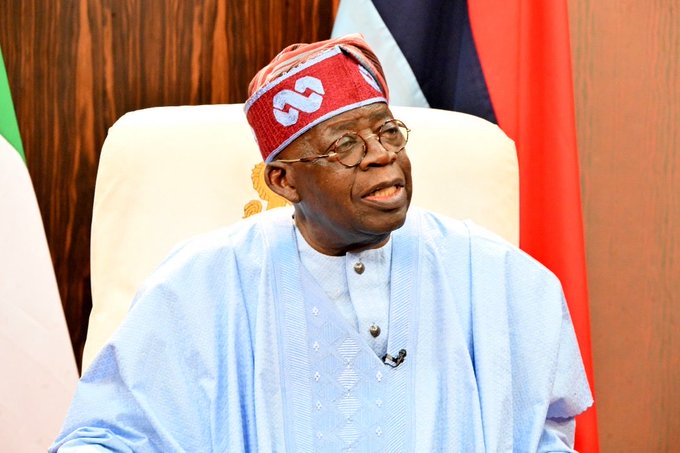
Former National Vice-Chairman of the All Progressives Congress (APC) in the South-West, Bankole Adefemi Oluwajana, has said President Bola Ahmed Tinubu has demonstrated through his policies and actions that restructuring Nigeria remains part of his administration’s agenda.

Oluwajana made the assertion in an interview in which he discussed the Tinubu administration’s performance, Nigeria’s economy, agriculture, federalism, restructuring and preparations for the 2027 general elections.
According to him, Tinubu’s administration has gone beyond routine governance by pursuing policies aimed at restructuring the country, promoting economic growth and improving economic stability.
Oluwajana described Tinubu as a leader who, in his view, understands his direction for the country and is committed to achieving his objectives.
He acknowledged that the administration may have experienced setbacks and made mistakes but argued that such challenges were not necessarily deliberate and could be addressed as the government continues in office.

TINUBU’S ECONOMIC POLICIES
Oluwajana defended the administration’s decision to remove fuel subsidies and deregulate the naira, describing both measures as important elements of the government’s economic reforms.
He argued that the changes had altered some patterns of economic activity involving Nigerians who travel abroad to trade.
According to him, Nigeria’s foreign reserves have also increased significantly, which he cited as an indication of improvement in the country’s economic position.
He therefore cautioned against reversing the direction of the reforms, arguing that doing so could undermine the progress he believes has been recorded.

RESTRUCTURING AND FEDERALISM
On the question of restructuring, Oluwajana said the process could not be completed within a few years, noting that major changes to Nigeria’s political and economic structure require time.
He said, however, that he believes Tinubu has already taken steps in that direction.
One example he cited was the increased revenue available to states. He also pointed to investments in roads, railways and other infrastructure as part of what he considers the administration’s broader approach to restructuring.
Oluwajana acknowledged that the process remains incomplete but said he believes the administration’s actions indicate that restructuring is being pursued within the limitations of Nigeria’s democratic system.
He contrasted this with restructuring imposed through military decrees, noting that a civilian administration has to operate within constitutional and democratic constraints.

GOVERNORS AND SUBSIDY SAVINGS
Oluwajana also discussed the relationship between the Federal Government and state governors, particularly the distribution of funds arising from fuel subsidy reforms.
He said governors wield substantial constitutional powers within Nigeria’s federal system and that the President must work with them to ensure that resources reach citizens.
He noted that Tinubu has also encouraged governors to focus on projects and policies that directly benefit their populations rather than concentrating excessively on expensive infrastructure projects.
However, he agreed that state governors need to do more to translate increased resources into tangible improvements in the lives of Nigerians.

POLITICAL OPPOSITION AND 2027
On the political situation ahead of the 2027 elections, Oluwajana expressed his assessment that opposition parties currently face organisational challenges.
He argued that a successful political party requires a strong structure, organisation and long-term preparation rather than relying primarily on social media criticism or public opposition to the incumbent government.
He also discussed efforts by opposition politicians to cooperate around a single presidential candidate, arguing that differences in political ambitions and interests could make such an arrangement difficult to sustain.
Oluwajana further said that some of the issues being raised against Tinubu ahead of the next election had also featured prominently during the 2023 presidential campaign.

AGRICULTURE AS A KEY ECONOMIC OPPORTUNITY
Oluwajana also expressed concern about Nigeria’s declining focus on agriculture.
He argued that the country has historically possessed significant agricultural potential but that the pursuit of white-collar employment has gradually drawn people away from farming and rural economic activities.
He cited palm oil as an example, noting that Nigeria was once a major global supplier but now accounts for a much smaller share of world production.
According to him, cocoa, cashew, groundnuts and other agricultural commodities have similarly suffered from decades of insufficient investment and replacement of ageing plantations.
He said Nigeria could regain a stronger position in agricultural exports by investing in new plantations, improved crop varieties and modern farming methods.

FOREIGN PARTICIPATION IN AGRICULTURE
Oluwajana also raised concerns about increasing foreign participation in Nigeria’s agricultural sector.
He claimed that foreign investors, including Chinese, Indian and other African investors, are increasingly involved in agricultural plantations across the country, particularly in commodities such as cocoa, oil palm, cashew and timber.
He argued that Nigeria needs to develop stronger domestic capacity to participate in these value chains and ensure that more of the economic benefits generated from agricultural production remain within the country.
AGRICULTURAL EXPORT POTENTIAL
According to Oluwajana, Nigeria has significant opportunities in the global market for agricultural products.
He warned that many existing plantations were established several decades ago and could eventually become less productive as the trees reach the end of their productive lifespan.
He therefore called attention to the need for new plantations and the adoption of improved agricultural varieties capable of producing within shorter periods.

He also identified growing international demand for Nigerian agricultural products as an opportunity, particularly in Asian markets.
He cited products such as bitter kola, kola nuts, cocoa and other plant-based resources as commodities that could generate greater export revenue if Nigeria develops their production and value chains.
THE FUTURE OF NIGERIA’S ECONOMY
Oluwajana maintained that Nigeria’s long-term economic prospects would depend on strengthening productive sectors rather than relying heavily on government employment or traditional sources of revenue.
He argued that agriculture, manufacturing, infrastructure and private enterprise should play stronger roles in creating employment and generating economic opportunities.
He also stressed the importance of reducing the pressure on major cities such as Lagos by developing economic opportunities in rural communities and other parts of the country.
In his view, greater investment in agriculture and rural economies could help reduce excessive migration to major cities while creating opportunities for Nigerians outside traditional white-collar employment.
Oluwajana ultimately argued that Nigeria’s economic transformation would require sustained reforms, stronger agricultural production, infrastructure development and continued efforts to improve the country’s federal structure.




