

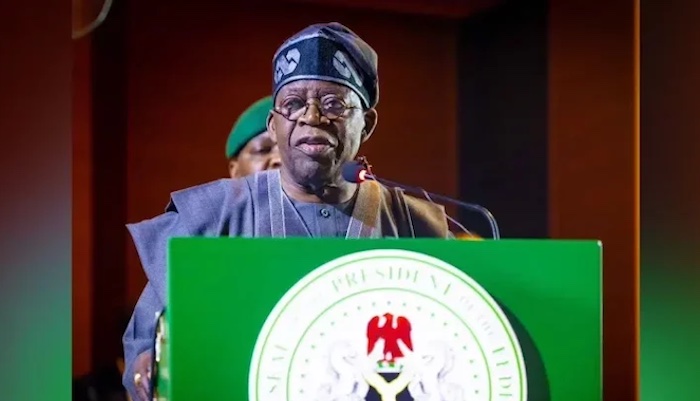
President Bola Ahmed Tinubu has declared that Nigeria is moving into what he described as an “age of prosperity” following three years of economic reforms aimed at correcting the country’s economic direction.
Tinubu made the declaration in his Independence Day address on Thursday, October 1, 2026, as Nigeria marked its 66th anniversary.

The President said his administration’s main focus during its first three years had been to address longstanding economic challenges and establish a stronger foundation for sustainable growth.
According to him, the country has now moved beyond what he described as the difficult phase of economic adjustment, with the government’s attention shifting towards creating jobs, increasing production, reducing living costs and improving the standard of living.
“The emergency treatment is over. The foundation has been repaired,” Tinubu said.
He explained that the government’s economic objective had changed from correcting the country’s course to achieving “shared and widespread prosperity.”

TINUBU DEFENDS ECONOMIC REFORMS
The President acknowledged that the reforms implemented since his administration came into office had created difficulties for Nigerians, but argued that they were necessary to address structural weaknesses that had accumulated over several years.
He said the economic problems confronting Nigeria were not created by the reforms, but were issues that the reforms were intended to address.
Tinubu said Nigeria’s economic outlook had improved after three and a half years of reforms, pointing to economic growth of more than four per cent in 2026.
He also cited contributions from both the oil and non-oil sectors, a reduction in oil theft, lower inflation compared with its previous peak, stronger foreign reserves and greater stability in the foreign exchange market.

The President further stated that Nigeria recorded more than $6 billion in non-oil export revenue in 2025, which he described as the country’s highest figure on record.
He said these developments had attracted continued interest from international observers, multilateral institutions and investors.
GOVERNMENT SHIFTS FOCUS TO PROSPERITY
Tinubu said the next phase of his administration would focus more directly on improving the economic conditions of ordinary Nigerians.
He said prosperity should not be measured only by economic statistics but by whether farmers can produce profitably, factories can operate reliably, businesses can access financing and young Nigerians can find productive employment.
Reducing the cost of living, he said, would require lowering the cost of producing and transporting goods.

The President identified agricultural production, mechanised irrigation, access to seeds and fertiliser, storage facilities and transportation as areas requiring continued attention.
He also highlighted ongoing investments in roads, railways and ports as part of efforts to connect farms and factories with markets.
According to Tinubu, improving productivity and reducing the cost of doing business should eventually help bring down the prices paid by consumers.
JOB CREATION AND INDUSTRIAL DEVELOPMENT
The President said job creation, enterprise and industrial expansion would remain central to the government’s economic programme.
He said Nigeria’s large young population could become a major source of economic production if the right opportunities, skills and infrastructure were provided.

Tinubu said the government would seek to use Nigeria’s gas resources to support new industries while helping existing industrial centres revive manufacturing activities.
He also promised continued expansion of digital connectivity and investment in skills that match the needs of employers.
The President said the government wanted to see more Nigerian businesses producing goods locally and selling them internationally, while encouraging young entrepreneurs to build technology companies and create employment within the country.
SUPPORT FOR VULNERABLE NIGERIANS
Tinubu acknowledged that many Nigerians continue to face difficulties meeting basic needs, including food, education, healthcare and transportation costs.
He said these challenges predated his administration and reflected years of low productivity, inadequate infrastructure, limited opportunities and weaknesses in public institutions.
The President said his government could not reverse decades of accumulated problems within a single term but could change the country’s direction.

He pointed to strengthened support for vulnerable households and improvements to the National Social Register as part of efforts to ensure assistance reaches people who need it.
He also highlighted the Nigerian Education Loan Fund, saying it was intended to give students from low-income families greater access to higher education.
Tinubu further mentioned CREDICORP, which provides consumer credit for working Nigerians seeking to acquire assets such as vehicles, solar systems and digital devices.
He said the Federal Government would continue working with state and local governments to improve primary healthcare, basic education and other essential public services.
According to the President, salaries and pensions have been paid on time and in full since 2023, while reforms to the national pension system have also been introduced.
‘WE MUST DEFEAT POVERTY’
Tinubu said social programmes should not be viewed as a permanent replacement for economic prosperity but as support for Nigerians while the broader economy develops.
“Our objective is not to manage poverty more efficiently. We will defeat it,” he said.
He acknowledged that achieving this would take time and require sustained economic growth and the creation of millions of productive opportunities.
The President maintained that the country was now better positioned to pursue these objectives because, in his assessment, the economic reforms had established a stronger foundation.

‘THE AGE OF REFORM HAS DONE ITS WORK’
Tinubu described the current moment as a transition from economic reform to a period focused on prosperity.
“The age of reform has done its work. Now begins the age of prosperity,” he said.
He called on Nigerians to remain focused on building the country and expressed confidence in the ability of ordinary citizens to drive national development through their work, resilience and determination.
The President acknowledged that challenges would remain but said Nigeria now had what he described as a clearer direction and stronger foundation.
Tinubu concluded his Independence Day address by urging Nigerians to look towards the future rather than return to past difficulties.
He said the country’s ultimate goal should be a Nigeria where prosperity is widely shared, children can pursue opportunities regardless of their background and the nation’s economic potential is reflected in the daily lives of its citizens.
He ended by wishing Nigerians a happy 66th Independence Anniversary and calling for continued faith in the country’s future.




