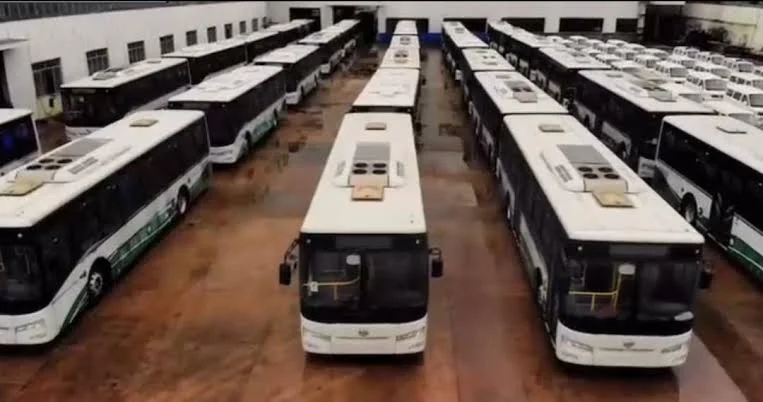
The Presidential Initiative on Compressed Natural Gas and Electric Vehicles (Pi-CNG & EV) says the growing deployment of CNG buses and electric vehicles across Nigeria is beginning to reduce transportation costs for commuters.

The Executive Chairman of Pi-CNG & EV, Ismaeel Ahmed, disclosed this in a statement issued by the initiative’s Head of Brand and Communications, Onyekachi Eke.
According to Ahmed, the reduction in transport fares is being driven by the expansion of CNG and electric mobility on major transport routes by federal and state governments.
He said the development is part of the National Affordable CNG Transit Programme, which aims to ensure that the lower operating costs associated with alternative energy translate into more affordable transportation for Nigerians.
President Bola Ahmed Tinubu had set October 1 as a target for Nigerians to begin seeing measurable reductions in transportation costs as the adoption of CNG and electric mobility expands.

Ahmed said different models of affordable transportation were already emerging across the country, with some states deploying CNG buses, electric buses, taxis and tricycles, while also investing in refuelling and charging infrastructure.
BORNO DEPLOYS ELECTRIC VEHICLES
In Borno State, 500 electric tricycles, 20 electric buses and 150 electric saloon cars and taxis have been deployed, supported by eight standalone solar-powered charging stations.
The state is providing subsidised transportation, with fares set at N50 for buses, N100 for taxis and N200 for tricycles.
Borno is also expanding its CNG infrastructure, with three CNG stations in Maiduguri. One is already operational, while two others are nearing completion. Conversion facilities are also being developed to support the transition of more vehicles to CNG.

ABIA AND ZAMFARA EXPAND ELECTRIC MOBILITY
In Abia State, 40 electric buses are providing public transportation at fares subsidised by 50 per cent.
Zamfara State is also introducing 100 electric taxis, with fares expected to be about 40 per cent lower than existing rates.
ENUGU COMMUTERS SEE LOWER FARES
Ahmed said the impact of lower energy costs was already evident in Enugu State, where 100 CNG buses operated by FEMADEC on behalf of the state government serve several major routes.
The routes include Enugu–Nsukka, ESUTH–Agbani, Enugu–UNTH, Holy Ghost–Emene and other commercial and residential corridors.
On the Enugu–Nsukka route, which previously cost between N3,000 and N4,000, the fare was initially reduced to N2,200 and now stands at N1,600 on the CNG-supported service.

CNG BUSES CUT FARES IN FCT
Similar reductions are being recorded in the Federal Capital Territory.
On the Kubwa–Berger route, commuters using CNG buses pay N500 compared with N1,000 on diesel-powered buses. The Apo–Nyanya/Maraba route also costs N500 compared with N1,000.
The Masaka–Berger route costs N600 on CNG compared with N1,000, while Berger–Gwagwalada costs N700 compared with N1,200.
The FCT fleet is also expected to expand, with 26 additional buses scheduled to be added.
LAGOS ROUTES RECORD FARE REDUCTIONS
Commuters in Lagos are also benefiting from lower fares on several routes.
The Ikorodu–Fadeyi route has dropped from N1,200 to N680, while Ikorodu–Maryland has reduced from N1,000 to N570.
The Ikeja–Obalende route has also moved from N1,400 to N720, with other routes recording varying levels of reduction.

PROPOSED REDUCTIONS IN AKWA IBOM AND EDO
In Akwa Ibom State, proposed fares include a reduction from N1,300 to N650 on the Uyo–Ikot Ekpene route.
The Uyo–Eket route is proposed to fall from N2,500 to N1,250, while Uyo–Oron is proposed to reduce from N3,000 to N1,500.
In Edo State, proposed fares on several routes would also represent reductions of about 50 per cent.
The Benin–Auchi route is proposed to move from N8,000 to N4,000, while Kingsquare–Ugbowo–Oluku is proposed to reduce from N600 to N300.
MORE STATES JOIN THE PROGRAMME
Ahmed said interventions in Delta, Jigawa, Ogun and Oyo states are also expected to contribute to lower transportation costs.
In Delta State, the proposed fare for the Warri–Asaba CNG service is N4,900, compared with the current N7,000.
In Jigawa State, the proposed fare for the Dutse–Kano route is N2,000, compared with the current N3,500.
Delta State has also developed 22 electric vehicle charging stations to support the expansion of electric mobility.

In Kaduna State, 100 CNG buses are providing free transportation on major routes. According to Pi-CNG & EV, the buses have transported about 3.2 million passengers, with estimated savings to commuters exceeding N3.5 billion.
Niger State is also expanding its alternative-energy transport programme, with CNG-supported transportation between Suleja and Abuja providing a cheaper travel option.
In Ebonyi State, the government has acquired luxury buses as part of measures aimed at reducing the impact of transportation costs on civil servants.

MORE CNG BUSES AND REFUELLING STATIONS PLANNED
Pi-CNG & EV said it is deploying another batch of buses that will operate with reduced fares on designated routes.
The current deployment includes 61 buses designated for commercial operations. Of these, 13 each are allocated to the FCT, Kano and Lagos; five each to Delta, Kaduna and Katsina; three to Enugu; and two each to Borno and Niger.
The initiative also reported increasing CNG conversion activities in emerging markets such as Kano and the South-East, alongside established CNG markets in other parts of the country.
According to Ahmed, new CNG refuelling stations are also coming on stream regularly, with Pi-CNG & EV working with industry partners to reach about 150 operational CNG refuelling stations before the end of 2026.
He said the October 1 target should be viewed as part of an expanding programme rather than the conclusion of efforts to reduce transport fares.
Pi-CNG & EV said it would continue working with relevant stakeholders to expand CNG refuelling and EV charging infrastructure so that savings from lower energy costs can increasingly be reflected in transportation fares across the country.