

Making reforms work for Nigerians: inside APC’s 2027–2031 prosperity agenda for affordable living, jobs, education, healthcare and measurable delivery
By Princess Gloria Adebajo-Fraser, MFR
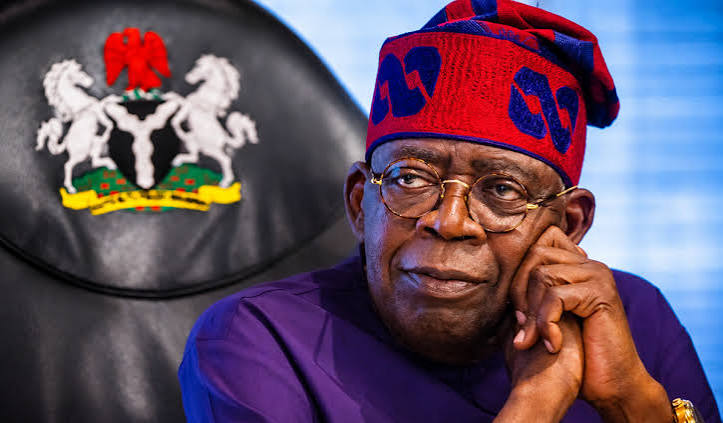
The All Progressives Congress’s 2027–2031 manifesto, From Reforms to Prosperity, presents the next phase of President Bola Ahmed Tinubu’s development agenda: translating economic reforms into improvements Nigerians can experience through their incomes, employment, public services and everyday living costs.

The document addresses a question central to the approaching election: how will national economic progress improve life for ordinary households?
Its answer brings together education, healthcare, social protection, affordable housing, consumer rights, enterprise development, energy, infrastructure and accountable governance.
An online listing published by Proshare on November 8, attributed to APC Nigeria, identifies four principal pillars: national security, improved living standards, energy and infrastructure-led economic growth, and accountable governance.
For the National Patriots, the manifesto’s significance lies in connecting policy decisions with practical benefits. Nigerians want to understand what reforms mean for school fees, medical bills, transport fares, food purchases, business survival and opportunities for their children.
RESTORING PURCHASING POWER AND AFFORDABLE LIVING
The agenda’s household focus recognises that economic statistics alone cannot describe a family’s circumstances.
President Tinubu addressed the connection between production costs and affordability in his October 1, 2026 Independence Day address:
“We will achieve this by lowering the cost of producing and moving the things Nigerians consume.”

His statement followed a commitment to bring down living costs, connecting the administration’s economic direction with household concerns.
Purchasing power improves when earnings stretch further, essential services become more accessible and households face fewer unavoidable expenses.
For a worker, affordable transport can preserve more of a monthly salary. For a parent, accessible public healthcare can reduce pressure on savings. For a trader, reliable electricity can lower operating costs and strengthen the business.
The manifesto’s attention to living costs, consumer protection, fair credit and taxation should therefore be understood as part of a connected affordability programme.
The practical objective is to help Nigerians retain more value from their earnings while expanding opportunities to earn.

EDUCATION, HEALTH AND SOCIAL PROTECTION
Education and vocational training occupy an important place in that approach.
The development challenge extends from keeping children in school to helping young people acquire useful qualifications, practical skills and routes into employment or enterprise.
Healthcare has a similarly direct relationship with household prosperity. Families cannot build financial security if treatment costs repeatedly overwhelm their resources.
Social protection must also reach people whose circumstances prevent them from immediately benefiting from expanding economic activity, including vulnerable households and disadvantaged children.

Women’s inclusion strengthens these priorities. Improved access to education, finance, healthcare, employment and decision-making can expand both individual opportunity and household resilience.
Affordable social housing adds another essential dimension: greater stability for families whose rent or accommodation costs consume a disproportionate share of income.
POWERING PRODUCTION AND EMPLOYMENT
The manifesto links energy and infrastructure with the expansion of productive activity.
Its published headline ambitions include peak electricity generation of 10,000 megawatts, annual non-oil exports of at least $15 billion and annual economic growth of six per cent. These are proposed targets, rather than achievements already delivered.
Reliable electricity matters to the small manufacturer, welder, tailor, cold-room operator and digital entrepreneur as much as it matters to major industry.
The citizen’s benefit comes through functioning businesses, employment opportunities, dependable services and reduced expenditure on alternative power.

Diversification likewise requires more Nigerian businesses to produce competitively for domestic and international markets. Industry, trade, investment, agriculture, solid minerals, steel, digital services and creative enterprise all have roles in widening that productive base.
World Bank Group President Ajay Banga explained the business foundations of job creation in remarks on October 13, 2026:
“It comes from businesses that can start, that can grow, that can hire, that can trade, and that can compete.”
Banga was discussing international development, not endorsing the APC manifesto. His observation nevertheless provides a relevant test: public investment should help enterprises become productive employers.
ROADS, RAIL AND PORTS: CONNECTING INVESTMENT WITH DAILY BENEFITS
The transport programme encompasses roads, railways, ports and aviation, including completion of ongoing projects and rehabilitation of existing roads.
The connection with household welfare must remain explicit.


Farmers need dependable routes to markets. Traders need predictable deliveries. Manufacturers need raw materials to arrive efficiently and finished goods to reach customers.
Better transport can reduce spoilage, shorten delivery journeys and lower logistics costs. Where those savings reach buyers through competitive markets, they can contribute to cheaper goods.
These benefits require functioning services, effective maintenance, security and affordable access. Infrastructure delivers its strongest value when the entire journey works—from farm or factory to warehouse, market and household.
DIGITAL, CREATIVE AND RESOURCE INDUSTRIES
The agenda’s coverage of the digital economy and creative industries recognises opportunities beyond traditional public-sector employment.

Technology, entertainment, design and related services can create income opportunities for young Nigerians and businesses serving international customers.
Oil and gas, solid minerals and steel remain important to industrial development, but their contribution should extend beyond the extraction and export of raw resources.
Processing, manufacturing, technical services and domestic supply chains can spread economic activity more widely and create additional employment.
Fiscal sustainability, fair taxation and accessible credit must support these ambitions by connecting public priorities with realistic financing and stronger private enterprise.

JUSTICE, GOVERNANCE AND DELIVERY
Judicial reform forms part of the wider development framework.
Faster and fairer justice can help citizens resolve disputes, protect rights and obtain remedies. Businesses also benefit when contracts are enforceable and commercial disagreements are addressed promptly.
Reform must strengthen judicial integrity, institutional independence and the rule of law.
The manifesto’s delivery approach also places emphasis on implementation discipline. Its first 100 days are presented as a period for establishing responsibilities, publishing starting-point indicators and organising progress reporting.

These are proposed accountability arrangements whose value will depend on consistent implementation.
Progress reporting should answer practical questions: how many homes have families occupied, how many trainees found work, how reliably do clinics operate, and how much time do commuters save? Clear answers would make the agenda understandable beyond policy circles and strengthen public participation in implementation.
INDEPENDENT ASSESSMENT AND THE TEST OF RESULTS
Proshare’s independent review recognises the manifesto’s stronger emphasis on household prosperity while identifying areas requiring greater detail.

It calls attention to the need for costed commitments and clearer interim objectives, particularly for wages, food affordability and poverty reduction. Those observations provide useful questions for implementation rather than an endorsement of the party.
Similarly, assessments by multilateral institutions of Nigeria’s economic performance should be distinguished from approval of an election manifesto.
For citizens, the enduring test will be straightforward: better services, stronger livelihoods, affordable essentials and visible delivery against published commitments.

NATIONAL PATRIOTS’ POSITION
The National Patriots welcome the manifesto’s emphasis on translating reforms into household prosperity through reliable power, affordable transport, accessible healthcare, quality education and opportunities to earn. Published milestones and regular reporting can strengthen confidence and help ensure that workers, farmers, traders, women and young people benefit meaningfully from Nigeria’s growth.
We believe this manifesto demonstrates President Tinubu’s goodwill towards Nigerians, his understanding of the country’s challenges and a strategic programme for addressing them. He has outlined his vision, priorities and proposed delivery framework. I therefore urge every Nigerian to vote for President Bola Ahmed Tinubu, giving him a second term to translate reforms into shared prosperity through affordable living, productive employment and better public services.
Princess Gloria Adebajo-Fraser, MFR, MBA, MIoD, FIPMD
President, National Patriots
Member, APC-PCC Strategic Communications Team 2027