

Efforts by Nigeria’s opposition parties to present a single presidential candidate against President Bola Tinubu in the 2027 general election have suffered another setback following disagreements among key political figures over the proposed alliance.
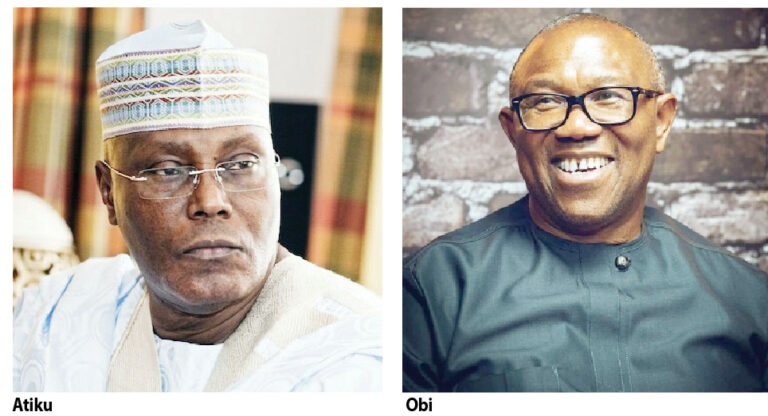
Former Vice-President Atiku Abubakar has rejected reports that he intends to withdraw from the presidential race in favour of former Anambra State Governor Peter Obi. Meanwhile, Oyo State Governor Seyi Makinde has questioned the political strength of a proposed Obi-Rabiu Kwankwaso ticket.

The latest disagreement comes as opposition leaders continue negotiations aimed at preventing a divided opposition vote in the next presidential election.
The controversy followed a press conference in Abuja at the weekend, where the Coalition of Atiku Support Groups Initiative announced that it was withdrawing support for Atiku and endorsing a proposed joint ticket involving Obi and former Kano State Governor Rabiu Kwankwaso.
The announcement generated reactions among Obi’s supporters, with some interpreting it as a possible indication that Atiku was preparing to step aside.

Businessman and social commentator Isaac Fayose also suggested in a video shared on his Facebook page that the development could signal Atiku’s readiness to withdraw from the contest.
However, Atiku dismissed the reports through his media aide, Phrank Shaibu, describing them as a “brazen, malicious and desperate falsehood”.
The former vice-president maintained that he had neither withdrawn from the presidential race nor authorised any individual or organisation to announce such a decision on his behalf.
He also warned that spreading claims about his withdrawal could benefit President Tinubu by removing a major challenger from the race.
Atiku insisted that he remained committed to contesting the 2027 election and urged his supporters to continue mobilising ahead of the polls.

“I do not need anyone to step down for me, and I am stepping down for no one,” he said.
He also reaffirmed his commitment to his Affordable Life campaign, which he said was designed to address the economic difficulties facing Nigerians, including rising living costs, hunger and poverty.
An African Democratic Congress (ADC) chieftain, Dele Momodu, also rejected speculation that Atiku would surrender his ambition to support Obi.
Momodu described Atiku as too experienced and politically influential to abandon his presidential aspiration for another candidate. He further recalled that Atiku had selected Obi as his running mate in the 2019 presidential election.

MAKINDE QUESTIONS PROPOSED OBI-KWANKWASO TICKET
The disagreement has also been fuelled by comments from Makinde, who questioned whether an Obi-Kwankwaso combination would offer the strongest political option for Nigerians.
Speaking during an interview on The Rooftop, a programme hosted by Kayode Okikiolu, the Oyo governor highlighted the historical relationship between the North and the South-West.
Makinde argued that cooperation between the two regions had traditionally played an important role in maintaining political stability in Nigeria.
He referred to the January 1966 military coup, during which several prominent political and military figures, including leaders from the North and South-West, were killed.
The governor also pointed to the performance of his administration in Oyo State and what he described as the youthful energy he could bring to national leadership.
He advocated a transitional government of national unity to address the country’s political and security challenges. Makinde said he was willing to lead such an arrangement but would not seek to benefit politically from its outcome.
He argued that this would help prevent personal ambition from influencing decisions made in the national interest.
OPPOSITION PARTIES CONTINUE CONSENSUS TALKS
Despite the disagreements, some opposition figures remain optimistic that the parties can reach an agreement before the 2027 election.

The Director-General of the Nigerian Democratic Congress (NDC) Presidential Campaign Council, Ibrahim Abdulkarim, has urged Atiku to support the proposed alliance involving Obi and Kwankwaso.
Abdulkarim argued that opposition parties needed to work together to challenge the ruling All Progressives Congress (APC). He also maintained that the coalition did not necessarily have to operate under the ADC.
The Tanimu Turaki-led faction of the Peoples Democratic Party (PDP) has similarly expressed confidence in the ongoing negotiations.
The faction’s National Publicity Secretary, Ini Ememobong, confirmed that discussions were continuing behind the scenes to produce a single presidential candidate.
He said the group remained involved in the coalition process and was working towards an agreement among opposition parties.
However, the Democratic Leadership Alliance (DLA) has distanced itself from the ongoing arrangements.

In a statement signed by its National Chairman, Samuel Memeh, the party said it had been briefed by the coalition organisers but had not decided whether to join the alliance.
It stressed that it was neither directly involved in the negotiations nor committed to the proposed coalition.
The party said it would continue its independent political activities and communicate any decision on possible collaboration through the appropriate channels.
NOVEMBER 30 SUMMIT UNDER PRESSURE
The disagreements have emerged ahead of a planned opposition summit scheduled for 30 November 2026.
The meeting, organised under the Coalition for Democracy led by former APC National Vice-Chairman Salihu Lukman, is expected to bring together participating parties to discuss cooperation and the possibility of presenting a common presidential candidate.

The summit was initially scheduled for 23 November but was postponed following requests from some participating parties.
Lukman said the parties had agreed to suspend campaign activities nationwide on the new date to allow their leaders to participate fully.
The participating political groups include the ADC, Allied Peoples Movement (APM), NDC, a faction of the PDP, Peoples Redemption Party (PRP) and Social Democratic Party (SDP).
However, the latest developments have raised questions about whether the parties can overcome their differences and agree on a candidate acceptable to all sides.
Atiku and Obi are both pursuing presidential ambitions on separate platforms, while Kwankwaso and other political figures also have interests in the negotiations.
The challenge facing the coalition is not only to agree on a common political programme but also to determine which aspirants would be willing to step aside for a consensus candidate.
With the 2027 election approaching, the latest dispute has renewed concerns that personal ambitions and competing political interests could undermine the opposition’s attempt to unite against the ruling party.