

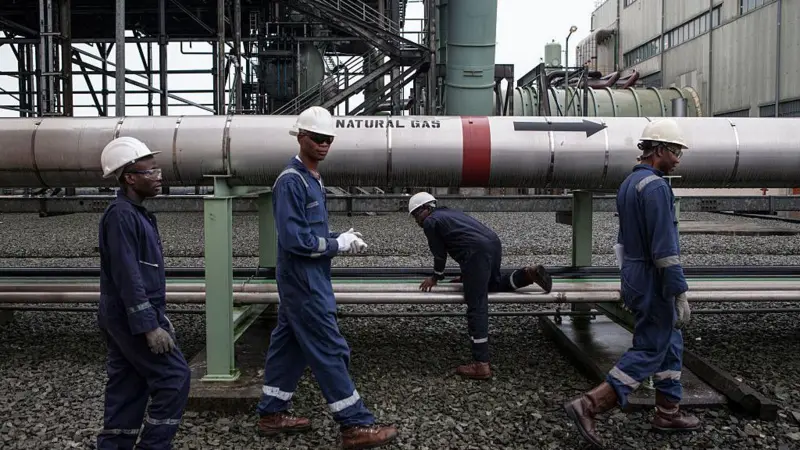
West African leaders have officially approved the Nigeria-Morocco Atlantic Gas Pipeline, marking a major milestone for one of Africa’s largest energy infrastructure projects.
The endorsement was announced during a ceremony in Freetown, where ECOWAS leaders backed the project that is expected to strengthen regional energy cooperation and improve access to international markets.

The proposed pipeline will stretch approximately 6,000 kilometres along the Atlantic coast, connecting Nigeria to Morocco through 14 African countries before linking with Europe’s gas network via Spain.
Construction is expected to begin in 2028, with the project estimated to cost about $25 billion. Once completed, the pipeline is projected to transport up to 30 billion cubic metres of natural gas annually, serving an estimated 400 million consumers across the region.
Energy experts say the project represents a shift from the traditional model in which African natural resources are exported for processing abroad before being sold back to the continent at higher prices. Instead, the pipeline is expected to promote regional industrialisation, energy security and economic development.

The agreement establishes the legal and governance framework for the project after nearly a decade of negotiations, moving it into a more advanced political and technical phase. The pipeline is expected to be developed in stages, with initial construction likely to begin along the Morocco-Mauritania-Senegal corridor before eventually connecting to Nigeria.
Unlike the proposed Trans-Saharan Gas Pipeline, the Atlantic route avoids many of the security challenges associated with the Sahel region, although the extensive offshore construction is expected to increase costs.
The project is being jointly led by Nigeria’s national oil company and Morocco’s national mining agency, with support from ECOWAS, the Islamic Development Bank and the OPEC Fund for International Development.
Beyond supplying gas to Europe, the pipeline is expected to provide affordable energy to participating African countries, encourage electricity generation, support fertiliser and petrochemical industries, expand manufacturing and create employment opportunities across the region.

Despite growing political support, challenges remain, including securing financing, protecting the infrastructure, maintaining political stability across participating countries and addressing uncertainties surrounding future European demand for natural gas as the continent transitions toward renewable energy.




