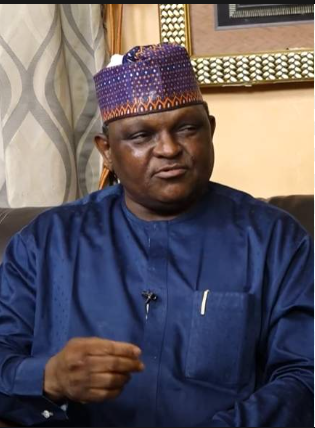
Former Chief Security Officer to the late General Sani Abacha, Dr. Hamza Al-Mustapha, has urged African leaders to draw lessons from China’s development model by prioritising psychological and moral reforms alongside technical development.
Al-Mustapha made the call while speaking at the International Conference (West-Africa): Second Abuja Forum, organised by the Centre for Contemporary China-Africa Research in Nigeria in Abuja.
CORRUPTION AND LACK OF SKILLS AS DEVELOPMENT BARRIERS
The former military officer identified corruption and inadequate technical skills as two major challenges slowing Africa’s development.
According to him, China recognised corruption as more than an administrative problem, describing it as a psychological issue that requires deliberate efforts to change the mindset and values of individuals.

He also argued that a population without adequate skills would struggle to achieve sustainable development because technical competence is essential to national progress.
Al-Mustapha maintained that technical improvements alone cannot eliminate corruption, stressing the need for moral and psychological transformation at individual and institutional levels.
AFRICA NEEDS LEADERSHIP AND MORAL REFORM
Al-Mustapha called on African governments to make moral reform a central part of their development strategies.
He said leaders at every level must actively participate in efforts aimed at transforming citizens’ attitudes, strengthening patriotism and promoting responsible leadership.
According to him, China’s experience demonstrates that sustained development requires both technical advancement and deliberate efforts to improve the values and mindset of the population.
CALL TO REVIEW NIGERIA-CHINA RAILWAY AGREEMENT
Speaking on Nigeria-China cooperation, Al-Mustapha urged the Federal Government to revisit a bilateral agreement reached in 1994 during the visit of the then Chinese Prime Minister to Nigeria.
He said the agreement included plans to develop a railway system with separate lines for transporting goods and passengers across the country.

He argued that the proposed railway network was designed around Nigeria’s east-west economic movement and could help improve the transportation of goods and services.
Al-Mustapha therefore called on the Ministry of Transport and the Chinese Ambassador to examine the old agreement and consider how it could be revived to support Nigeria’s economic development.
EXPANDING CHINA-AFRICA COOPERATION
The former CSO identified infrastructure, trade, investment, manufacturing, digital technology, healthcare and agriculture as other areas where Nigeria and other African countries could deepen cooperation with China.
He also stressed the importance of education, cultural exchange and stronger people-to-people relationships between Africa and China.

According to him, China’s emphasis on ensuring that citizens feel valued and supported has contributed to national unity and development.
He further advocated greater cooperation in green development, knowledge sharing and technology transfer.
Al-Mustapha said African countries could accelerate development by studying successful aspects of China’s experience while adapting them to their own circumstances.
The Abuja conference brought together diplomats, academics and policymakers to discuss strengthening China-Nigeria cooperation and advancing partnership initiatives aimed at achieving shared development goals.