

CNG TAKE-OFF STALLS AS NIGERIANS SPEND N58.6TRN ON PETROL SINCE SUBSIDY REMOVAL
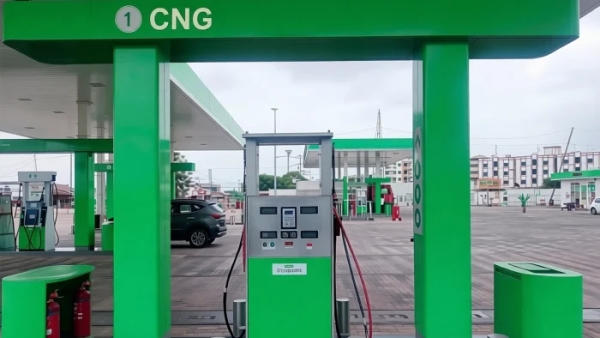
Nigeria’s plan to move one million vehicles from petrol to Compressed Natural Gas (CNG) is facing serious challenges, with only about 120,000 vehicles reportedly converted so far.
Nearly three years after the Federal Government introduced the Presidential Compressed Natural Gas Initiative (P-CNGi) following the removal of petrol subsidy, the programme is yet to reach the scale needed to significantly reduce petrol consumption and transportation costs.
The slow adoption has also come as Nigerians continue to bear a huge fuel burden. Estimates based on national petrol consumption and average pump prices indicate that about N58.6 trillion has been spent on petrol since the subsidy was removed in May 2023.
The Federal Government had announced plans to establish hundreds of CNG refuelling stations nationwide to support the transition. However, only about 90 stations have reportedly been established so far, raising concerns about the pace of implementation.
Despite the challenges, P-CNGi says the programme has recorded progress. The initiative reports that more than 400 conversion centres have been certified, over 7,700 technicians trained and more than 120,000 vehicles converted. It also claims to have attracted over $2.5 billion in investment and created approximately 10,000 jobs.

However, motorists in several major cities continue to complain about limited access to CNG, long queues, faulty equipment and the high cost of converting vehicles.
In Abuja, for instance, motorists have reportedly spent several hours waiting at some CNG stations, while another facility near Next Cash & Carry was said to have stopped dispensing the product for months because of a faulty compression machine.
RISING PETROL COSTS ADD TO THE PRESSURE
The difficulties surrounding CNG adoption have occurred alongside a sharp increase in petrol prices since the subsidy was removed.
In March 2023, the average petrol price was about N263.76 per litre. By June of the same year, it had risen to N545.83.
The average petrol price for 2023 stood at N624.69 per litre, resulting in an estimated annual fuel bill of about N11.2 trillion based on average daily consumption.
The burden increased in 2024, when the average petrol price climbed to about N872.09 per litre. Estimated annual expenditure on petrol consequently rose to approximately N15.9 trillion.
In 2025, the average price was estimated at N1,104.88 per litre, translating to roughly N19.8 trillion in annual petrol expenditure.
The first half of 2026 brought further increases, with petrol averaging about N1,300.33 per litre between January and June. This amounted to an estimated N11.7 trillion spent on petrol within just six months.
TRANSPORT COSTS CONTINUE TO RISE
The increase in fuel prices has also pushed up transportation costs across the country.
Data from the National Bureau of Statistics showed that the average intra-city bus fare reached N1,431.25 per trip in May 2026, representing a significant increase compared with the previous year.
Intercity bus fares and domestic airfares also recorded substantial increases, while motorcycle transport fares rose sharply.
For many workers and business owners, the rising cost of transportation now takes up a large portion of their income, adding to the financial pressure caused by higher food and living expenses.
HIGH CONVERSION COSTS SLOW CNG ADOPTION
Although CNG can provide cheaper running costs for motorists, the initial cost of conversion remains a major obstacle.
Some motorists reportedly spend between N600,000 and N800,000 to convert their vehicles, depending on the type of cylinder and conversion equipment used.
Long queues at available CNG stations have also discouraged some drivers, particularly commercial and ride-hailing operators who depend on their vehicles for daily income.
However, motorists who have successfully switched to CNG say the fuel can substantially reduce their operating expenses.
One e-hailing driver who recently converted his vehicle said he now spends considerably less on fuel and can travel about 120 kilometres on a single refill.
Despite these savings, he said waiting times at CNG stations remain a major problem.
STATES SEE UNEVEN CNG DEVELOPMENT
The rollout of the programme has also varied significantly from one state to another.
Lagos has received CNG buses and is working towards expanding its network, with plans for as many as 2,000 buses through public-private partnerships.
Oyo and Ogun were among the early beneficiaries of the programme, while Oyo has also converted a number of vehicles at no cost.
Other states, however, continue to struggle with inadequate infrastructure. Ekiti, for example, has received CNG buses but reportedly lacks an operational CNG filling station.
Several other states are either developing their facilities or have received limited federal assistance.
The P-CNGi says it has deployed buses to transport unions and state-owned transit companies in several states, claiming that the initiative has reduced fares on some routes by as much as 50 per cent.
2027 TARGET UNDER PRESSURE
Experts and stakeholders have blamed the slow progress on inadequate infrastructure, high conversion costs and weak implementation.
Human rights lawyer Malachy Ugwummadu said the concept of CNG adoption was not necessarily the problem but that more attention needed to be given to implementation.
Another senior lawyer and activist, Femi Falana, called for stronger collaboration with private operators to expand the availability of CNG-powered public transport.
The Federal Government has also introduced tax and import-duty exemptions for CNG, LPG and electric vehicles in an effort to encourage Nigerians to adopt alternative energy sources.
P-CNGi says it is targeting 100,000 vehicle conversions in 2026 and hopes to reach the one-million-vehicle mark by 2027.
With the current level of adoption still significantly below the target, however, the government faces growing pressure to expand infrastructure, reduce conversion costs and make CNG more accessible if it hopes to deliver cheaper transportation to millions of Nigerians.




