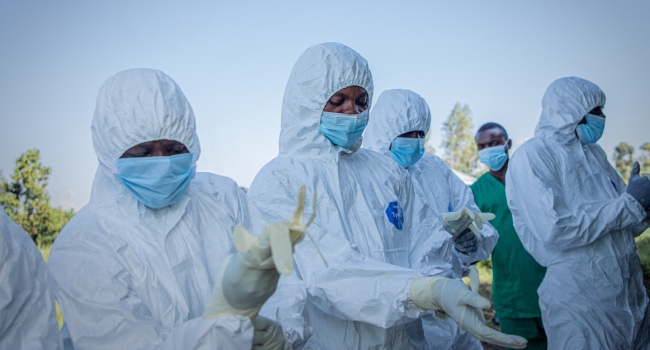
Health authorities in Nigeria are monitoring 53 people who may have been exposed to the country’s confirmed Ebola case, including healthcare workers, domestic staff and the patient’s husband.
The Nigeria Centre for Disease Control and Prevention (NCDC) said the individuals had been identified and categorised according to their possible level of exposure as part of efforts to prevent further spread of the disease.

According to the agency’s latest situation report, 44 of the identified contacts are linked to the health facility where the patient received treatment, while nine others had different forms of contact with her or were involved in her medical care.
The confirmed case involves a 42-year-old woman who travelled from Uganda through Addis Ababa before arriving in Abuja on October 3, 2026. She began experiencing symptoms on October 7 and sought medical attention at private health facilities in the following days.
The infection was confirmed by laboratory testing on October 20, after health authorities were notified of the suspected case and commenced investigations.

The NCDC also reported that a suspected Ebola case recorded in Rivers State tested negative following laboratory analysis. The patient’s husband also reportedly tested negative for the disease.
Director-General of the NCDC, Dr Jide Idris, said contact tracing and monitoring were continuing, with identified individuals expected to be observed for 21 days after their last possible exposure.

He urged Nigerians contacted by public health officials to cooperate with the monitoring teams and provide accurate information about their movements, contacts and any symptoms they might develop.
Idris emphasised that being identified as a contact does not mean a person has contracted Ebola. Rather, the monitoring process helps health officials detect possible infections early and limit further transmission.
He also called on public and private healthcare facilities to strengthen infection prevention and control measures, ensure adequate supplies of personal protective equipment, maintain proper screening procedures and promptly isolate and report suspected cases.
The Federal Government has reaffirmed its commitment to containing the outbreak through surveillance, contact tracing, laboratory testing and coordinated public health interventions.