

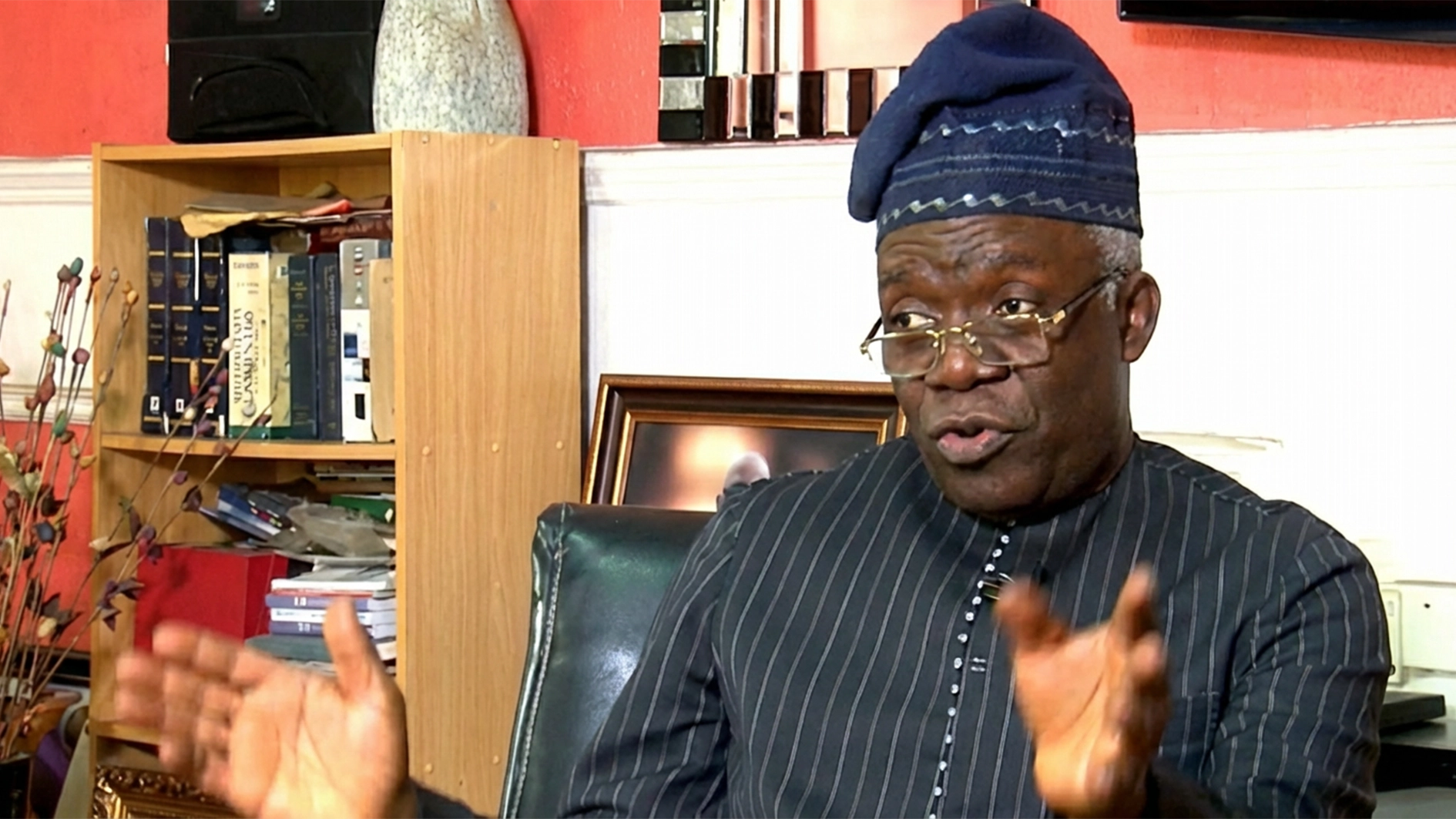
The senior advocate warned that the process undermines constitutional provisions and due process.
Human rights lawyer and Senior Advocate of Nigeria (SAN), Femi Falana, has called for an immediate halt to plans by the Nigerian government under President Bola Tinubu to subject 36 serving military officers to a General Court Martial over an alleged coup plot, arguing that the move violates constitutional safeguards and due process.

Falana raised concerns that the military trial structure being pursued does not align with Nigeria’s constitutional provisions, insisting that allegations such as treason and terrorism fall strictly within the jurisdiction of the Federal High Court and should not be split between civilian courts and military tribunals.
His reaction follows the recent arraignment of six suspects before the Federal High Court in Abuja on charges of treason, terrorism, and money laundering. The defendants were escorted into the courtroom under tight security as proceedings began before Justice Joyce Abdulmalik, following earlier confirmation from the Office of the Attorney-General of the Federation.

Those arraigned include retired Major General Mohammed Ibrahim Gana, retired Naval Captain Erasmus Ochegobia Victor, Police Inspector Ahmed Ibrahim, Zekeri Umoru, Bukar Kashim Goni, and Abdulkadir Sani. A former Minister of State for Petroleum Resources, Timipre Sylva, is also named in the charge sheet but remains at large.
Court filings marked FHC/ABJ/CR/206/2026 and signed by Attorney-General Lateef Fagbemi (SAN) accuse the defendants of participating in a 13-count charge linked to an alleged 2025 conspiracy to “levy war against the state” and forcibly remove the Tinubu administration.

The prosecution alleges that the accused had prior knowledge of an alleged coup plot involving Colonel Mohammed Alhassan Ma’aji and others but failed to report it. They are also accused of attending secret meetings aimed at destabilising the constitutional order and providing financial and logistical support to the scheme.
Financial transactions are central to the case, with allegations that some of the accused handled or retained funds suspected to be linked to terrorism financing, including amounts ranging from N1 million to N50 million across various accounts.
 Falana, however, criticised the government’s plan to also try 36 serving officers separately before a General Court Martial, describing it as legally inconsistent since civilians and military personnel are being subjected to different legal processes for related allegations.
He argued that applying separate judicial systems to similar offences violates the constitutional principle of equality before the law and undermines fair hearing guarantees. He further noted that in previous comparable cases, suspects were prosecuted within the regular court system rather than through military tribunals.

The senior advocate therefore urged the Attorney-General of the Federation to intervene immediately, halt the planned military trials, and consolidate all related prosecutions under the Federal High Court to ensure consistency, fairness, and adherence to constitutional due process.




