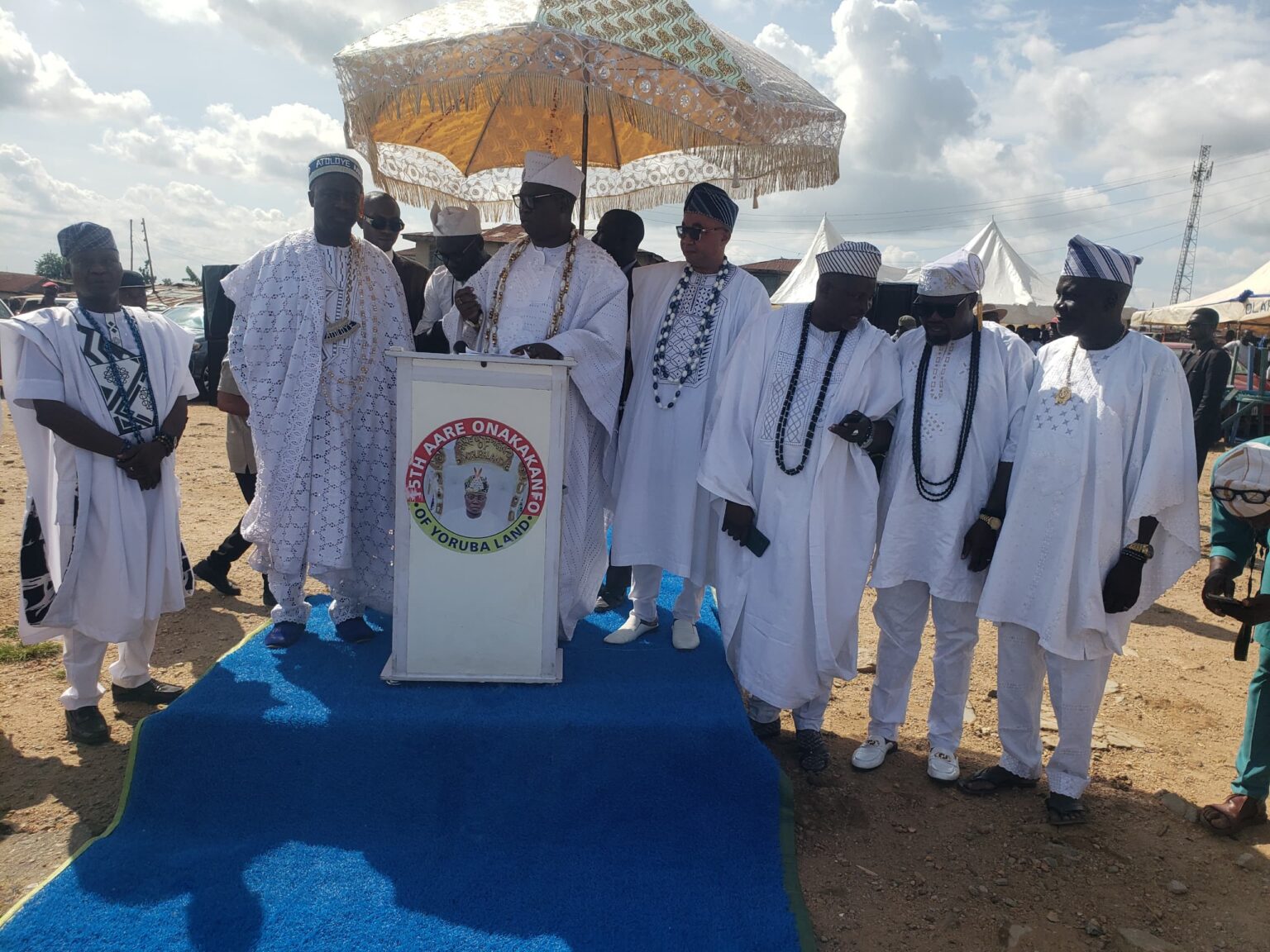
The Aare Onakakanfo of Yorubaland and National Coordinator of the Oodua People’s Congress (OPC), Iba Gani Adams, has urged the Federal Government to pursue technological advancement while preserving and promoting Nigeria’s indigenous culture.
Adams made the call at the 2026 Osun-Osogbo International Festival in Osogbo, Osun State, where he stressed the need for Nigeria to strike a balance between modern development and cultural identity.
Speaking alongside traditional rulers, including the Olufon of Ifon, Oba Peter Ipadeola Oluyooye, Adams cited China, Singapore and South Korea as examples of countries that have successfully combined economic growth and technological development with the preservation of their cultural heritage.
He said indigenous culture remained the foundation of every tribe, irrespective of religious affiliation.

“Whether you are a Christian or a Muslim, we must recognise that our indigenous culture and heritage are important. Our traditional heritage is our foundation; it is the beginning of our history. If you do not know where you are coming from, you may not know where you are going,” he said.
The promoter of the Olokun Festival Foundation described the Osun-Osogbo Festival as more than an annual cultural celebration, saying it could become one of Nigeria’s leading cultural tourism brands if properly supported.
He called on the Federal Government to collaborate with the Osun State Government, traditional institutions, host communities and private investors to transform the festival into a globally competitive tourism event.
Adams noted that events such as the FIFA World Cup and Olympic Games enable countries to project their image internationally, arguing that Nigeria could similarly use cultural tourism to showcase its heritage and strengthen its global image.
He also urged festival organisers to introduce new ideas and programmes to maintain the event’s appeal to returning visitors.
According to him, repeating the same activities every year could diminish visitors’ experiences, making continuous innovation and creativity essential to sustaining the festival’s relevance.
Adams further highlighted the festival’s economic importance, noting that it attracts local and international visitors while creating business opportunities for traders, artisans, performers, transport operators, hoteliers and other service providers.

He therefore called for greater investment in infrastructure, security, publicity, accommodation, transportation and other tourism facilities around the Osun Sacred Grove, as well as stronger support for local businesses.
He also advocated integrating the Osun-Osogbo Festival into a broader tourism development strategy for Osun State by linking it with other cultural and historical attractions in Osogbo, Ile-Ife and Ilesa.
Earlier, the President of the Olokun Festival Foundation, in his welcome address, described the festival as an important platform for preserving and passing Yoruba culture to future generations.
He described the Osun Sacred Grove, a UNESCO World Heritage Site, as a priceless cultural treasure representing Yoruba history, spirituality, music, dance, arts and identity.
He also commended the Osun State Government, traditional institutions and residents for their continued support for the festival.

Meanwhile, Adams appealed for peace ahead of the August 15, 2026 Osun State governorship election.
Condemning political violence, he urged political parties, politicians, supporters, INEC and security agencies to work together to ensure a peaceful, transparent and credible election.
“Power is transient. Power is momentary. We should not, because we are looking for power, kill a soul. We don’t need bloodshed in Yorubaland. We want a peaceful atmosphere for the election,” he said.
Adams noted that the credibility of the Osun election would have implications for public confidence in future elections across Nigeria.
He concluded that the future of the Osun-Osogbo Festival depended on continued innovation, increased government involvement, private-sector participation and stronger international interest.
According to him, the festival should not only preserve the past but also serve as a platform for job creation, investment, tourism development and cultural diplomacy.