

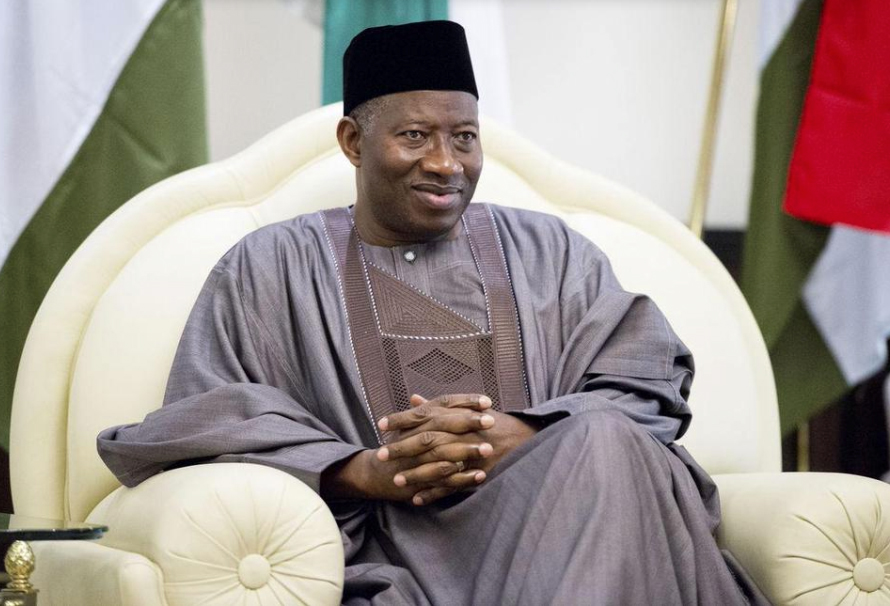
Former President Goodluck Jonathan has responded to recent criticism from former Vice President Atiku Abubakar, insisting that he did his best while serving as Nigeria’s leader and acknowledging that mistakes are part of governance.

Atiku, who is currently seeking the presidential ticket of the African Democratic Congress (ADC), had in a recent television interview described Jonathan as inexperienced and suggested that his administration struggled in handling national challenges.
Reacting to the remarks at the 2025 Association of Retired Career Ambassadors of Nigeria (ARCAN) awards ceremony in Abuja on Monday, Jonathan said no leader is immune from errors, stressing that public office naturally comes with challenges and missteps.

He noted that he assumed office as president in 2010 at the age of 53 and left in 2015 at 58, questioning the claim that he was too young to govern Nigeria effectively.
Jonathan maintained that despite criticisms, his administration recorded notable achievements, particularly in foreign relations, including Nigeria’s election to the United Nations Security Council on two occasions.
He added that his government successfully navigated complex diplomatic processes, which he said would not have been possible without experience and commitment.

The former president also used the occasion to reflect on regional governance in West Africa, warning that political instability remains a major obstacle to economic development across the sub-region.
He stressed that the Economic Community of West African States (ECOWAS) cannot achieve meaningful economic integration without stable democratic systems among member nations.

Jonathan further highlighted the tension between national sovereignty and regional intervention, noting that enforcing democratic standards often presents challenges for ECOWAS member states.
He called on West African leaders to strengthen cooperation and ensure political stability, describing it as essential for the region’s long-term progress.
The former president also urged Nigerian diplomats to document foreign policy experiences to guide future administrations, while commending the founding vision of ECOWAS by regional leaders, including former Head of State Yakubu Gowon.

The event also featured reflections from Gowon, who credited the creation of ECOWAS to collective regional efforts and post-war diplomatic engagements aimed at fostering cooperation among West African countries.
Other speakers at the ceremony emphasized the importance of diplomacy, leadership, and regional integration, noting that ECOWAS marks 50 years of existence as a key regional institution.




