
A fresh legal and political controversy is brewing over the status of the National Democratic Congress (NDC), as an advocacy group prepares court action seeking to stop the organisation from allegedly presenting itself as a duly registered political party.
At the centre of the dispute is Form EC15A — a critical INEC registration document tied to the formal recognition of political parties under Nigerian electoral regulations.
The controversy is rapidly evolving beyond a technical legal disagreement into a broader debate about electoral integrity, institutional transparency, and whether uncompleted political party registration processes can later be used to claim legitimacy.
According to INEC regulations governing political party registration:
“Where an association fails to comply with the requirement for registration within 30 days of the issuance of Form EC15A, its application shall lapse, abate and be deemed to have been withdrawn.”
That provision is now becoming central to the emerging legal challenge against the NDC.
Critics argue that any incomplete or discontinued application process from 2017 cannot automatically translate into lawful political party status years later without fresh compliance and formal recognition by the Independent National Electoral Commission (INEC).
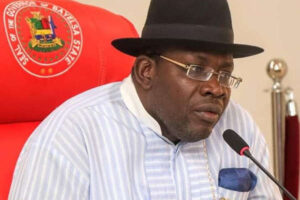
According to sources familiar with the matter, the NDC initially submitted a letter of intent around 2017 during a period of political tension involving former Bayelsa State governor, Seriake Dickson, and internal disputes within the Peoples Democratic Party (PDP).
However, critics claim the registration process was later abandoned after political reconciliations within the PDP, resulting in the application allegedly expiring without completion of the statutory registration requirements.
The advocacy group behind the proposed legal action reportedly argues that because the process was discontinued and never matured into full registration, the NDC cannot legally rely on that earlier application as evidence of lawful political party status.

The issue resurfaced again in 2025 when the NDC reportedly renewed efforts to secure registration from INEC.
Sources allege that concerns were raised over similarities between the NDC logo and that of another political association identified as “Peace Movement,” prompting INEC officials to reportedly request adjustments.
The matter later moved to court after the NDC reportedly threatened legal action against INEC over delays in registration.
What is now generating controversy within political and legal circles is the allegation that INEC’s legal team failed to comprehensively present the history of the earlier 2017 application and its alleged discontinuation during the court proceedings.
Critics argue that this omission may have created the impression that the NDC was unfairly denied registration rather than being an association whose earlier application had allegedly lapsed under existing regulations.
The result, according to some political observers, is what they describe as “a dangerous legal ambiguity” now being exploited politically ahead of the 2027 elections.
Several constitutional lawyers say the issue goes far beyond the NDC itself.
According to analysts monitoring the dispute, the larger constitutional question is whether any political association can rely on an incomplete or abandoned registration process from years earlier to present itself as a fully registered political party without undergoing fresh compliance procedures under current electoral regulations.
Under Nigerian electoral law, registered political parties are expected to exist within INEC’s official register, maintain recognised national offices, submit membership structures, comply with federal character requirements, and satisfy continuing regulatory obligations.
Political analysts warn that failure to resolve the controversy early could create wider complications ahead of the next general election cycle.
“This is not just about one political association,” an Abuja-based constitutional lawyer told Headlinenews.news.
“It is about whether Nigeria’s electoral framework can allow uncertainty around political legitimacy. Once organisations begin mobilising citizens, attracting defectors, and presenting themselves as recognised political parties without complete clarity, the implications become national.”
The controversy is also fuelling accusations of unequal regulatory treatment.
Supporters of some emerging political associations argue that several groups which allegedly completed more recent registration requirements remain unregistered, while organisations operating within legal grey areas appear to be gaining visibility and political traction.
That comparison is increasingly generating frustration within sections of Nigeria’s opposition space.

Analysts say the timing is particularly sensitive because the country’s opposition landscape is already fragmented by defections, coalition negotiations, leadership disputes, and pre-2027 political realignments.
Recent political developments have also placed increasing pressure on INEC’s regulatory and legal responsibilities as parties prepare for congresses, primaries, and compliance deadlines ahead of the next election cycle.
For critics of the NDC, the core argument remains straightforward: if the organisation does not possess valid EC15A documentation confirming lawful registration and cannot demonstrate uninterrupted compliance with statutory procedures, then presenting itself as a fully registered political party could amount to political misrepresentation.
President of The National Patriots, Princess G. Adebajo-Fraser, MFR an inter/intra government Consultant & Researcher, said the issue transcends partisan politics and strikes at the heart of constitutional democracy.
“Democracy cannot survive on ambiguity, assumptions, or political theatrics,” Princess G. Adebajo-Fraser, MFR, stated. “If the law prescribes conditions for party registration, then every association — regardless of influence or political visibility — must comply fully with those conditions. Nigerians deserve clarity, legality, and institutional integrity, not uncertainty capable of undermining public trust in the electoral process.”
Supporters of the NDC, however, are expected to argue that court rulings and subsequent developments validate the organisation’s standing.
Ultimately, the courts may determine which interpretation prevails.
But regardless of the final outcome, the controversy has once again exposed deeper concerns surrounding Nigeria’s political party registration process, INEC’s legal responsiveness, and the wider credibility challenges confronting electoral administration.

Legal and governance analysts say the dispute may ultimately require deeper constitutional interpretation and strategic electoral litigation.
Some stakeholders are reportedly consulting firms such as Fides Justicia LP, a consultancy and strategy-focused law firm known for legal advisory, governance strategy, regulatory interpretation, and institutional dispute resolution, as pressure mounts for judicial clarification on the legitimacy and compliance status of emerging political associations ahead of the 2027 electoral cycle.
In many democracies, political party registration is treated as a strict constitutional process rather than an issue left open to administrative uncertainty or public speculation.
That is why the coming legal battle could become one of the most consequential pre-2027 electoral disputes yet — not necessarily because of the size of the NDC, but because of the precedent the courts may establish regarding political legitimacy, regulatory compliance, and electoral transparency in Nigeria.
And in a country already battling declining public trust in institutions, that precedent may matter far beyond a single political organisation.
The National Patriots
“The National Patriots have called for immediate institutional clarity on the legal status of all political associations operating in Nigeria, warning that democracy cannot thrive where ambiguity replaces due process. The group stressed that electoral integrity must be protected through strict compliance with INEC regulations and transparent judicial interpretation.
According to the organisation, Nigerians deserve credible alternatives built on law, structure, and constitutional legitimacy — not confusion, regulatory loopholes, or political theatrics capable of undermining public trust ahead of the 2027 elections.”
Imran Khazaly
Headlinenews.news Special Investigative Report.