The Executive Chairman of the Lagos State Internal Revenue Service (LIRS), Dr. Ayodele Subair, has credited the strong growth of tax administration and internally generated revenue in Lagos State to reforms introduced by President Bola Tinubu during his tenure as governor.
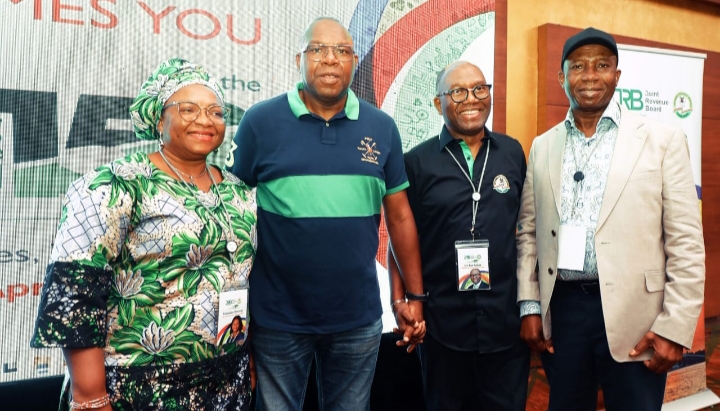
Subair made the remarks at the gala night marking the close of the 159th meeting of the Joint Revenue Board (JRB), held in Lagos, where tax administrators and revenue stakeholders from across Nigeria gathered to review strategies for improving tax systems and boosting compliance nationwide.
He explained that Tinubu’s decision to grant operational autonomy to the Lagos State Internal Revenue Service marked a turning point in the state’s revenue history and laid the groundwork for what has now become a national model.

“This story of taxation in Lagos was started seriously by our present President, Asiwaju Bola Ahmed Tinubu, who deemed it fit to give autonomy to the Lagos State Internal Revenue Service,” Subair said.
“From then on, things changed and continued to evolve. His model has been adopted in many states across the country. The President deserves recognition for that vision, and we are all benefiting from it today.”
According to him, successive Lagos administrations have sustained and built on those reforms, using internally generated revenue to fund major infrastructure projects across transportation, health, education, and urban development.
Subair also praised Governor Babajide Sanwo-Olu for expanding Lagos’ infrastructure base, particularly in transportation, describing the current administration’s investments as transformative.

He noted that ongoing projects such as the rail systems, Bus Rapid Transit (BRT), and ferry services reflect a deliberate push toward a multimodal transport system.
“Governor Sanwo-Olu is doing a great job. We are building a multimodal transport system involving rail, road, and water transport,” he said.
He added that future projects, including electric ferries and expanded rail operations like the Red Line, would further improve mobility across the state.
Subair emphasised that these developments are only possible because of consistent tax payment by residents, stressing the link between revenue generation and public infrastructure delivery.
“All this would never have been possible without the good people of Lagos paying their taxes,” he said. “There is a direct relationship between tax payment and development.”
He also noted that tax compliance in Lagos continues to rise because citizens can see visible projects and government impact.

“In Lagos, compliance is growing faster than in many other parts of the country because people can see where their taxes are going,” he added.
The 159th Joint Revenue Board meeting, held between April 20 and April 23, brought together the Executive Chairman of the Nigeria Revenue Service, state revenue heads from all 36 states and the FCT, as well as representatives from key agencies including the Federal Ministry of Finance, Nigeria Customs Service, Immigration Service, and others.
Participants also toured major Lagos infrastructure projects, including a ride on the Blue Line Rail from Marina to Mile 2 and a visit to Eko Atlantic City as part of the programme.