

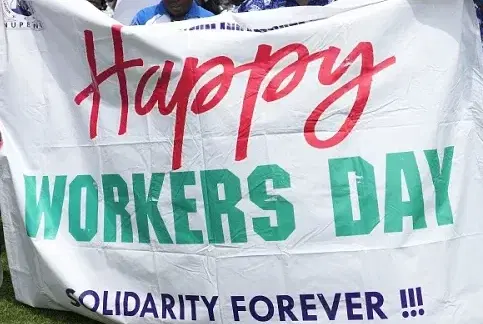
May 1, 2026, has taken on a different tone from the usual May Day celebrations marked by parades and official ceremonies. Instead, the Nigeria Labour Congress (NLC) and the Trade Union Congress (TUC) have instructed workers in several states to stay away from government-organised events, signalling a shift back to street-based activism and protest.

This year’s theme, “Insecurity and Poverty: Bane of Decent Work,” reflects deep concerns about worsening economic hardship and rising insecurity across the country. Labour leaders say the idea of “decent work” is being eroded by both unsafe working conditions and the declining real value of wages due to inflation.
They warned that many Nigerians are now trapped in a situation where they remain employed but are still unable to afford basic transportation, safety, or daily living costs. This growing group of “working poor” highlights how severe the economic pressure has become.

According to the labour movement, insecurity has also disrupted productivity, especially in farming communities and major transport routes where workers face constant threats and informal “levies” imposed by criminal groups. At the same time, inflation has significantly weakened the purchasing power of salaries, making existing wage agreements increasingly unrealistic.

The unions described their decision to avoid government-hosted celebrations as a matter of principle, arguing that it is inconsistent to celebrate labour dignity while agreed wage policies are not fully implemented.

They further warned that failure to address the widening gap between income and living costs could heighten social tensions, stressing that the welfare of workers must become a national priority.
Labour leaders concluded that Nigeria is entering a critical period where economic policies must move beyond rhetoric and focus on real improvements in workers’ living standards.




